 Save
Save I still remember the first time I attempted an elaborate charcuterie board at my cousin's wedding reception. I was nervous, convinced I'd disappoint with something pedestrian, but then I discovered the magic of folding cured meats like delicate origami and sculpting cheese into roses that looked almost too beautiful to eat. That day, watching guests gasp as they approached the table, I realized this wasn't just about arranging ingredients—it was about creating an edible work of art that told a story of intention and care. The Advanced Artisan Array became my love letter to that moment, a celebration of beautiful, thoughtful abundance.
I'll never forget assembling one of these boards for my dinner party last spring, with my friend Sarah perched on a kitchen stool offering running commentary as I fanned prosciutto into delicate ribbons. By the time we finished, we'd laughed so hard at my clumsy early attempts that the final result felt like something we'd created together, even though she'd only watched. When our guests arrived and fell silent at the sight of it, we knew we'd done something special—and the best part was that the flavors were just as impressive as the presentation.
Ingredients
- Prosciutto (100 g): Slice it paper-thin and let it curl slightly as it dries—this catches light beautifully and adds an elegant, salty counterpoint to soft cheeses.
- Soppressata (100 g): This peppery Italian salami holds its shape when folded and provides a bold, savory anchor to the board's composition.
- Capicola (100 g): Its marbling and slight sweetness create visual interest and pair gorgeously with aged cheeses.
- Chorizo (100 g): The deep red adds visual warmth and brings a smoky heat that complements fruit elements.
- Mortadella (100 g): Its tender texture and subtle spicing feel luxurious, and slices large enough to display beautifully.
- Brie (150 g, chilled): Serve it cold so it holds its creamy promise without melting into the board—guests will love the contrast between the firm exterior and silky interior.
- Manchego (150 g): This Spanish cheese has a buttery nuttiness that anchors the flavors and cuts through richer elements gracefully.
- Aged Cheddar (150 g): Its crystalline texture and sharp bite provide textural contrast and prevent the board from feeling monotonously soft.
- Goat Cheese (150 g): Tangy and creamy, it's the wild card that surprises palates and pairs unexpectedly well with dried cherries.
- Gouda (150 g): Its caramel undertones feel luxurious and its firm texture allows for interesting cutting angles.
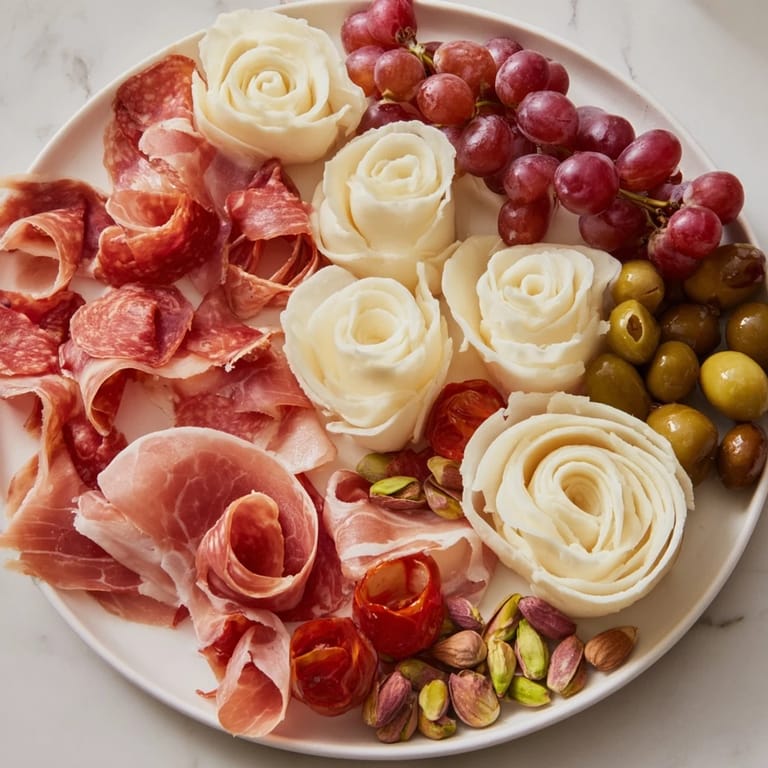
- Provolone (100 g): This is your sculpting cheese—its pliability makes it ideal for rolling into roses that actually hold their shape.
- Red and Green Grapes (2 bunches): Keep them in small clusters; their natural sweetness refreshes the palate between salty meats and rich cheeses.
- Figs (2, quartered): Their deep purple interiors and jammy texture add an unexpected luxury and pair beautifully with aged cheeses.
- Pomegranate Seeds (from 1): They provide bursts of tart sweetness and jewel-like sparkle that elevates the visual drama.
- Apple and Pear (1 each, thinly sliced): Slice these just before serving to prevent browning, and they'll provide crisp contrast and brightness.
- Dried Apricots and Cherries (50 g each): These concentrated sweetness pockets balance the board's savory elements and provide chewiness.
- Dried Figs (50 g, halved): They're natural partners to goat cheese and manchego, and they add sophisticated earthiness.
- Marcona Almonds and Pistachios (75 g each): Toast them lightly if you'd like; their buttery richness feels indulgent and guests love the nutty texture.
- Cornichons (75 g): Their briny crunch cuts through richness and provides palate-cleansing moments between bites.
- Mixed Olives (75 g): Choose a mix of green and kalamata for visual and flavor variety—they're essential for balance.
- Roasted Red Peppers (50 g): Their sweet smokiness bridges the gap between fruits and savories beautifully.
- Artichoke Hearts (50 g): They add an unexpected vegetal elegance and provide interesting texture play.
- Whole Grain Mustard (100 g jar): This is your silent hero—a small dollop transforms simple bread and cheese into something memorable.
- Fig Jam (100 g jar): It's the sweet-savory bridge that makes goat cheese sing and crackers feel special.
- Honey (100 g jar): A drizzle over brie with almonds creates an unforgettable flavor combination that guests will ask about.
- Baguette (1, sliced): Toast slices lightly before serving if you'd like; they become sturdy vehicles for topping combinations.
- Assorted Crackers (150 g): Choose varying textures—some delicate, some hearty—so there's a pairing for every cheese.
- Grissini (100 g): These Italian breadsticks add height and visual interest, and they're perfect for scooping cheeses and spreads.
- Fresh Rosemary and Thyme: Beyond garnish, these herbs add herbal aromatics that make the board smell as good as it looks.
- Edible Flowers (Pansies, Nasturtiums): These aren't just decoration—they're edible surprises that add delicate flavor and unmistakable sophistication.
- Microgreens: They add tender texture and a peppery finish that feels unexpectedly complex.
- Radish Roses: These are pure artistry—thinly slice radishes, soak briefly in ice water, and they'll curl into roses that guests will admire before eating.
Tired of Takeout? 🥡
Get 10 meals you can make faster than delivery arrives. Seriously.
One email. No spam. Unsubscribe anytime.
Instructions
- Prepare Your Canvas:
- Start with a pristine wooden or marble board—at least 18 by 24 inches—wiped clean and ready. This is your artist's palette. Place small bowls for mustard, jam, and honey near one edge, leaving them as anchoring elements rather than obstacles. Food-safe gloves are your friend here; they keep everything pristine and let you work without worrying about fingerprints.
- Sculpt Your Cheese Roses:
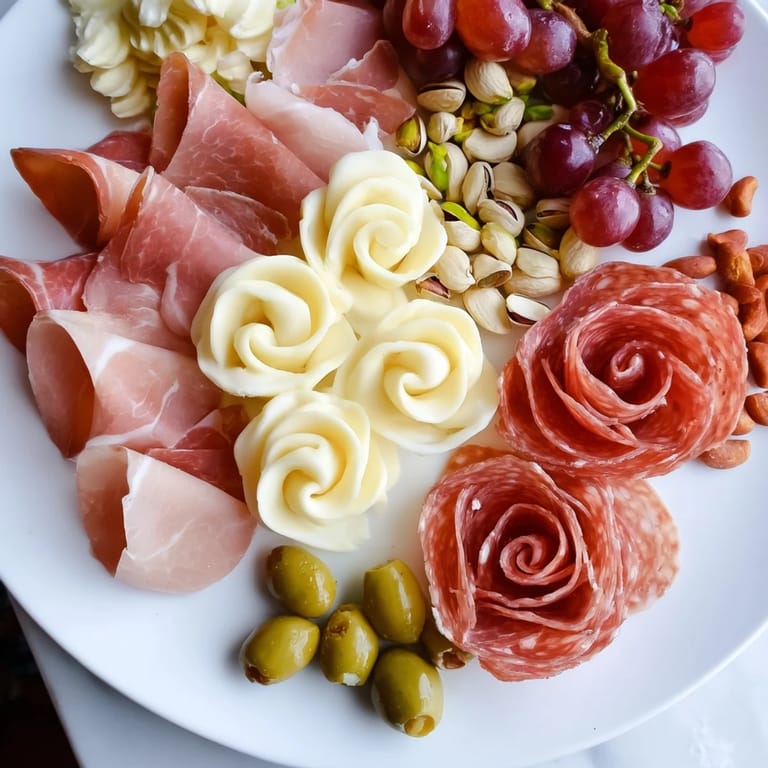
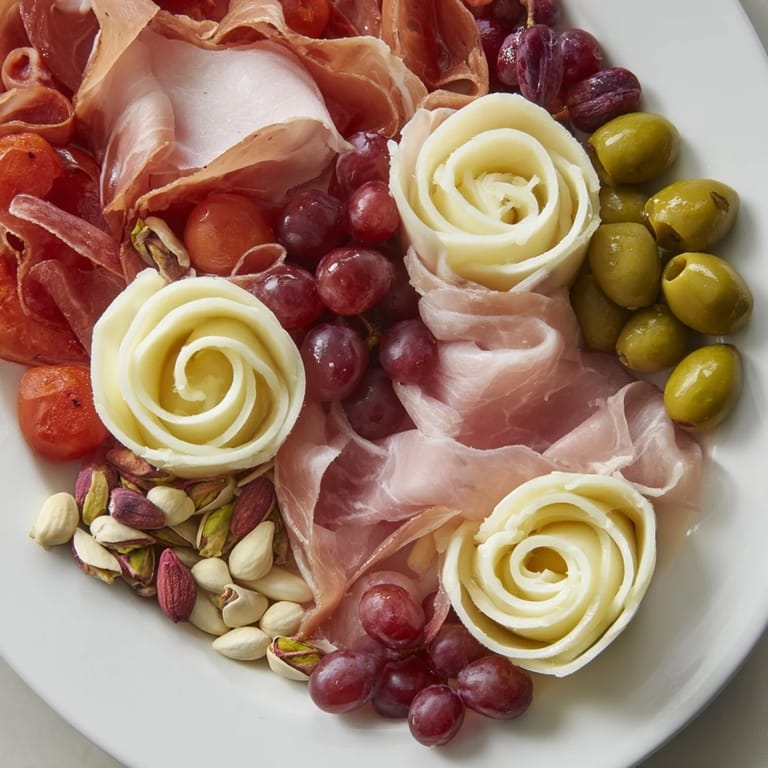
- Take thin slices of provolone and, starting from one corner, roll them tightly into spirals, then gently fan the outer edges outward to resemble petals. The first ones won't be perfect, and that's fine—by your third or fourth, your hands will understand the motion. Place finished roses on a small plate to keep them cold and firm. You can also create meat roses using prosciutto or soppressata; they're slightly more forgiving and create beautiful layered effects.
- Arrange Your Cured Meats:
- This is where folding becomes an art form. Fold prosciutto into quarters or thirds, letting edges crumple naturally for dimension. Create ribbons by layering and slightly offsetting slices. Fill gaps with soppressata fanned in overlapping arcs. The goal is a lush, crowded feeling—no bare board should peek through the meats. Think of it like creating a textile with meat, where texture and dimension matter as much as coverage.
- Position Your Cheeses:
- Cut cheeses into varied shapes: thick wedges of manchego and aged cheddar, cubes of brie (keep it chilled!), irregular shards of gouda. Now place your cheese roses as focal points, distributing them so the eye travels across the board. Tuck goat cheese rounds between meats, and let some cheese pieces lean against others to create height and visual interest. Chill the board periodically if your kitchen is warm—cold cheese holds its shape and presentations better.
- Nestle Your Fruits:
- Grapes should stay in small clusters, using their natural stems as organic groupings. Scatter pomegranate seeds across the board like edible jewels. Arrange dried figs and apricots in small piles, using their deep colors as visual anchors. Toss in fresh apple and pear slices just before serving so they don't brown, fanning them slightly to show off their delicate flesh. Figs, quartered, should sit prominently—they're showstoppers.
- Scatter Nuts, Olives, and Pickles:
- Create small piles or use small bowls for nuts and olives—this prevents them from rolling and gives the board a organized luxury. Cluster cornichons together for their briny appeal. Artichokes and roasted peppers should be placed in small groupings that feel intentional rather than random. Think in terms of flavor neighborhoods where complementary items live near each other.
- Fan Your Bread and Crackers:
- Fan baguette slices in overlapping rows, finding gaps between cheese and meats. Stand grissini at angles, as if they're leaning casually—height adds drama. Scatter crackers in varied directions across empty spaces, creating visual rhythm. These carbohydrates are the stage for everything else, so their placement should feel thoughtful.
- Garnish with Flourish:
- This is your final flourish. Tuck fresh rosemary sprigs into gaps between cheeses. Scatter thyme leaves where they'll catch light. Place radish roses as unexpected jewels. Dust microgreens across the board for delicate texture and peppery surprise. Edible flowers—pansies and nasturtiums—should be positioned where they'll be admired, perhaps nestled into cheese folds or floating above the surface. This garnish layer transforms the board from impressive to extraordinary.
- Serve and Enjoy:
- Serve immediately for maximum visual impact and optimal cheese temperature, or cover loosely with plastic wrap and refrigerate until your guests arrive. If refrigerating, bring the board out 15 minutes before serving so cheeses soften slightly and flavors emerge. This moment—when guests first see your creation—is why you've taken all this care.
 Save
Save I remember one dinner party where a guest who claimed not to like charcuterie boards watched me assemble this one and actually gasped. By the end of the night, she'd tried every single element and admitted that the combination of careful presentation and genuine flavor variety had converted her. That's when I understood: this board isn't about showing off—it's about creating moments of discovery and delight, where everyone finds something that speaks to them.
The Art of Visual Storytelling
A charcuterie board is fundamentally about composition and balance. The eye should travel across the board finding focal points—those cheese roses, the deep jewel tones of figs, the bright pop of pomegranate—rather than landing on uniform rows. Think of yourself as a painter: you're using color (the reds of chorizo and peppers, the pale golds of manchego, the emerald of olives), texture (rough nuts against smooth cheese, crinkled prosciutto against firm crackers), and height (standing grissini, stacked meats, nestled berries) to create a composition that feels both abundant and intentional. The maximalist approach isn't about chaos; it's about curated richness where every element earns its place.
Flavor Pairing Mastery
The genius of this board lies in how thoughtfully ingredients support and enhance each other. Salty cured meats soften in the mouth, making the perfect lead-in to creamy brie or tangy goat cheese. Dried fruits provide concentrated sweetness that makes sharp aged cheddar taste even more complex. Fresh grapes cleanse the palate between bites of rich mortadella and nutty manchego. Whole grain mustard bridges everything—it adds a subtle spice that makes even simple bread and cheese feel sophisticated. The pickles and briny olives prevent palate fatigue, essentially resetting your taste buds for the next flavor adventure. When you understand these relationships, you're no longer just arranging ingredients; you're composing a meal experience.
Making It Your Own
While this recipe provides a template for maximum impact, the real magic happens when you adapt it to your preferences and what's available to you. Swap cheeses based on what your local cheesemonger recommends—maybe you find an incredible aged gouda that deserves center stage, or a creamy bleu that surprises everyone. If tree nuts are an issue, replace them with sunflower or pumpkin seeds for similar richness and crunch. Gluten-free guests? Use rice crackers or vegetable crisps without hesitation. The framework is robust enough to handle substitutions while maintaining its luxurious feel.
- Consider your season: spring boards might feature more fresh herbs and bright flowers, while autumn boards could emphasize roasted nuts, candied fruits, and deeper cheese selections.
- Don't be afraid to add unexpected elements—a small pot of truffle honey, candied nuts, or smoked paprika scattered over almonds create talking points that guests remember.
- Remember that your guests' allergies and preferences matter more than perfect presentation, so always communicate ingredient lists and offer alternatives without hesitation.
 Save
Save Every time I create a board like this, I'm reminded that the simplest ingredients—when treated with intention and care—become something transcendent. You're not just feeding people; you're telling them they're worth the effort.
Recipe FAQ
- → How do I sculpt cheese roses?
Use soft cheeses like provolone, slicing thinly and rolling tightly into spirals. Fan out edges gently to mimic petals for an elegant floral effect.
- → What cured meats work best for intricate folding?
Thinly sliced options like prosciutto, soppressata, and capicola fold well, allowing you to create layered ribbons and folds for visual appeal.
- → How should I arrange fresh and dried fruits on the board?
Cluster fruits like grapes, figs, and pomegranate seeds in groups to add color contrast and attract the eye while balancing the savory elements.
- → Which garnishes best enhance the presentation?
Fresh herbs such as rosemary and thyme, edible flowers, microgreens, and radish roses add vibrant color and texture, elevating the overall look.
- → Can I prepare the board in advance?
Yes, assemble and cover the board, then refrigerate until ready to serve, ensuring freshness and ease during entertaining.