 Save
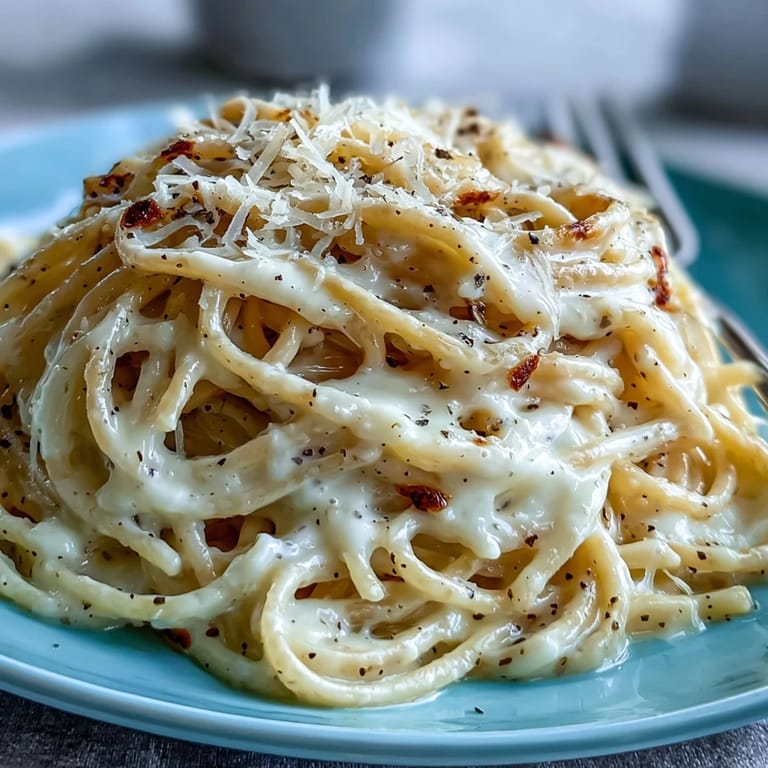
Save My first attempt at cacio e pepe happened on a Tuesday night when I was too tired to think about cooking anything complicated. I stood in front of my pantry with three ingredients and a vague memory of a friend describing this Roman classic, thinking, how hard could this be? Turns out, the simplicity was the entire point—and also the most humbling lesson I learned about pasta.
I cooked this for my neighbor after she mentioned feeling overwhelmed by cooking. Watching her taste it and immediately ask for the recipe told me everything—some dishes don't need tricks or fancy plating, just confidence and good technique.
Ingredients
- Spaghetti or tonnarelli: 400 g (14 oz)—tonnarelli is traditional with its squared edges that catch sauce better, but spaghetti works beautifully and is easier to find.
- Pecorino Romano cheese: 120 g (4.2 oz), finely grated—buy a wedge and grate it yourself; pre-shredded cheese contains anti-caking agents that will sabotage your creamy sauce.
- Whole black peppercorns: 2 tsp, freshly cracked—grinding them just before cooking releases oils that make the entire dish sing with pepper flavor.
- Kosher salt: 1 tsp for pasta water—this is your only seasoning vehicle, so don't skip it.
- Unsalted butter: 1 tbsp (optional)—traditionalists skip it, but I've found it helps the sauce emulsify when you're learning.
Tired of Takeout? 🥡
Get 10 meals you can make faster than delivery arrives. Seriously.
One email. No spam. Unsubscribe anytime.
Instructions
- Boil the pasta with intention:
- Fill a large pot with water, salt it generously, and bring it to a rolling boil. Cook your spaghetti about one minute under the package time—you want it with just a slight resistance when you bite it. This is crucial because the pasta will continue cooking in the skillet with the residual heat.
- Toast the pepper:
- While pasta cooks, put your cracked peppercorns in a large skillet over medium heat for about a minute. You'll smell when they're ready—that warm, slightly toasted aroma is your signal to move forward.
- Create the peppery base:
- Add a cup of your reserved pasta water to the skillet with the toasted pepper, then reduce heat to low. This becomes your sauce foundation, carrying all that pepper flavor.
- Combine pasta and water:
- Drain your pasta and add it to the skillet, tossing constantly so every strand gets coated in the peppery water and starts absorbing it. This takes about a minute of active tossing.
- Cheese emulsion moment:
- Remove the skillet from heat—this step is non-negotiable for preventing scrambled eggs texture. Sprinkle in the grated Pecorino a handful at a time, tossing vigorously with every addition. The residual heat, pasta starch, and water create a creamy sauce if you keep moving.
- Adjust and finish:
- If the sauce looks too thick, splash in more pasta water, one tablespoon at a time. Add butter now if using, tossing until it melts into everything. Serve immediately with extra cheese and freshly cracked pepper on top.
 Save
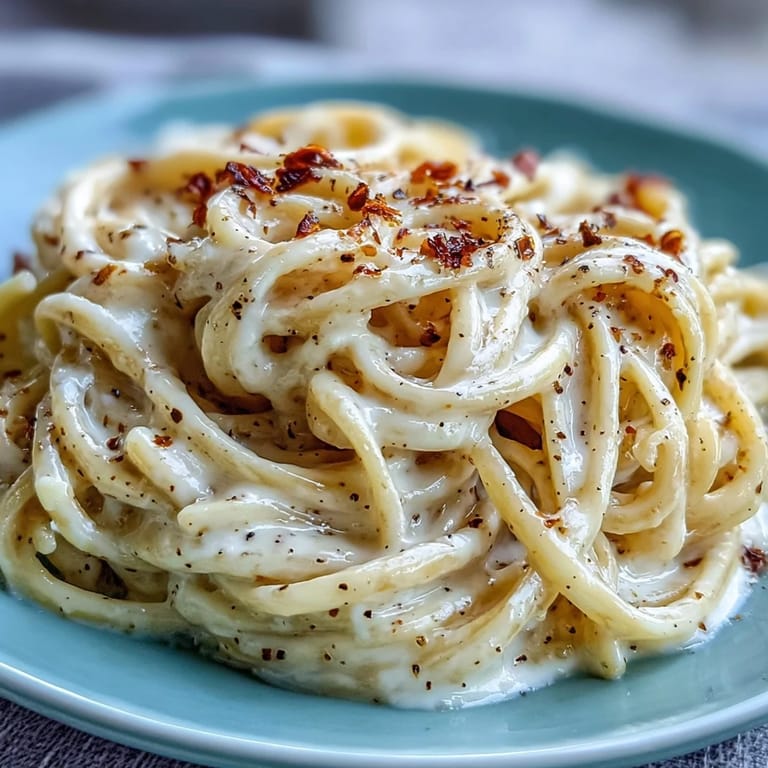
Save There's a moment when you're tossing the pasta and cheese together and suddenly the individual elements transform into something silky and luxurious, and you realize you just made restaurant-quality food in your own kitchen. That feeling never gets old.
The Science Behind the Sauce
Cacio e pepe works because of starch and emulsification, not cream or oil. The pasta releases starch into the cooking water, and when you toss hot pasta with cheese and that starchy water, the starch helps the cheese melt smoothly instead of separating into clumps. It's elegant chemistry that rewards technique over ingredients.
Choosing Your Cheese Wisely
Pecorino Romano is sharper and more assertive than Parmigiano-Reggiano, which is why it's not interchangeable for this dish. The cheese carries the entire flavor profile alongside the pepper. I learned this the hard way by substituting once, and the result felt like a different dish entirely—flatter, less interesting.
From Pantry Staple to Dinner
What makes cacio e pepe magical is that it proves you don't need a crowded ingredient list or complicated techniques to eat well. It's the kind of dish that builds your confidence in the kitchen because every element is visible and every step has a clear purpose. Once you understand how it works, you start seeing similar principles everywhere in cooking.
- Always taste the pasta before draining—if it's still crunchy, fish out a few strands and give it another minute.
- Keep a small cup of reserved water near your stove so you can add it quickly if needed.
- Serve in warm bowls because this dish gets cold fast and loses its magic if not eaten immediately.
 Save
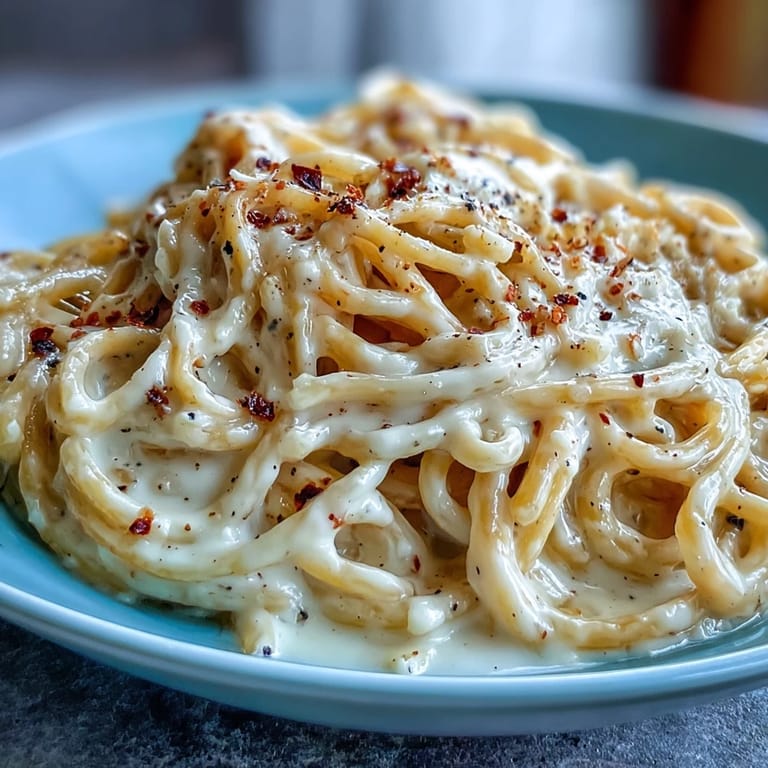
Save This is the dish I make when I want to feel capable and proud of something simple. It's become a cornerstone of my cooking because it taught me that technique and respect for ingredients matter more than complexity.
Recipe FAQ
- → What type of cheese is best for Cacio e Pepe?
Pecorino Romano is essential for authentic Cacio e Pepe. This aged sheep's milk cheese provides the sharp, salty flavor that defines the dish. Always use freshly grated cheese rather than pre-shredded varieties, which contain anti-caking agents that prevent smooth melting.
- → Why does my cheese clump instead of creating a creamy sauce?
Clumping occurs when cheese is added while the pan is too hot or without enough pasta water. Remove the skillet from heat before adding cheese, and add it gradually while tossing vigorously. The starchy pasta water acts as an emulsifier, so add it in small amounts until you achieve a creamy consistency.
- → Can I substitute Parmesan for Pecorino Romano?
While Parmesan can be used, it significantly changes the flavor profile. Pecorino Romano is sharper and saltier, which is characteristic of authentic Cacio e Pepe. If you must substitute, use a combination of Parmesan and Pecorino for better results, though purists prefer 100% Pecorino Romano.
- → What pasta shape works best besides spaghetti?
Tonnarelli is the traditional choice in Rome—a square-shaped spaghetti that holds the sauce beautifully. Other long pasta like bucatini, linguine, or even fresh fettuccine work well. The key is choosing pasta with enough surface area to catch the creamy cheese and pepper sauce.
- → How do I save the dish if the sauce becomes too thick?
Always reserve extra pasta cooking water before draining. If your sauce becomes too thick or sticky, add the reserved water one tablespoon at a time while tossing vigorously. The starch in the water will help re-emulsify the cheese and restore the creamy texture without diluting the flavor.
- → Is butter traditional in Cacio e Pepe?
Traditional Roman Cacio e Pepe contains only pasta, Pecorino Romano, and black pepper. However, some modern versions include a small amount of butter for extra creaminess and to help stabilize the emulsion. Purists omit it, but it's a matter of personal preference and won't compromise authenticity significantly.