 Save
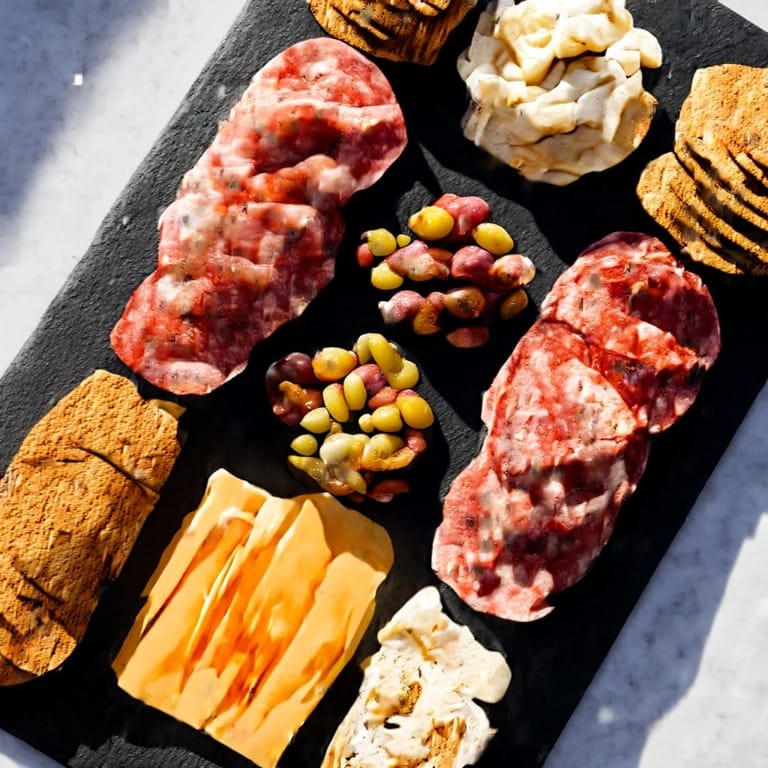
Save I discovered the magic of a charcuterie board for one on a lazy Sunday afternoon when I realized that treating myself to something beautiful didn't require feeding a crowd. Standing in my kitchen with an aged cheddar in one hand and a few slices of prosciutto in the other, I understood that the most elegant meals are sometimes the quietest ones—a small plate that says you're worth the effort.
I remember bringing a board like this to my friend's studio apartment one evening, and watching her face light up when I set it down felt like I'd done something far more meaningful than assemble some cheese and meat. She told me later it was the presentation that moved her, that someone had taken five minutes to make her feel special. That's when I truly understood the power of a thoughtfully arranged board.
Ingredients
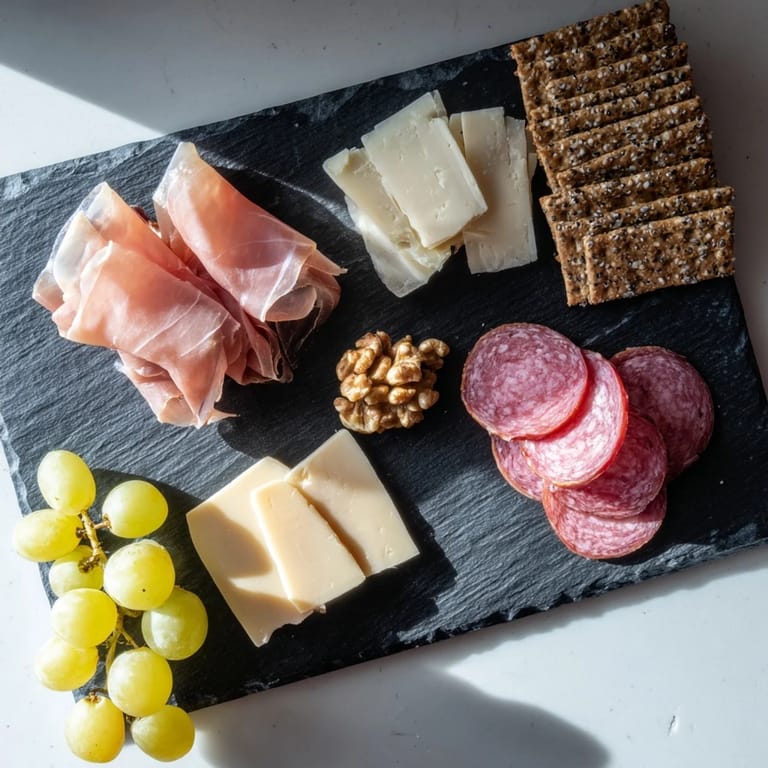
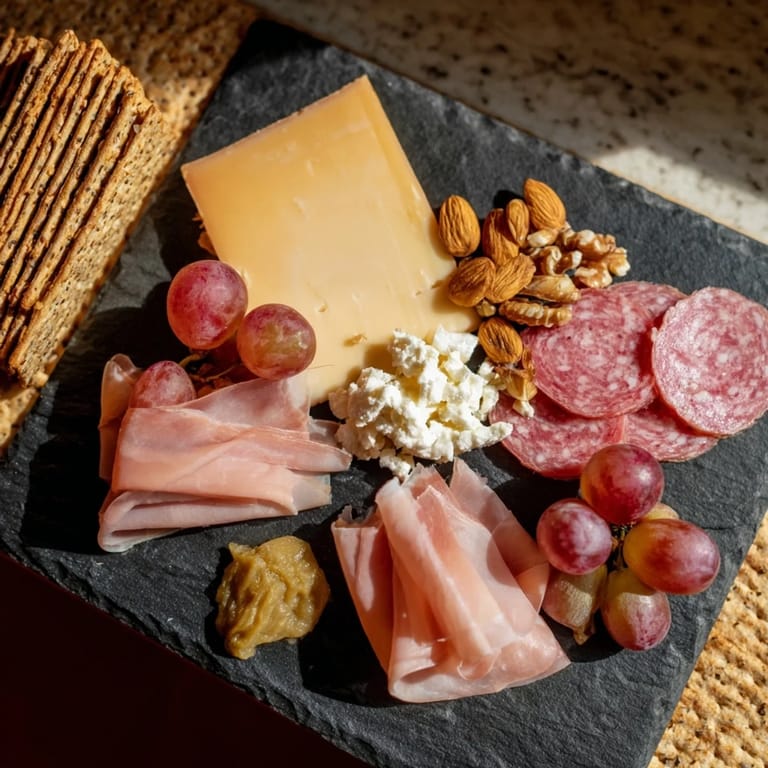
- Prosciutto (2 slices): This wafer-thin, delicate cured meat is the star player—let it drape naturally rather than fold it too tightly, as it bruises easily and deserves to show off its silky texture
- Soppressata or Salami (2 slices): The heartier cured meat that gives you substance and a deeper flavor note, sliced just thick enough to hold its character but thin enough to eat without wrestling
- Aged Cheddar or Brie (30 g): The aged cheddar brings a sharp, crystalline snap; brie whispers softness and sophistication—choose based on your mood that day
- Soft Goat Cheese or Blue Cheese (30 g): Goat cheese offers tangy brightness; blue cheese is bold and commanding—they're completely different conversations
- Seedless Grapes or Fresh Berries (small handful): These provide pops of sweetness and jewel-like color that make the whole board feel abundant and alive
- Mixed Nuts (1 tablespoon): Almonds and walnuts add textural contrast and a grounding earthiness that balances the richness of the cheese and cured meats
- Cornichons or Baby Gherkins (2–3): These tiny pickled gems are your palate cleansers, cutting through richness with their bright, vinegary snap
- Whole Grain Mustard (1 teaspoon): A small dollop of this provides gentle heat and acts as a flavor bridge between elements
- Crackers or Baguette Slices (3–4): Your edible canvas—choose quality crackers that won't overshadow your toppings, or use baguette slices for a more rustic feel
Tired of Takeout? 🥡
Get 10 meals you can make faster than delivery arrives. Seriously.
One email. No spam. Unsubscribe anytime.
Instructions
- Choose Your Canvas:
- Select a small slate coaster or appetizer plate—something that feels right to you. I prefer slate because it's a tiny bit theatrical and makes even a simple arrangement feel intentional.
- Arrange the Meats with Grace:
- Lay your prosciutto in gentle, loose folds on one side of the plate, allowing it to create natural ruffles. Follow with the soppressata or salami beside it, keeping them in their own space so each gets its moment of attention.
- Position Your Cheeses:
- Place the aged cheddar and soft cheese on opposite sides or in different corners from the meats. Let them maintain their own identity visually—you want someone looking at this board to see distinct flavor personalities waiting to be explored.
- Fill the Gaps with Intention:
- Scatter your grapes or berries into the open spaces, then add a small handful of nuts and the cornichons. This is where you create visual rhythm—let colors play off each other, let round shapes echo in different corners.
- Add the Mustard Moment:
- Place the mustard in one small, tidy dollop. This becomes your secret flavor amplifier, so put it where your eye lands naturally when you look at the board.
- Stack Your Crackers:
- Arrange the crackers or baguette slices in a neat, slightly casual stack in the remaining space. They should look easy to grab, inviting rather than rigidly perfect.
- Balance and Serve:
- Step back and look at what you've created. Are colors distributed evenly? Do shapes and textures vary across the space? If something feels off, move it. Then, serve immediately to yourself and sit down to really taste what's before you.
 Save
Save There's a quiet satisfaction in sitting down with a board like this, knowing that every single element is something you chose because you love it, not because it was on a guest list. This is food that's entirely for you, which somehow makes even the simplest ingredients feel like a celebration.
The Art of Visual Balance
I learned that a charcuterie board is really about creating a small landscape of flavor and color. Think of it like painting—you want warm tones (the golden cheese, amber cured meats) balanced with cool accents (the green grapes, purple berries). A slate or dark plate becomes your canvas, making every element glow. The arrangement isn't just about aesthetics either; it's about how someone will naturally navigate the board, discovering each flavor combination as their hand reaches from one corner to another.
Wine and Pairing Philosophy
The board itself whispers what it wants to drink alongside it. A crisp white wine like a Sauvignon Blanc or Albariño echoes the brightness of the cornichons and berries. If you lean toward red wine, choose something light and cool—a Pinot Noir or even a chilled Beaujolais—something that won't overpower the delicate prosciutto. The beauty of a board for one is that you can experiment without compromise, tasting and adjusting as you go, learning what your palate truly loves.
Customization and Personal Touch
This is where your board becomes uniquely yours. I've added a small square of dark chocolate to the edge more times than I can count, and the subtle shift from savory to dark and bitter feels like the perfect final note. Some days I add a drizzle of honey over the soft cheese, watching it catch the light. Other times, I'll include fresh figs if they're in season, or swap the nuts for something I'm craving that morning. The beauty is that there are no rules—only your own taste preferences guiding the way.
- Try adding a small piece of dark chocolate for an unexpected sweet-savory moment
- Swap nuts seasonally—candied walnuts in fall, toasted almonds in spring
- Include fresh fruit that's in season to keep the board feeling current and alive
 Save
Save A charcuterie board for one is a reminder that the simplest moments of beauty and self-care often require nothing more than intention and good ingredients. Treat yourself like you'd treat a guest you adore.
Recipe FAQ
- → What meats are ideal for this charcuterie board?
Prosciutto and soppressata or salami work well, offering a variety of delicate to robust flavors.
- → Which cheeses complement the cured meats best?
Aged cheddar and soft goat cheese or blue cheese create a creamy contrast to the savory meats.
- → Can I substitute the accompaniments?
Yes, fresh berries can replace grapes, and nuts can be swapped depending on preference or dietary needs.
- → How should I arrange the items on the board?
Place folded meats on one side, cheeses adjacent, and fill gaps with fruits, nuts, and pickles to create balance and visual appeal.
- → Is this suitable for gluten-free diets?
Using gluten-free crackers or bread ensures the board accommodates gluten-free needs.
- → What beverage pairs well with this board?
A crisp white wine or light red wine enhances the flavors and provides a refreshing complement.