 Save
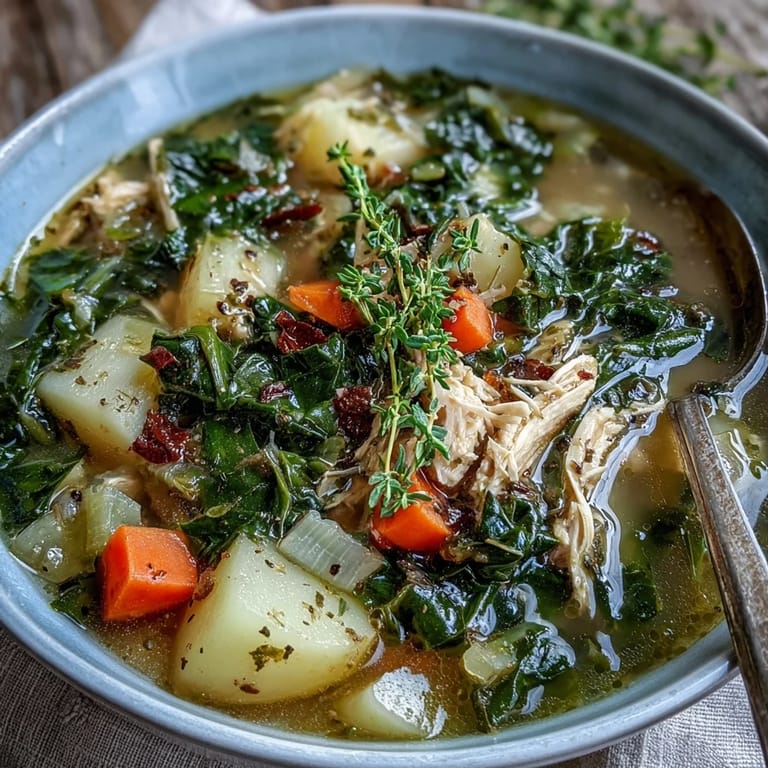
Save My mom used to make a version of this soup on Sunday afternoons, filling the kitchen with a smell so comforting it could convince anyone to sit down at the table. Years later, I realized what made hers so good wasn't anything fancy—just good chicken, honest vegetables, and those earthy collard greens cooking low and slow. One winter evening, I found myself recreating it from memory, tweaking as I went, and by the time I ladled it into bowls, I understood why people reach for this soup when they need to feel nourished. It became my go-to when someone I cared about needed feeding, or when I needed to feed myself through a rough week.
I made this for my sister when she moved into her first apartment with nothing but a soup pot and determination. Watching her face when she tasted it—that moment where someone realizes they can actually cook something real—that's when I knew this recipe mattered. She's made it dozens of times since, and now it's become something she makes for people she loves.
Ingredients
- Boneless, skinless chicken breasts or thighs: Thighs stay juicier and more forgiving, but either works; I've learned that either way, shredding is easier than you'd expect.
- Yellow onion, carrots, and celery: This is the foundation, the holy trinity that makes everything taste like actual food instead of ingredients.
- Potatoes: They thicken the broth naturally and add substance without being heavy; medium dices cook evenly.
- Collard greens: Remove those tough stems or you'll regret it; the leaves are where the magic lives and they soften beautifully.
- Garlic: Fresh is non-negotiable, and mince it yourself if you can—jarred garlic changes everything about the flavor.
- Low-sodium chicken broth: This matters more than you think because you'll be seasoning as you go; salty broth ruins that control.
- Bay leaf, thyme, oregano: Dried herbs work perfectly here; they bloom in the heat and create that recognizable, welcoming flavor.
- Olive oil: Just enough to build flavor without making the soup feel oily; two tablespoons is exact for a reason.
Tired of Takeout? 🥡
Get 10 meals you can make faster than delivery arrives. Seriously.
One email. No spam. Unsubscribe anytime.
Instructions
- Build your base:
- Heat oil in your pot over medium heat and let it shimmer, then add onion, carrots, and celery. You'll know they're ready when they've softened and the kitchen smells impossibly good—about 5 to 6 minutes.
- Wake up the garlic:
- Stir in minced garlic and cook just one minute; this is the difference between raw garlic notes and ones that blend into the background beautifully.
- Introduce the chicken and broth:
- Add chicken, potatoes, broth, and seasonings, then bring everything to a boil. Once it's rolling, reduce heat and let it simmer uncovered for 20 minutes until the chicken is completely cooked through.
- Shred and return:
- Remove chicken and shred it with two forks—it should fall apart easily. Return it to the pot so it can soak up all those flavors again.
- Finish with greens:
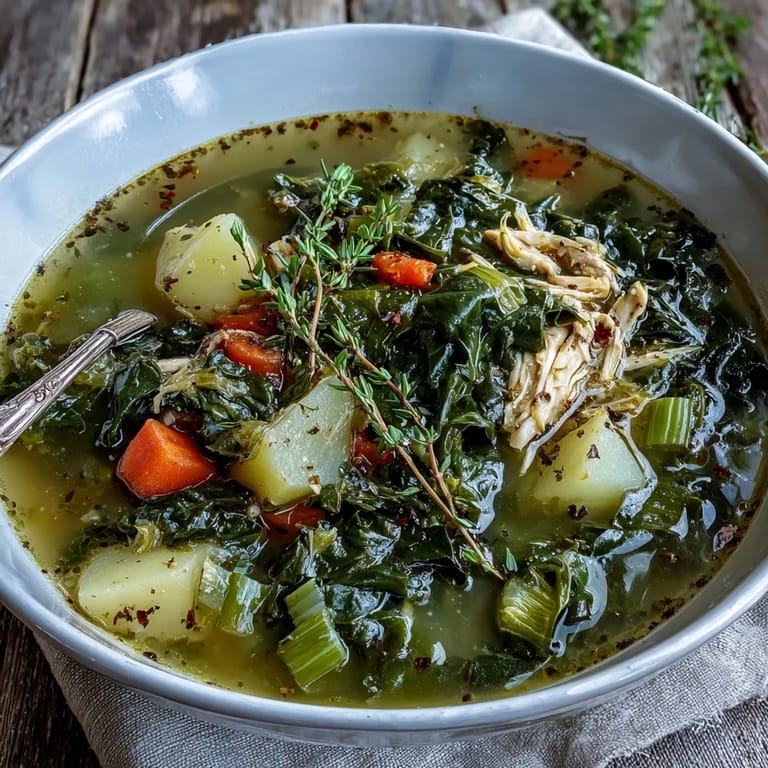
- Add chopped collard greens and simmer another 10 to 15 minutes, stirring occasionally. Watch how they transform from tough leaves into something silky and tender.
- Taste and adjust:
- Remove the bay leaf, then taste. This is your moment to add more salt, pepper, or even a squeeze of lemon if you want brightness.
 Save
Save There's something sacred about a pot of soup simmering on the stove while you handle something else in your life—work, worry, plans. By the time it's ready, the whole house feels warmer somehow, like you've been taken care of.
Why This Soup Works Every Time
The magic isn't in exotic techniques or unusual ingredients—it's in understanding that each component gets enough time to become itself. The vegetables soften, the chicken cooks through without drying out, and the greens lose their edge. I've made this with different vegetables left in the crisper drawer, and it's adjusted beautifully every time. Flexibility built into structure—that's what makes a recipe worth keeping.
Storage and Reheating
This soup lives in the refrigerator for four days without losing its soul, and the flavors actually deepen overnight. Freezing works too—I've portioned it into containers and pulled them out weeks later when I needed something instant and nourishing. Reheat gently over medium heat on the stovetop, adding a splash of broth if it's thickened too much.
Making It Your Own
Once you've made this base, you understand the structure well enough to improvise with confidence. Kale and Swiss chard work beautifully if that's what you have; white beans or corn add heartiness without changing the soul of the soup. The lemon juice trick I learned from someone who understood that brightness can wake up even the most familiar flavors.
- A pinch of chili flakes at the end adds depth without heat if you're careful with your pour.
- Fresh dill or parsley stirred in just before serving brings a lightness that rounds everything out.
- This freezes incredibly well, so making a double batch on a quiet Sunday means dinners sorted for weeks.
 Save
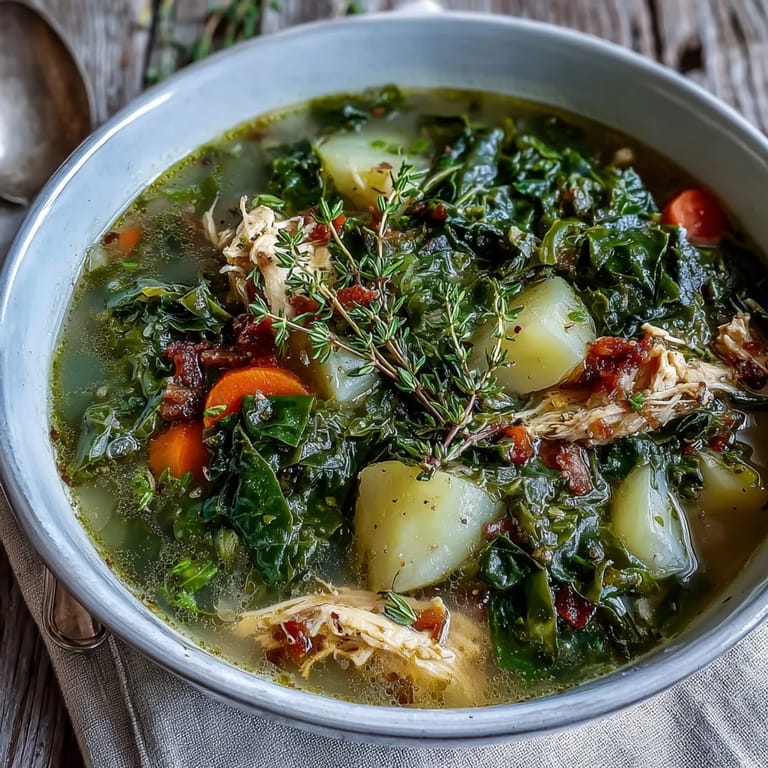
Save This is the kind of soup that teaches you something every time you make it, and that's the real reason to come back to it. It's never the same twice, and somehow, it's always exactly what you needed.
Recipe FAQ
- → Can I use other greens instead of collard greens?
Yes, kale or Swiss chard work beautifully as substitutes. Both hold up well during simmering and provide similar nutritional benefits.
- → How do I store leftovers?
Store in an airtight container in the refrigerator for up to 4 days. The flavors develop beautifully over time. Reheat gently on the stovetop.
- → Can I make this in a slow cooker?
Absolutely. Sauté vegetables first, then add everything to the slow cooker. Cook on low for 6-7 hours or high for 3-4 hours. Shred chicken before serving.
- → Is this freezer-friendly?
Yes, this soup freezes well for up to 3 months. Cool completely before transferring to freezer-safe containers. Thaw overnight in the refrigerator.
- → How can I add more protein?
Stir in cooked white beans, chickpeas, or leftover rotisserie chicken during the last 15 minutes of cooking for extra protein and heartiness.
- → What should I serve with this soup?
Crusty bread, cornbread, or crackers make perfect accompaniments. A simple side salad also pairs nicely for a complete meal.