 Save
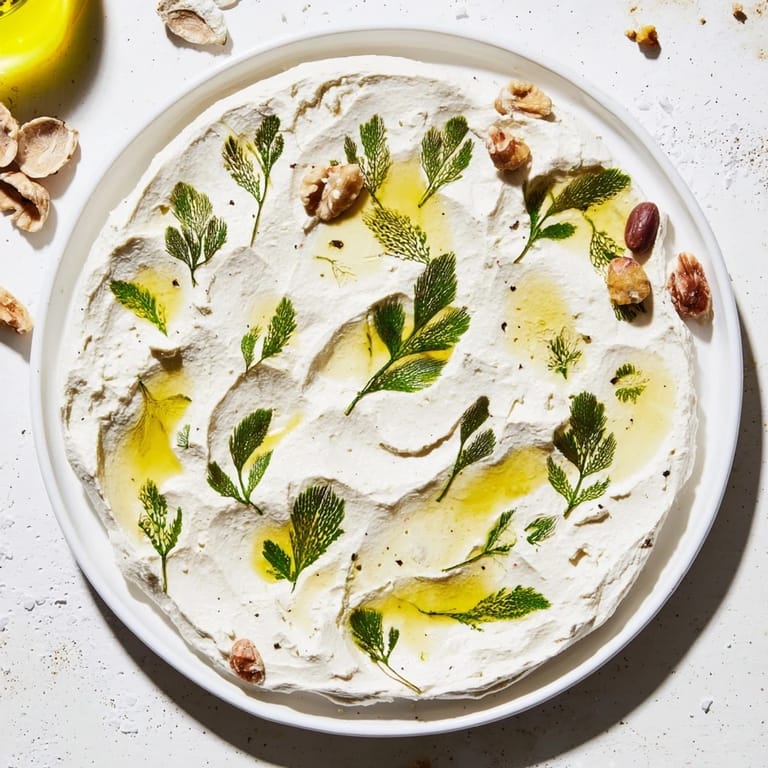
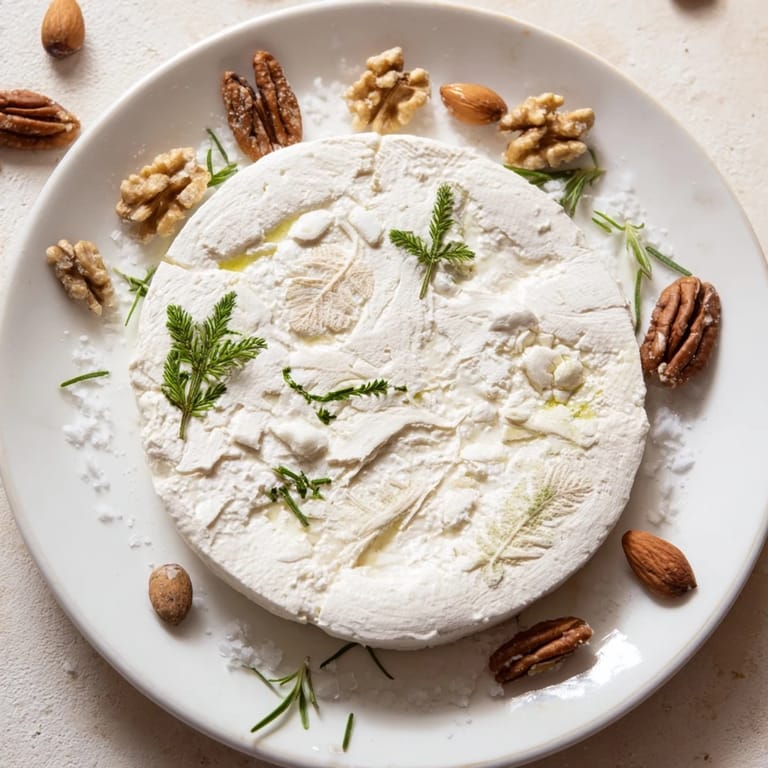
Save There's something almost magical about pressing fresh herbs into soft cheese and watching the indentations bloom like impressions from an ancient world. I stumbled onto this idea while organizing my spice cabinet one afternoon, admiring how delicate parsley looked against white surfaces, and thought: what if I could turn that moment into something edible? The Fossil Record was born from that simple curiosity, and it's become one of my favorite ways to transform humble ingredients into something that makes people pause mid-conversation.
I made this for a small dinner party where my friend brought her new partner, and I was nervous about impressing them. When they saw the cheese platter with those herb-pressed fossils and scattered shells, their faces lit up with genuine delight—not because it was complicated, but because it felt thoughtful and a little playful. Watching someone discover something beautiful on their own plate, rather than being told it's beautiful, is its own kind of reward.
Ingredients
- Soft cheese (250 g): Goat cheese gives tang, cream cheese offers richness, and ricotta brings earthiness—pick based on your mood, or blend two for complexity that develops as it warms on the plate.
- Fresh herbs (1 small bunch): Parsley creates delicate ferns, dill leaves feathery patterns, and cilantro adds surprising geometry; tender herbs imprint more cleanly than woody ones, and fresher stems flex rather than break.
- Olive oil (1 tbsp, optional): A light brush adds subtle gloss and helps herbs release their oils, though honestly the cheese has enough fat that this is more about appearance than necessity.
- Assorted nuts (100 g): In-shell nuts look more archaeological and taste fresher, but pre-cracked saves time; the mix of shapes matters more than the specific types, though walnuts and pecans stay crunchier longer than softer almonds.
- Sea salt (1/2 tsp, optional): A final sprinkle awakens all the flavors without needing to be heavy-handed.
Tired of Takeout? 🥡
Get 10 meals you can make faster than delivery arrives. Seriously.
One email. No spam. Unsubscribe anytime.
Instructions
- Prepare your canvas:
- Line a small tray with parchment paper so the cheese doesn't stick and you can move it confidently. This small detail prevents the kind of 3 a.m. moment where you're scraping cheese off ceramic.
- Shape the cheese gently:
- Spread the soft cheese into a rough 2 cm mound—imperfect edges feel more natural than a manicured circle. Use the back of a spatula to smooth just enough that herbs will catch and leave clean impressions.
- Press herbs into memory:
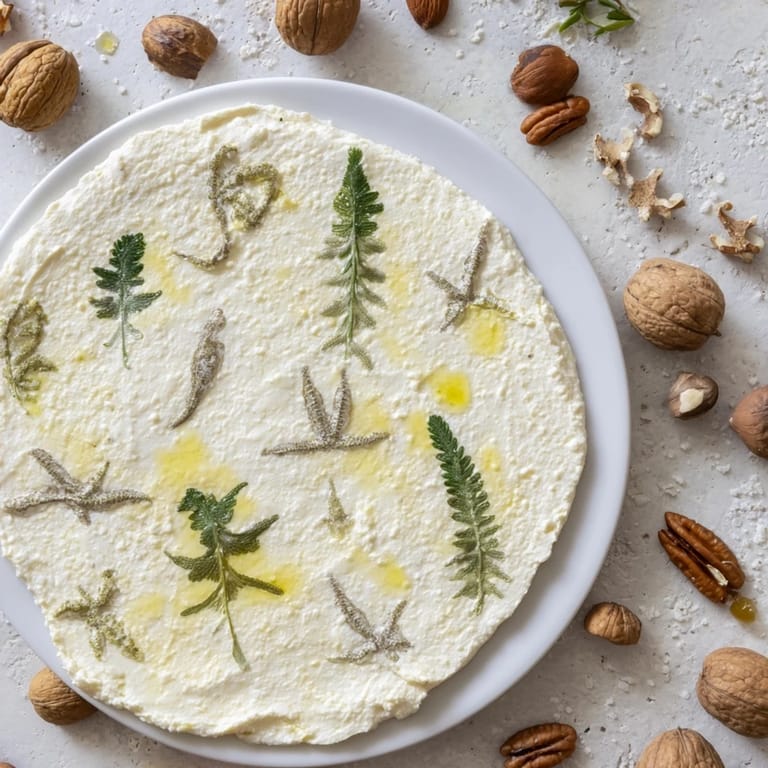
- Lay herb sprigs across the cheese surface with intention, pressing gently so they sink but don't disappear entirely. Lift slowly and straight up, leaving behind intricate shadows that look like they've been pressed for centuries.
- Add optional shine:
- A light brush of olive oil catches the light and makes the whole thing glow, though it's purely for vanity—skip it if you prefer matte or are short on time.
- Scatter the ancient world:
- Arrange cracked nuts around the cheese in a loose circle, letting some shell fragments fall naturally for that excavation-site authenticity. Think of it as arranging a landscape rather than placing objects.
- Finish with salt:
- Sprinkle sea salt if the mood strikes—it brightens flavors without overpowering the delicate cheese and herb story you've just created.
- Serve or chill:
- Bring it straight to the table for maximum impact, or cover loosely and refrigerate until guests arrive. The cheese firms slightly when cold, which some people prefer.
 Save
Save What started as a playful plating experiment has become something people ask for by name now—which still surprises me, because it feels more like edible art than a real recipe. But that's exactly the point: sometimes the most memorable food is the kind that makes people feel like they've discovered something, not been served something.
Choosing Your Cheese
The cheese is your foundation, and each type brings its own personality. Goat cheese has a subtle tang and slightly drier texture that herbs grip beautifully, while cream cheese is forgiving and rich, melting gently against your palate. Ricotta sits somewhere between—lighter than cream cheese but milder than goat—and absorbs the herb flavors more fully. I've also had wonderful results with burrata, though its creaminess means it spreads softer and requires a steadier hand. Trust your instinct about which flavor you crave, because that intuition usually leads somewhere delicious.
The Nut Selection Story
There's a reason I suggest in-shell nuts whenever possible: they feel more intentional, and their irregular shapes actually look more authentically archaeological than uniform nut pieces. Walnut halves catch light in surprising ways, pecans add warmth, and hazelnuts contribute unexpected sweetness. If you crack them yourself just before serving, the oils stay fresher and the crunch carries more presence in your mouth. That said, pre-cracked nuts are perfectly respectable when you're short on time—the point is the interplay between creamy and crunchy, not proving you labored over every detail.
Serving Suggestions & Pairings
The beauty of this dish is its flexibility in finding its place on a table. Crackers are the obvious partner, but I've also served it with thinly sliced rye bread, grilled sourdough points, and even crispy apple slices for a sweet-savory moment. A drizzle of honey creates an unexpected bridge between salty nuts and mild cheese, while a small dish of fig preserves transforms it into something almost dessert-like. Wine-wise, a crisp Sauvignon Blanc complements everything here, but so does an off-dry Riesling or even a light rosé if you're leaning into the warmer season.
- Pair with honey or fruit preserves for a sweet contrast that surprises and delights.
- Serve alongside crackers, grilled bread, or thin apple slices depending on your mood and season.
- A crisp white wine like Sauvignon Blanc or a light rosé completes the experience without overshadowing the delicate flavors.
 Save
Save This recipe reminds me that the most satisfying meals aren't always the most complicated ones—sometimes they're the simplest gestures that feel like small art. Serve it with joy and watch what happens.
Recipe FAQ
- → What cheeses work best for the soft base?
Soft cheeses like goat cheese, cream cheese, or ricotta provide a smooth texture ideal for pressing herbs and creating impressions.
- → Can I use different herbs for imprinting?
Yes, herbs like parsley, dill, cilantro, or chervil can be used alone or combined to create varied, delicate patterns on the cheese surface.
- → How should the nuts be prepared?
Use a variety of cracked nuts such as walnuts, pecans, almonds, or hazelnuts, preferably with some shells for a rustic, textured presentation.
- → Is it necessary to brush olive oil on the cheese?
Brushing olive oil is optional but adds a subtle sheen and enhances flavor, making the herb imprints more vivid.
- → How to serve this dish best?
Serve immediately with crackers or fresh bread to enjoy the creamy texture and crunchy nuts, or refrigerate until ready to serve.
- → Are there vegan alternatives for the soft cheese?
Plant-based soft cheeses can be used as substitutes to create a vegan-friendly version while maintaining texture and flavor.