 Save
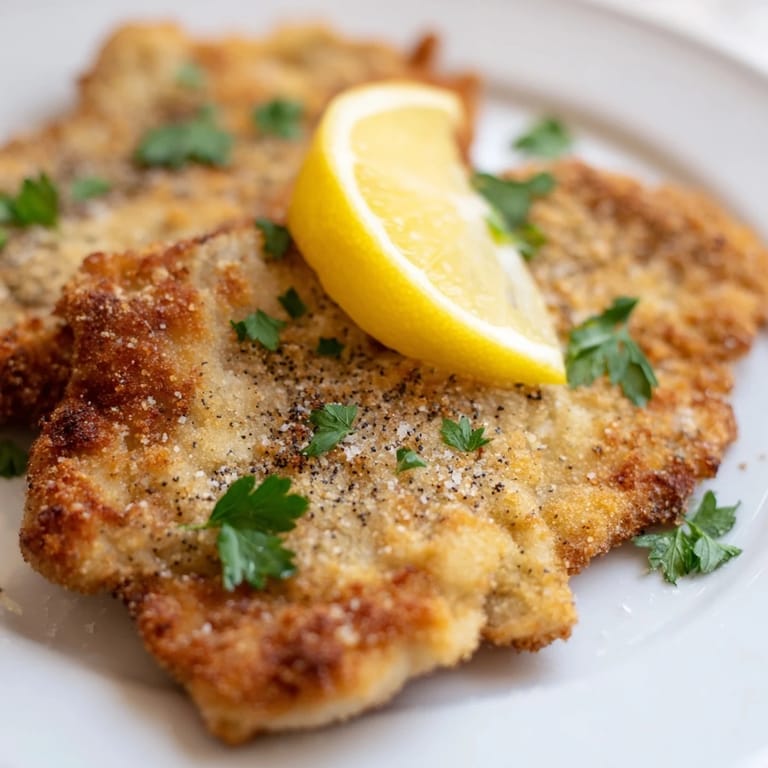
Save There's something deeply satisfying about the sound of a schnitzel hitting hot oil—that immediate aggressive sizzle that tells you everything is about to go perfectly. I learned to make this dish on a rainy Berlin afternoon, watching my neighbor's mother work with such casual confidence that it seemed almost effortless, though I'd soon discover the small details that separate a soggy mess from crispy perfection.
My first real schnitzel moment came when I made a batch for friends who were skeptical about the whole breading-and-frying approach to dinner. Within two bites, skepticism melted into requests for seconds, and I realized this wasn't just food—it was permission to serve something uncomplicated that still felt special.
Ingredients
- Pork chops or chicken breasts (4, about 150 g each): The thinner you pound these, the faster they cook and the more tender they become; aim for that paper-thin quality that makes you wonder if you've taken it too far until they hit the pan.
- All-purpose flour (100 g): This first layer creates the foundation for everything that comes after, so don't skip it even though it feels like a step that shouldn't matter.
- Eggs (2 large) and milk (2 tbsp): The egg mixture is your adhesive—it's what holds the breadcrumbs in place, and adding a splash of milk makes it thinner and easier to work with without dripping everywhere.
- Fine dry breadcrumbs (150 g): Use panko if you can find it for extra crispiness, but regular fine breadcrumbs work beautifully; the key is keeping them dry and unclumped before you use them.
- Vegetable oil or clarified butter (120 ml): Clarified butter (Butterschmalz) is the traditional choice and adds authentic flavor, but neutral oil works just as well if that's what you have on hand.
- Salt, black pepper, lemon wedges, and fresh parsley: These finish the dish, and the lemon is non-negotiable—it cuts through the richness and brightens every bite.
Tired of Takeout? 🥡
Get 10 meals you can make faster than delivery arrives. Seriously.
One email. No spam. Unsubscribe anytime.
Instructions
- Pound your meat paper-thin:
- Place each cutlet between two sheets of plastic wrap and use a meat mallet or rolling pin to pound them until they're about 1/4 inch thick. You'll feel the resistance give way as the meat flattens—that's when you know you're close to done, but keep going a bit further for the most tender result.
- Season generously:
- Both sides get salt and freshly ground black pepper; don't be shy here because the flour and breadcrumbs will dilute the flavor somewhat.
- Set up your breading station:
- Three shallow plates or bowls, one with flour, one with beaten eggs mixed with milk, one with breadcrumbs. This assembly-line setup prevents cross-contamination and keeps your hands cleaner than you'd expect.
- Dredge with precision:
- Flour first, then dip into the egg mixture, then breadcrumbs—but here's the crucial part: press the breadcrumbs on gently and let them adhere naturally rather than forcing them. Over-pressing creates a dense, heavy crust instead of that delicate crispy shell.
- Get your oil to the right temperature:
- Heat it in a large skillet over medium-high heat until a breadcrumb sizzles vigorously when dropped in. If the oil isn't hot enough, you'll get a soggy breading; too hot and it burns before the inside cooks through.
- Fry until golden brown:
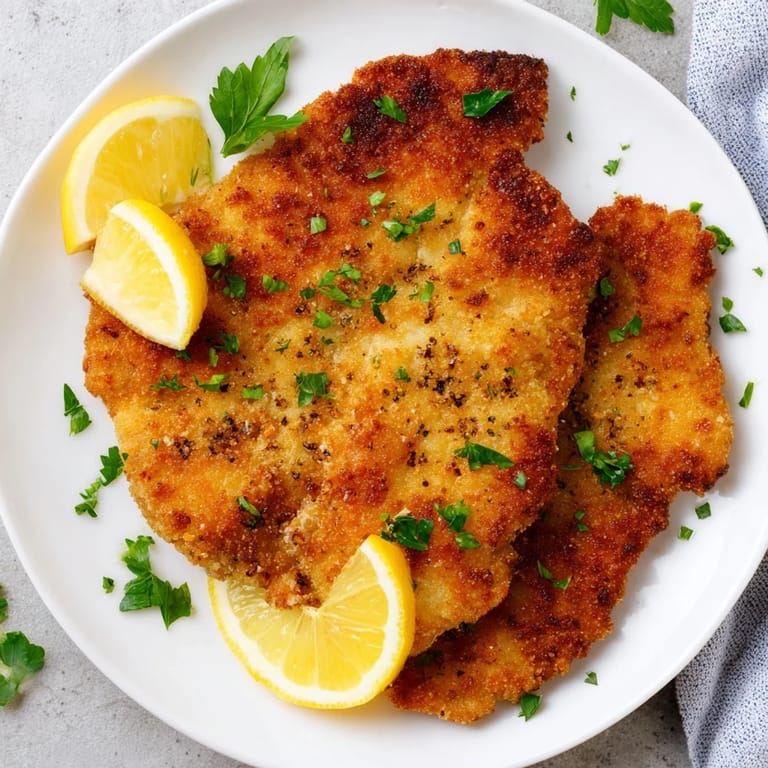
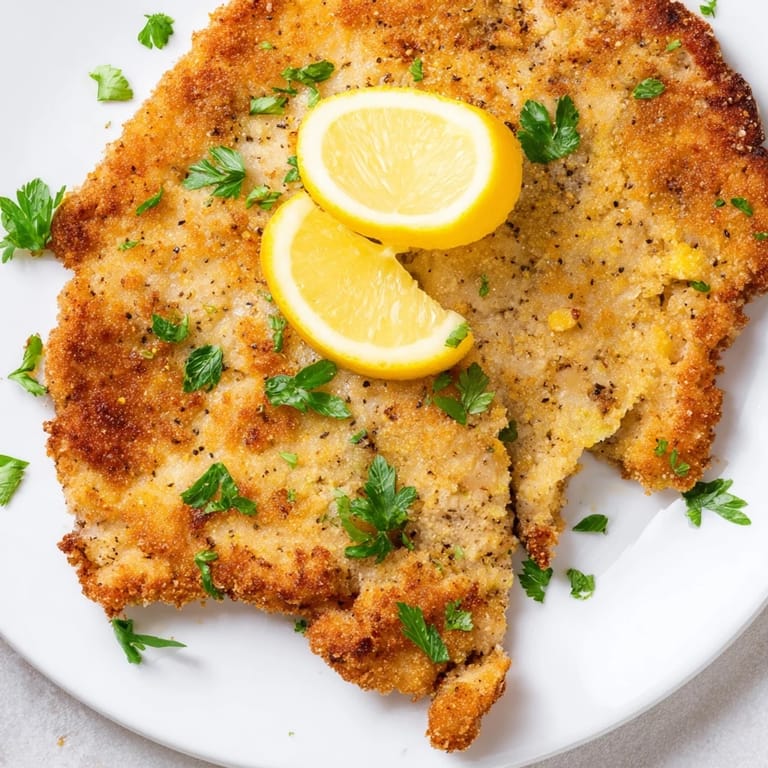
- Add your schnitzels (work in batches if your skillet is crowded) and fry for 2 to 3 minutes per side. You're looking for a deep golden-brown color that gleams, and the meat should feel firm when you press it gently with a spatula.
- Drain and serve immediately:
- Transfer each schnitzel to a paper towel-lined plate for just a minute or two to shed excess oil, then serve right away while the crust is still crispy and the inside is still hot.
 Save
Save There's a memory I hold of making schnitzel for my partner on a completely ordinary Wednesday night, nothing special planned, and watching their face light up when they realized this simple, golden cutlet tasted exactly like happiness. It became our go-to weeknight dinner, the one we make when we want to feel taken care of without the complexity.
The Art of the Perfect Pound
The pounding stage feels almost meditative once you get into it—there's a rhythm to it, a progression from thick and resistant to thin and yielding. The meat will eventually feel almost delicate under the mallet, almost translucent in places, and that's exactly right. I've learned that the angle of the mallet matters more than brute force; gentle, overlapping strikes work better than trying to smash it all at once.
Achieving That Legendary Crunch
The difference between a forgettable schnitzel and one that people remember comes down to respecting the breading process. Watch how other cooks work: they're patient with each layer, they use a light touch, they don't overcrowd the pan. The breadcrumbs should crackle between your teeth in the most satisfying way, a sound that tells you everything went right.
Serving and Pairing Suggestions
Schnitzel shines alongside cool, crisp sides that balance its richness. I've served it with buttery egg noodles, warm potato salad, even a simple arugula salad dressed with nothing but good lemon juice and olive oil. A cold pilsner or crisp German Riesling is the traditional pairing, though honestly, it's hard to imagine this dish not tasting incredible with whatever you happen to have on hand.
- Lemon wedges are essential—squeeze them over everything just before eating.
- Fresh parsley isn't just a garnish; it adds a peppery freshness that cuts through the richness beautifully.
- Serve everything hot, including the plates if you can manage it, because cool plates deflate the crispiness faster than you'd think.
 Save
Save Schnitzel is the kind of dish that proves simplicity done well beats complexity every single time. Make it, serve it with confidence, and watch people remember why they love eating good food.
Recipe FAQ
- → What cuts of meat are best for schnitzel?
Boneless pork chops or chicken breasts pounded thinly to about 1/4 inch thickness provide tender, even cooking and optimal texture.
- → How do I achieve a crispy coating?
Coat the meat lightly in flour, then dip in an egg-milk mixture, and finally coat evenly with fine dry breadcrumbs. Avoid pressing breadcrumbs too hard to keep crust crisp.
- → What fat is recommended for frying?
Vegetable oil or clarified butter (Butterschmalz) offer high heat tolerance and add subtle flavor for delicious frying results.
- → How long should the cutlets be fried?
Fry each side for about 2–3 minutes over medium-high heat until golden brown and cooked through, ensuring a juicy interior.
- → What traditional sides complement this dish?
Potato salad, cucumber salad, or fries are ideal accompaniments that balance the crispy, savory cutlets.
- → Can I substitute veal for pork or chicken?
Yes, veal is a classic choice for an authentic Wiener Schnitzel variation.