 Save
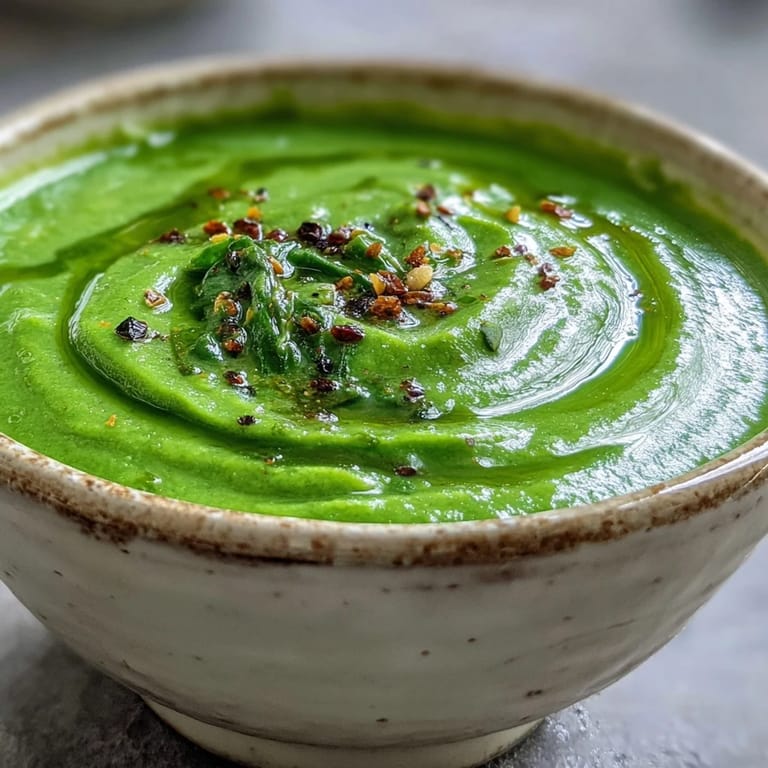
Save There's something almost magical about the moment a pile of green vegetables transforms into something so silky and nourishing you actually want to drink it straight from the bowl. My sister showed up one gray Tuesday afternoon feeling utterly depleted, and I had nothing but what was hiding in my vegetable drawer—broccoli getting slightly wrinkled, some asparagus, a bag of spinach I'd been meaning to use. An hour later, she was holding a steaming mug of this emerald soup, and I watched her shoulders literally drop as she took the first spoonful. That's when I realized this wasn't just lunch; it was somehow medicine disguised as comfort.
I made this soup for a friend recovering from being sick, and she texted me later saying she'd eaten it three days in a row. There's something about bright green food that feels like it's actively fixing you while you're eating it—whether that's science or psychology, I honestly don't care. What matters is that people come back for it, and that's never happened with my other soup recipes.
Ingredients
- Olive oil: Just one tablespoon is enough to coax sweetness from the onions and leeks without making this heavy.
- Onion, garlic, and leek: This trio is your flavor foundation—they soften into something almost caramelized, providing depth that lets the greens shine rather than disappear.
- Broccoli and asparagus: Cut broccoli into florets so they cook evenly, and slice asparagus into 2-inch pieces so it doesn't get lost in the blender.
- Baby spinach: It wilts down to almost nothing, which means you're fitting way more nutrition into each bite than you'd think possible.
- Raw cashews: Soak them first—this matters more than you'd expect, as it makes them blend into pure silk rather than grainy bits. If you're nut-free, coconut milk works just as well.
- Vegetable broth and water: Use low-sodium broth so you're in control of the salt level, and add water so the soup blends smoothly without becoming paste.
- Sea salt, black pepper, and nutmeg: The nutmeg is optional, but it adds a whisper of warmth that somehow makes everything taste more like itself.
- Lemon juice: This is non-negotiable—it wakes up all the green flavors and prevents the soup from tasting one-dimensional.
Tired of Takeout? 🥡
Get 10 meals you can make faster than delivery arrives. Seriously.
One email. No spam. Unsubscribe anytime.
Instructions
- Start your flavor base:
- Heat olive oil in a large pot over medium heat, then add your chopped onion, minced garlic, and sliced leek. You'll know it's working when the kitchen starts smelling sweet and fragrant instead of raw—about 4 to 5 minutes of gentle cooking.
- Bring in the sturdy greens:
- Add your broccoli florets and asparagus pieces, stirring for about 3 minutes so they get a light coating of oil and start to soften slightly.
- Build your broth foundation:
- Pour in the vegetable broth and water, bring everything to a boil, then lower the heat and let it simmer gently for 10 minutes until the vegetables are tender but not falling apart.
- Finish with the delicate greens:
- Stir in your spinach and drained soaked cashews, simmering for just 2 to 3 minutes until the spinach wilts and releases its nutrients into the pot.
- Blend to silky perfection:
- Remove from heat and use an immersion blender to puree everything until completely smooth and creamy. If you're using a regular blender, work in batches and be careful with the hot liquid—let it cool slightly first if you're nervous.
- Season with intention:
- Stir in salt, pepper, and nutmeg if you're using it, then squeeze in lemon juice and taste. This is your moment to adjust—add more lemon if it needs brightness, more salt if it needs depth.
- Adjust the consistency:
- If your soup is too thick, thin it with water or broth, a splash at a time, until it reaches that perfect spoonable-but-substantial texture.
- Serve with love:
- Ladle into bowls and drizzle with a little olive oil or a squeeze of fresh lemon if you want to feel fancy—you've earned it.
 Save
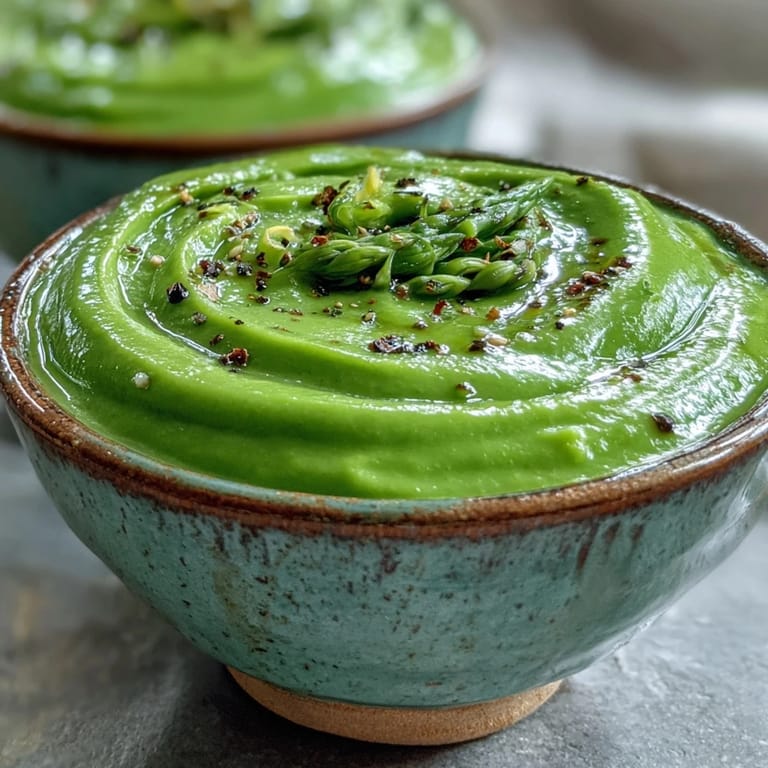
Save I've served this soup to people who claim they don't really like greens, and watched them eat an entire bowl without complaint. There's something about the texture being so smooth and the flavor so balanced that it stops being about eating your vegetables and starts being about wanting more.
Why This Soup Works as Medicine
The reason this soup shows up in your life when you need it most isn't just luck—it's because every single ingredient is doing actual work. Spinach and broccoli are loaded with vitamins C and K, asparagus feeds your gut bacteria, cashews add protein and magnesium, and the whole thing comes together in a way that your body absorbs easily. When you're run down or recovering, this is what you want to be eating.
Making It Your Own
This recipe is a framework, not a prison. I've made it with leeks swapped for extra garlic, with basil thrown in at the end, with a splash of coconut milk instead of cashew cream when I was out of nuts. The structure stays the same—aromatics, sturdy vegetables, delicate greens, blended smooth—but the specific greenery can shift depending on what you have or what sounds good. Some people add a pinch of ginger, others a handful of fresh herbs like parsley or dill right before serving.
Storage, Reheating, and Meal Planning
This soup keeps in the refrigerator for up to four days, and it actually tastes better on day two once the flavors have gotten to know each other. You can also freeze it in portions for up to three months—though I've never managed to keep it that long because I keep finding reasons to heat up a bowl. Reheat gently on the stove over low heat, stirring occasionally so it doesn't catch on the bottom of the pot.
- Make a double batch and freeze half so you always have emergency nutrition on hand.
- Serve it with crusty bread, over grains, or even poured into a mug if you're eating it standing up at your kitchen counter at 3pm on a Wednesday.
- Add a dollop of something at the end—cashew cream, olive oil, a squeeze of lemon, even crushed nuts if you want texture back after blending.
 Save
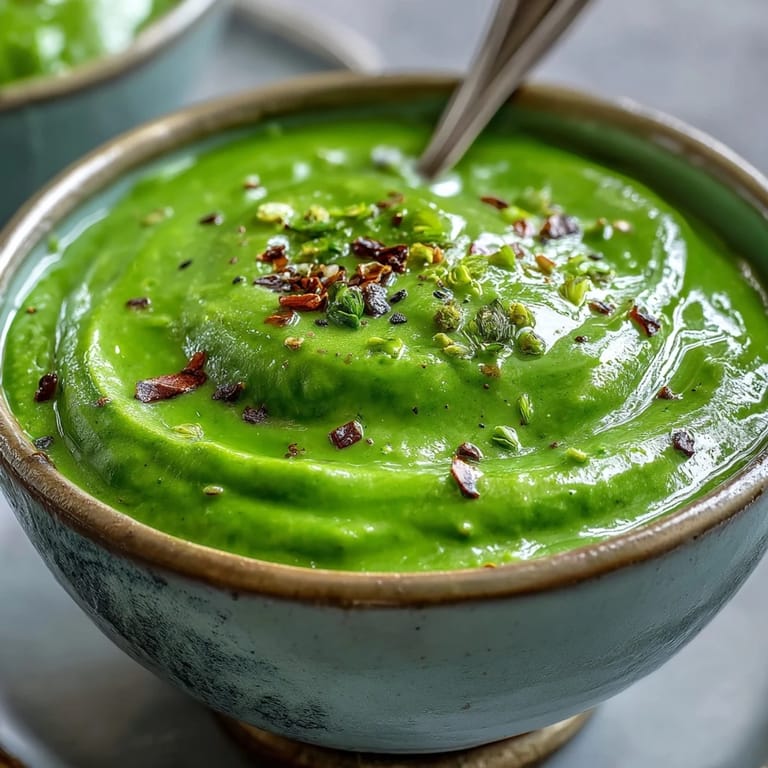
Save This soup has become my answer to so many different needs—when I want something nourishing, when someone I care about needs looking after, when I need to prove to myself that eating well can be easy and delicious at the same time. Make it once and you'll understand why it keeps coming back to my table.
Recipe FAQ
- → Can I make this soup nut-free?
Absolutely. Replace the cashews with full-fat coconut milk or silken tofu for similar creamy texture without nuts. Both alternatives create a smooth, velvety consistency while keeping the soup plant-based and satisfying.
- → How long does this soup keep in the refrigerator?
The soup stores well in an airtight container for 4-5 days. The flavors actually develop and deepen after a day or two. Reheat gently on the stovetop, adding a splash of water or broth if needed to restore consistency.
- → Can I use frozen vegetables instead of fresh?
Yes, frozen broccoli and spinach work well in this soup. Use frozen florets and spinach directly—no need to thaw first. The cooking time remains the same, though the final color might be slightly less vibrant than with fresh produce.
- → What's the purpose of soaking cashews?
Soaking raw cashews for 15 minutes softens them, making them blend completely smooth. This creates that luxurious, dairy-free creamy texture without any graininess. If you have a high-speed blender, you can skip soaking, but it helps achieve the silkiest results.
- → Can I freeze this soup?
This soup freezes exceptionally well for up to 3 months. Cool completely before transferring to freezer-safe containers, leaving space for expansion. Thaw overnight in the refrigerator and reheat gently, stirring occasionally and adding liquid if needed.
- → What can I serve with this green soup?
Crusty whole grain bread, warm naan, or roasted garlic toast make perfect accompaniments. For a complete meal, serve alongside quinoa, brown rice, or a simple green salad dressed with lemon vinaigrette. The soup also pairs beautifully with grilled vegetables or a protein source like chickpeas.