 Save
Save My aunt's kitchen in San Juan always smelled like guava paste and butter, and one afternoon she handed me a slice of her cheesecake with that gorgeous pink swirl running through it. I'd never thought to marry tropical fruit with creamy richness like that, but the moment it melted on my tongue, something clicked. Years later, I finally asked for her method, and what struck me wasn't just the recipe itself—it was how casually she described technique, as if swirling marmalade through cream cheese were the simplest magic in the world.
I made this for my partner's birthday dinner on a humid July evening, and watching their face when they tasted that first bite was worth every minute of the bake and chill time. The kitchen had been warm all day, but somehow the cool, tangy sweetness of the cheesecake felt like an act of love.
Ingredients
- Maria cookies (200g): These plain, slightly sweet biscuits crush into an ideal texture for a crust—they're sturdy enough to hold together but delicate enough to bind with just butter, unlike heavier graham crackers.
- Unsalted butter (80g, melted): Warm butter coats the cookie crumbs evenly and helps them compact into a crust that won't crumble when you slice.
- Granulated sugar for crust (2 tbsp): A touch of sweetness prevents the crust from tasting one-note or bitter after baking.
- Cream cheese (600g, softened): Softness is non-negotiable here—cold cream cheese creates lumps no amount of beating will fix, so leave it on the counter for at least an hour.
- Granulated sugar for filling (200g): This dissolves into the cream cheese and creates that silky mouthfeel that makes cheesecake irresistible.
- Sour cream (200ml): It adds tang and cuts through richness, keeping the cheesecake from feeling heavy or cloying.
- Large eggs (3): They bind the filling and give it structure, but overbeating them introduces air that creates cracks as the cheesecake cools.
- Pure vanilla extract (1 tsp): A quiet backbone that lets the guava and cream cheese shine without competing.
- Lime zest (optional): If you add it, the brightness echoes the guava and lifts the entire flavor profile—I never skip it now.
- Guava marmalade or paste (200g): This is where the magic lives; choose a quality brand because it's the star flavor, and the pectin helps it swirl beautifully through the batter.
- Water (2 tbsp): Just enough to loosen the marmalade so it doesn't sink to the bottom or stay in stubborn clumps.
Tired of Takeout? 🥡
Get 10 meals you can make faster than delivery arrives. Seriously.
One email. No spam. Unsubscribe anytime.
Instructions
- Prepare your stage:
- Preheat the oven to 160°C and line your springform pan with parchment on the base—this step feels small but saves heartbreak when you slide a spatula underneath later. Lightly grease the sides so the cheesecake releases cleanly.
- Build the crust:
- Pulse the Maria cookies in a food processor until they resemble fine sand, then toss with warm melted butter and sugar until every crumb glistens. Press this mixture firmly into the pan base, using the bottom of a measuring cup to compact it evenly, then bake for 10 minutes just until it sets enough to hold its shape.
- Cool and wait:
- Let the crust cool for a few minutes while you prep the filling—warm crust won't cause disaster, but cool crust prevents the filling from cooking too fast around the edges.
- Cream the base:
- Beat softened cream cheese and sugar together until it's smooth, pale, and fluffy, about 2–3 minutes, scraping the bowl often so no lumps hide in the corners. Add sour cream slowly and mix until the filling looks glossy and even.
- Fold in eggs gently:
- Add eggs one at a time, beating just until each one disappears into the batter—overworking here is the enemy. Stir in vanilla and lime zest so everything is incorporated but you haven't beaten extra air into the mixture.
- Pour and prepare for swirl:
- Spread the cream cheese filling over the cooled crust and smooth the top with a spatula so it's level. This creates a canvas for the guava.
- Warm the guava:
- Gently heat the marmalade in a small saucepan with water until it loosens into a pourable consistency—it should look like thick jam, not paste. If you're using guava paste instead, mash and stir it until it flows, adding water as needed.
- Swirl with intention:
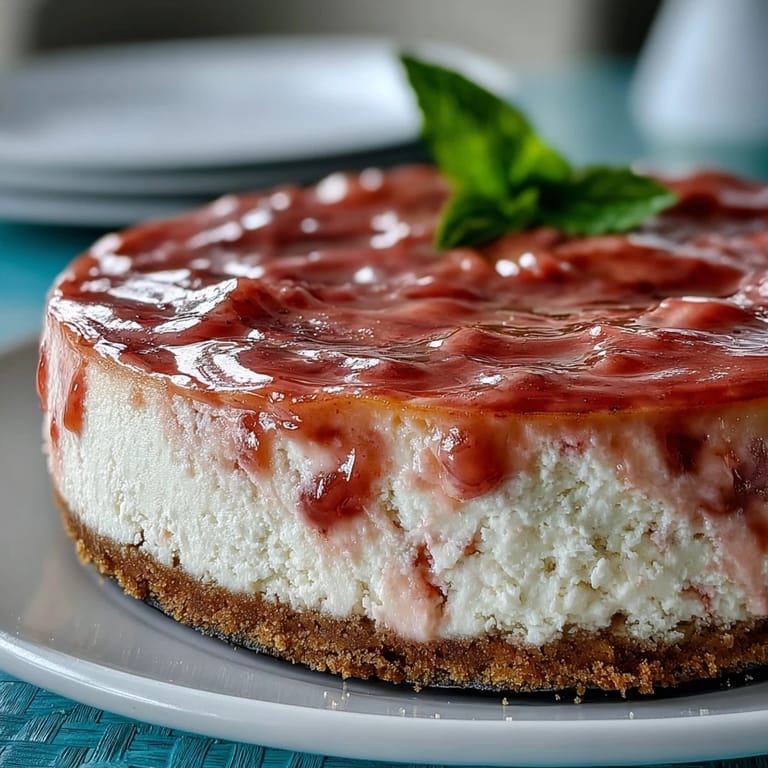
- Drop spoonfuls of guava across the top in a pattern, then drag a knife or skewer gently through the batter in one direction, then the opposite, creating that marbled effect that looks professional but feels intuitive. Don't overwork it or the colors blur into muddy brown.
- Bake low and slow:
- Bake for 50–55 minutes until the edges are set and puffed but the very center still jiggles slightly when you gently shake the pan—this means the residual heat will carry it through. Overbaked cheesecake cracks; underbaked feels slightly custardy but sets as it cools.
- Cool with the door cracked:
- Turn off the oven and crack the door open, letting the cheesecake cool in the gentle, fading heat for a full hour. This gradual temperature change is what prevents the top from splitting as the cake contracts.
- Chill and set:
- Refrigerate for at least 3 hours, though overnight is ideal—the cheesecake firms up and the flavors marry and deepen. A cold cheesecake slices cleanly and tastes more complex.
 Save
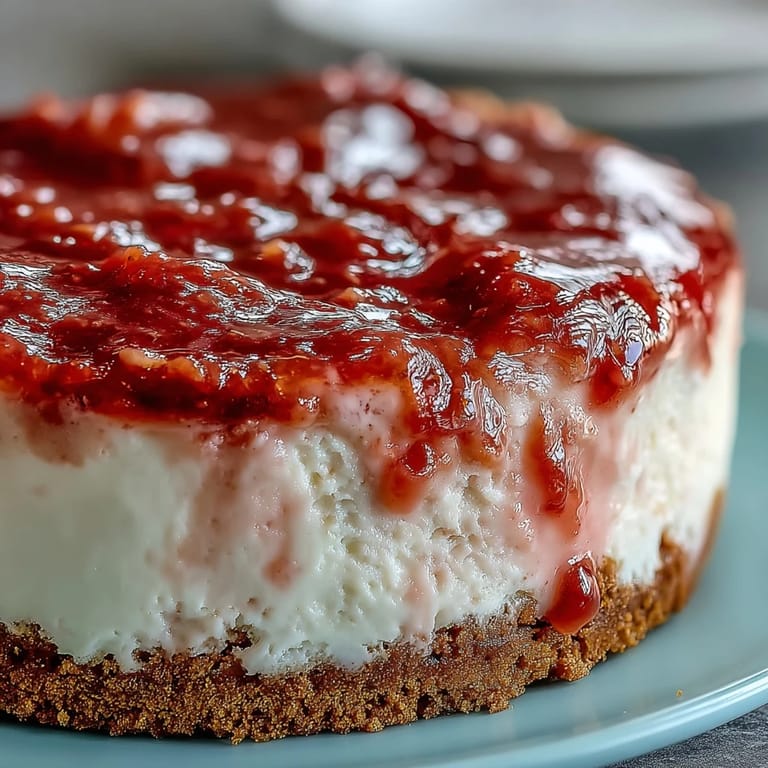
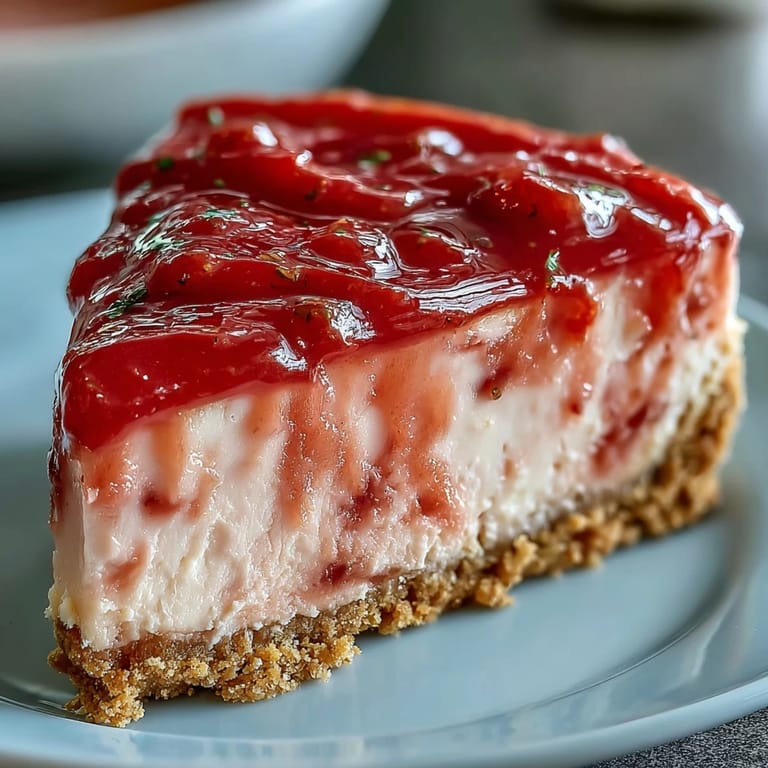
Save There's something almost meditative about watching that pink marbling bloom through the creamy filling, knowing that in a few hours something spectacular will emerge from the oven. This cheesecake has become my answer when someone asks what to bring to a summer gathering—it's memorable without being fussy, and it always tastes like you care.
The Guava Choice Matters
I've used three different brands of guava marmalade, and the difference between a thick, quality paste and the watery, overly sweet stuff at the back of the shelf is night and day. The good marmalade has actual guava pieces and pectin that helps it hold its swirl; the cheap version runs thin and blends into the filling until you can't see the pattern anymore. Spend a little extra on a brand you'd eat straight from the jar, because you're tasting it prominently.
Slicing and Serving Secrets
A long, thin knife dipped in hot water between each cut is the difference between a beautiful slice and a mangled mess, and I wish I'd known this before my first attempted serving. Run the knife under the hot water, wipe it clean, make one cut, then repeat—patience pays off in presentation.
Variations and Pairings
Once you've made this version, you'll start imagining other swirls and ways to play with it, which is exactly the point. The foundation is so solid that it welcomes creativity, whether that means switching the fruit or adjusting the crust.
- Graham crackers work beautifully if Maria cookies aren't available, though they're crunchier and less delicate.
- A glass of cold Moscato or sparkling rosé complements the tropical sweetness and creamy texture perfectly, cutting through richness with gentle fruit notes.
- Fresh guava slices or mint leaves on top turn a delicious dessert into something that looks worthy of a special occasion.
 Save
Save This cheesecake asks very little of you except patience and gentleness, which somehow feels like the recipe is teaching you something about cooking itself. Make it once, and you'll understand why my aunt served it with such quiet confidence.
Recipe FAQ
- → What makes guava cheesecake different from traditional cheesecake?
Guava cheesecake features a tangy tropical fruit swirl throughout the creamy filling, adding a distinctive Latin American flavor profile. The guava marmalade creates a beautiful marbled appearance while introducing a sweet-tart contrast that complements the rich cream cheese base perfectly.
- → Can I use fresh guava instead of marmalade?
Yes, you can puree fresh guava with a bit of sugar and cook it down until thickened to create your own swirl. Alternatively, guava paste works well when warmed with water to achieve a pourable consistency similar to marmalade.
- → Why must the cheesecake cool in the oven with the door cracked?
This gradual cooling method prevents sudden temperature changes that can cause cracking on the surface. The controlled cooling allows the cheesecake to set gently while maintaining a smooth, pristine appearance.
- → What can I substitute for Maria cookies?
Graham crackers make an excellent substitute for Maria cookies in the crust. Digestive biscuits or even vanilla wafers can work as well, though they may slightly alter the traditional flavor profile of this Latin American dessert.
- → How long should guava cheesecake chill before serving?
For optimal texture and flavor, refrigerate the cheesecake for at least 3 hours, though overnight chilling is ideal. This allows the flavors to meld and the filling to firm completely, ensuring clean slices and the best eating experience.
- → What beverages pair well with guava cheesecake?
The tropical flavors pair beautifully with Moscato, sparkling rosé, or a crisp dessert wine. For non-alcoholic options, try chilled guava juice, sparkling water with lime, or a creamy latte to complement the rich texture.