 Save
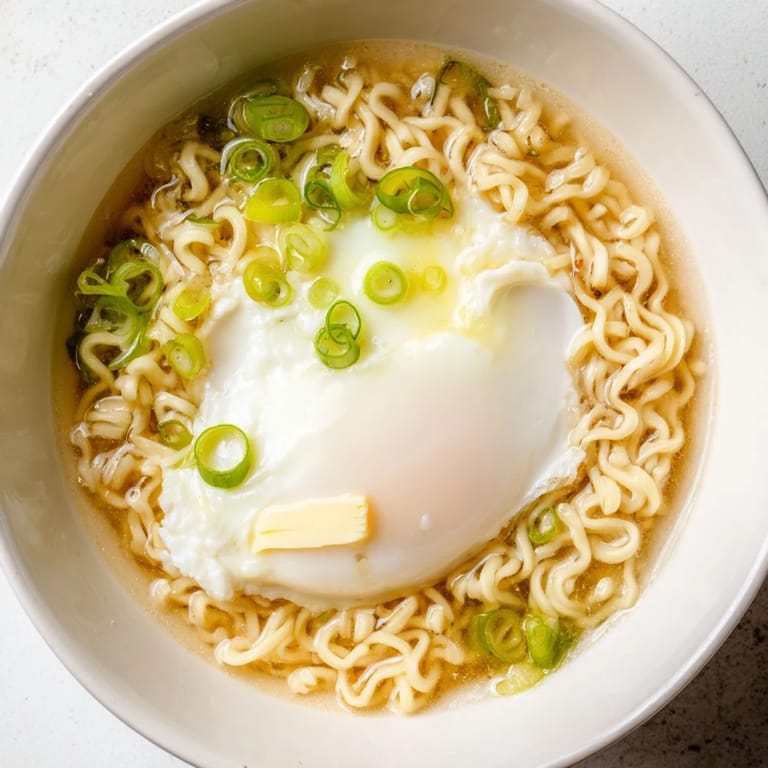
Save There's something about the quiet moment when you're standing over a pot of boiling water at 11 PM, too hungry to wait for anything elaborate, and you realize that instant ramen doesn't have to taste like shortcuts. I discovered this while working late one evening, and instead of just dumping in the noodles and seasoning, I cracked an egg directly into the simmering broth. Watching that white set while the yolk stayed liquid felt like a small act of kitchen magic. Suddenly it wasn't just ramen—it was dinner.
I made this for my roommate once when she came home exhausted from a double shift, and I'll never forget how her face changed when she took the first spoonful. She said it was the most comforting thing she'd eaten all week. That's when I realized this humble bowl was about more than convenience—it was about showing up for someone with something warm and thoughtful.
Ingredients
- Instant Noodles: Any brand works, but the thinner ones get softer faster, which I learned after overcooking too many packages.
- Water: Two cups is the sweet spot—enough to poach the egg and keep the noodles swimming without diluting the flavor.
- Ramen Seasoning Packet: The packet matters more than you'd think; that umami is what makes this feel intentional rather than desperate.
- Unsalted Butter: One tablespoon melts into the hot broth and creates a subtle richness that tastes wildly expensive for 50 cents.
- Egg: Large matters here because a small egg might overcook before the broth does; this is a detail that shifts everything.
- Scallion: The fresh slice adds a brightness that keeps the dish from feeling too heavy, even after a long day.
- Chili Flakes or Chili Oil: Optional, but the heat cuts through the richness in a way that feels like balance.
- Soy Sauce: A splash if you want deeper savory notes, though the packet usually handles that already.
Tired of Takeout? 🥡
Get 10 meals you can make faster than delivery arrives. Seriously.
One email. No spam. Unsubscribe anytime.
Instructions
- Start with boiling water:
- Bring two cups of water to a rolling boil in a small saucepan. You'll know it's ready when the bubbles are aggressive and the steam rises with purpose.
- Add the noodles:
- Drop in the ramen nest and stir gently to separate the strands. They'll soften according to the package, usually 2–3 minutes, and you want them just tender but still with a whisper of bite.
- Prepare for the egg:
- When the noodles are nearly done, reduce the heat to low. This gentler simmer is crucial because it won't scramble the egg white before the yolk stays soft.
- Crack and poach:
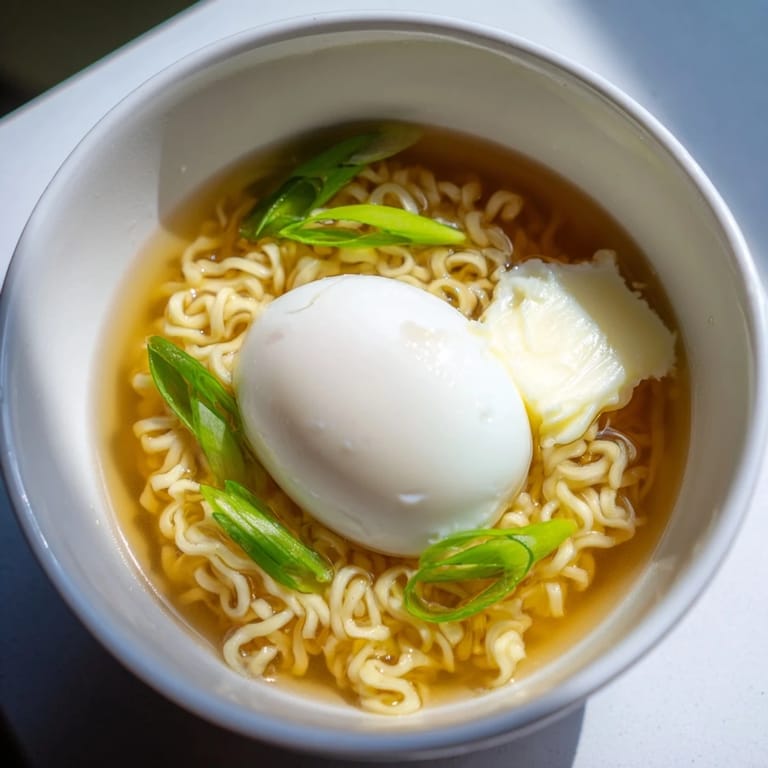
- Crack the egg directly into the center of the simmering broth without stirring, then cover the pot. In 1–2 minutes, the white will set into silky clouds while the yolk stays liquid gold in the middle.
- Build the flavor:
- Stir in the seasoning packet and butter, watching the butter melt into glossy ribbons through the broth. This step tastes better than it has any right to.
- Finish and serve:
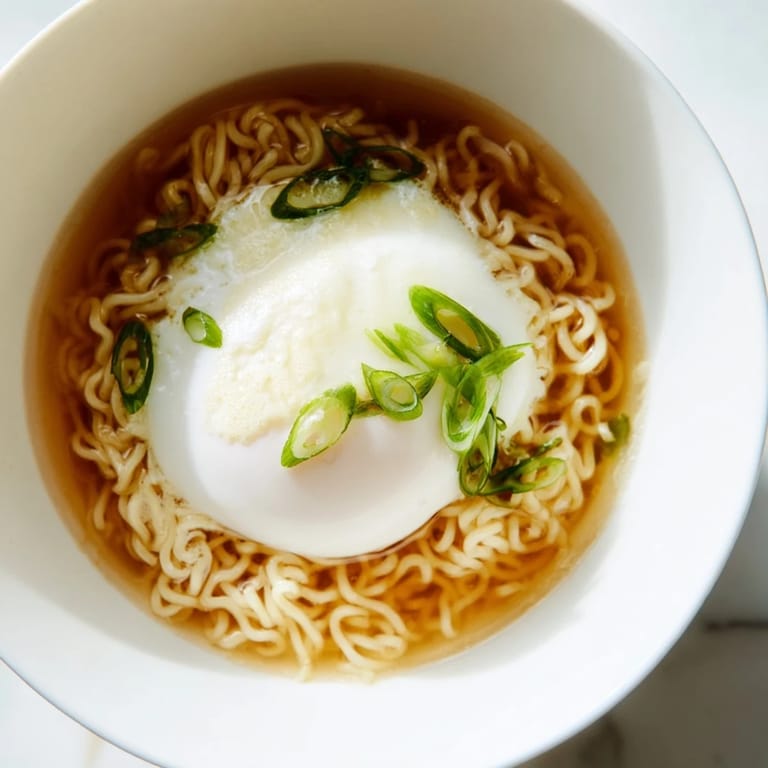
- Pour everything into a bowl, scatter the scallions across the top, and add chili flakes or soy sauce if your mood calls for it. Eat it while the bowl is still steaming.
 Save
Save This bowl has become my version of comfort in a way that expensive dinners never quite manage. It's not about being fancy; it's about understanding what your body needs and giving it something that actually delivers.
Why This Works When Nothing Else Feels Right
There's a reason instant ramen became iconic—it answers a real need without apology. But the magic happens when you treat it like you mean it. The egg doesn't just add protein; it transforms the whole bowl into something that feels less like survival food and more like self-care. I've noticed that the five minutes it takes to go from boiling water to eating makes space for a pause in chaotic days, which might be the real reason this recipe stuck with me.
Variations That Keep It Fresh
Once you master the basic version, the door opens to small shifts that feel like discoveries. I've added wilted spinach, corn kernels that warm through, or thin mushroom slices that soak up the broth like tiny sponges. A drizzle of toasted sesame oil at the end feels luxurious but costs almost nothing. The seasoning packet can be swapped with miso paste if you want earthier notes, or you can dial up the soy sauce if you crave deeper savory punch. None of these changes take longer, but each one feels like a choice rather than just heating water.
Small Lessons From a Humble Bowl
This recipe taught me that shortcuts and care aren't opposites. You can make something quickly and still make it thoughtfully. The difference between ramen that tastes like resignation and ramen that tastes like comfort is often just one egg and a moment of intention.
- If the water is boiling too vigorously when you add the egg, gently reduce the heat first or the yolk will get cooked faster than you want.
- Leftover scallions can go into eggs, soups, or scattered over rice; don't let them wilt in your fridge.
- This works in a dorm room, a tiny kitchen, or a fancy apartment—it doesn't care about your circumstances.
 Save
Save Some of the best moments happen in small bowls with simple ingredients and the willingness to pay attention. Make this when you need to remember that taking care of yourself doesn't require complexity.
Recipe FAQ
- → How do you achieve a soft egg in this dish?
Crack the egg directly into the simmering broth and cover; cook 1–2 minutes until the white is set but yolk remains silky.
- → Can I add vegetables to this preparation?
Yes, spinach, corn, or mushrooms can be added for extra nutrition and texture.
- → What enhances the flavor besides the butter and egg?
Fresh scallions add brightness, while chili flakes or soy sauce offer additional depth and heat.
- → Is this method compatible with all instant noodle brands?
Yes, any brand can be used following the same technique for a creamy, flavorful dish.
- → How can I make the egg firmer if preferred?
Extend covered cooking time to 3–4 minutes for a firmer egg while keeping yolk creamy.