 Save
Save I still remember the afternoon I first arranged a keto platter for friends who'd started their low-carb journey. I was nervous, honestly—worried it wouldn't feel celebratory or satisfying enough without the bread and pasta we'd always relied on. But as I layered those jewel-toned meats, creamy cheeses, and crisp vegetables across a large wooden board, something magical happened. My friend Sarah picked up a slice of prosciutto wrapped around aged cheddar and closed her eyes. That single moment of pure enjoyment told me everything I needed to know. This wasn't deprivation; it was abundance in its truest form.
Years later, I hosted a dinner where half the table was keto and half wasn't. Instead of making two meals, I built this platter and added fresh bread on the side. Everyone reached for the same board, mixing and matching according to their own preferences. It became the centerpiece of the evening—not just food, but the moment where everyone felt welcomed exactly as they were.
Ingredients
- Sliced Roast Beef (120 g): This is your protein foundation, and buying it freshly sliced from the deli counter makes all the difference in texture. The slight marbling keeps it tender, and you can roll or fold it for visual interest.
- Smoked Turkey (120 g): The mild smoke flavor bridges different palates beautifully. It's leaner than other meats here, so pair it with creamy cheeses to balance richness.
- Prosciutto (120 g): This ingredient teaches patience—drape it loosely rather than bunching it, and it becomes translucent and delicate. It's the fancy touch that signals you care.
- Salami, Sliced (100 g): Choose a quality cured salami; the spice and depth it brings matters more than quantity. The peppery notes create complexity that makes everything else taste better.
- Aged Cheddar, Cubed (100 g): Aged cheddar has crystalline texture and sharp flavor that cuts through the richness of meats. Those tiny crunchy bits are flavor explosions.
- Gruyère, Sliced (100 g): Nutty and creamy, Gruyère is the diplomat of cheese boards, playing well with everything. Its subtle sweetness rounds out salty cured meats.
- Manchego, Sliced (100 g): This Spanish cheese brings toasted, buttery notes that feel indulgent. It's slightly firm, so thin slices work better than cubes.
- Cherry Tomatoes (1 cup, halved): The acidity here is essential—it brightens the palette and prevents the richness from becoming cloying. Halving them makes them easier to grab and eat one-handed.
- Cucumber, Sliced (1 cup): Cool, hydrating, and refreshing, cucumber is your palate cleanser. The slight crunch matters, so slice just before serving.
- Radishes, Sliced (1 cup): Their peppery bite and crisp snap add textural contrast you didn't know you needed. They're the overlooked MVP of vegetable platters.
- Baby Bell Peppers, Sliced (1 cup): Sweet and colorful, these provide visual drama and a gentle sweetness that balances salt. The variety of colors makes the platter sing.
- Celery Sticks (1 cup): Raw celery's clean, watery crunch grounds the platter and pairs perfectly with rich cheeses and meats. Don't skip it.
- Green and Black Olives (1/4 cup each): These provide umami depth and visual contrast. The briny punch cleanses your palate between bites of rich foods.
- Fresh Parsley, Chopped (2 tbsp): This final herbal whisper lifts the entire platter, adding freshness that prevents everything from feeling heavy.
- Extra Virgin Olive Oil (2 tbsp): A light drizzle matters—it adds shine, helps flavors meld, and signals intention and care in the arrangement.
- Freshly Ground Black Pepper: Fresh pepper tastes completely different from pre-ground. The aromatic oils matter here, making each bite more complex.
Tired of Takeout? 🥡
Get 10 meals you can make faster than delivery arrives. Seriously.
One email. No spam. Unsubscribe anytime.
Instructions
- Gather and Prepare Your Canvas:
- Pull out your largest serving platter—this isn't the time to be modest with space. Let it sit at room temperature for a few minutes. Arrange all ingredients within arm's reach so you're not hunting for something mid-creation. This is meditative work, not rushed.
- Build Your Meat Foundation:
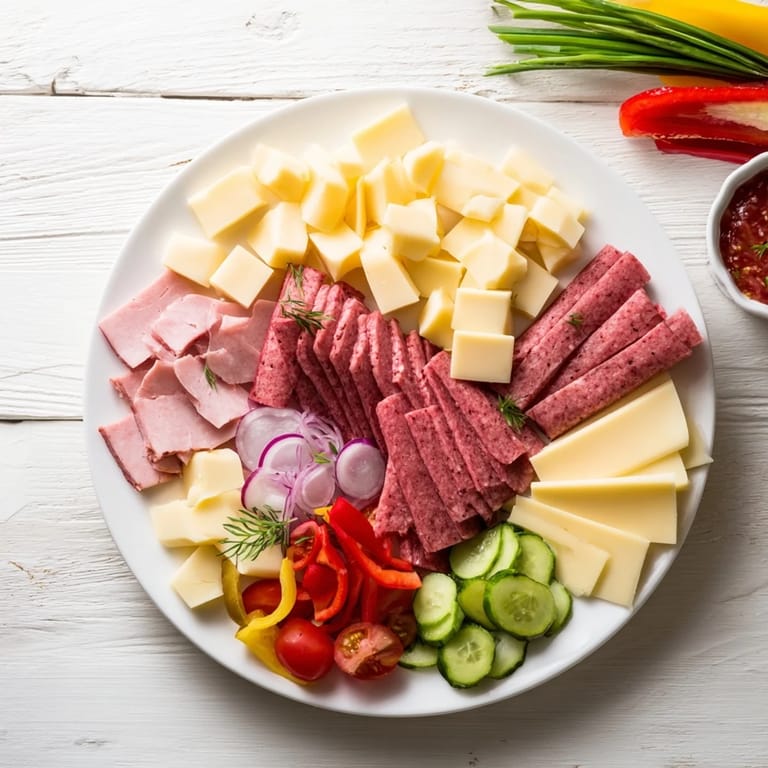
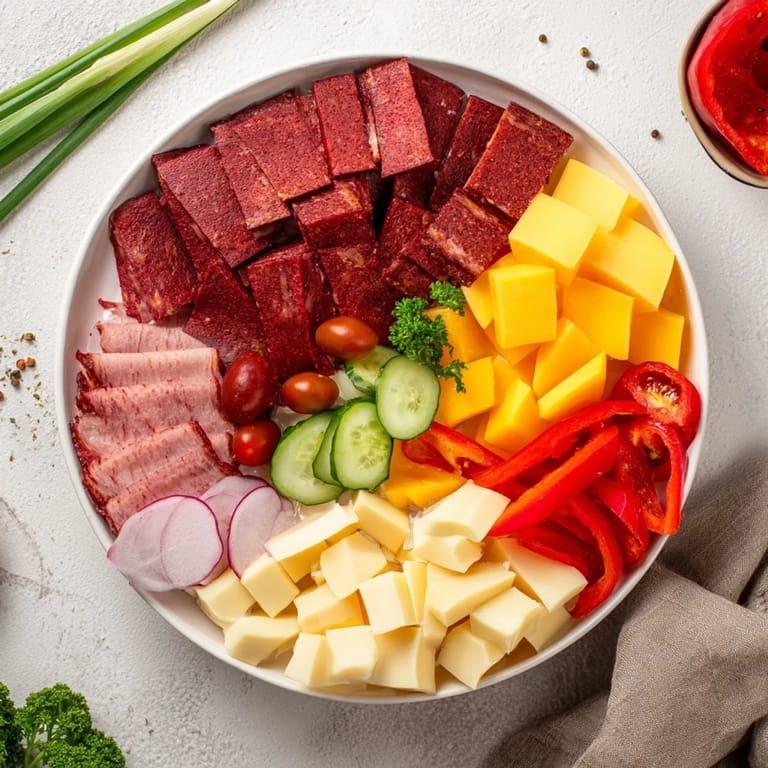
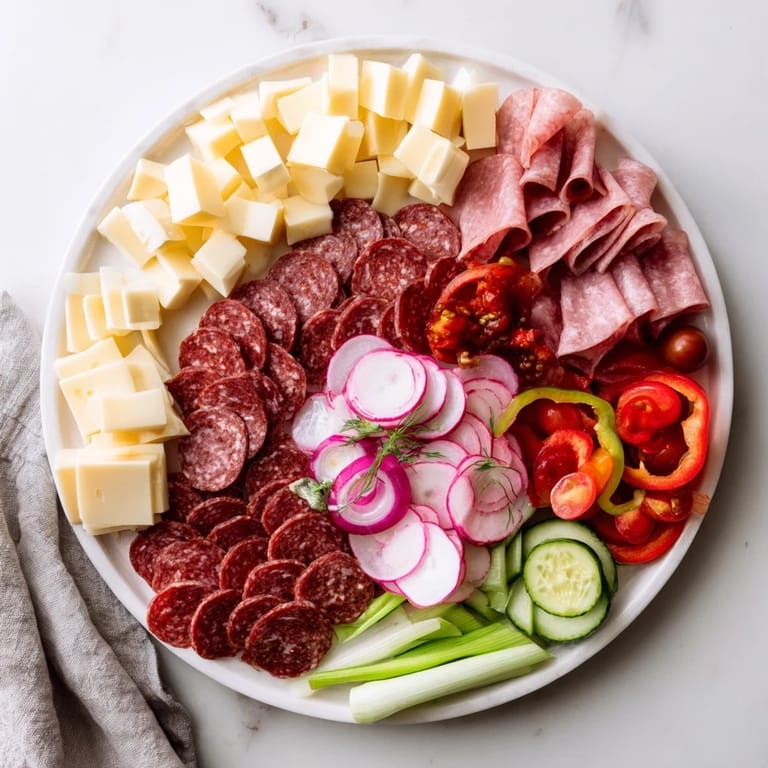
- Start by arranging the meats in clusters, keeping each type together. Drape the prosciutto loosely so light passes through it, creating an ethereal quality. Fold or roll the roast beef for height variation. The goal is abundance that looks organic, not surgical. Let your hand guide the arrangement rather than overthinking placement.
- Layer in the Cheeses:
- Next to the meats, arrange cheese in complementary groupings. Cube the aged cheddar for visual texture, slice the Gruyère thin so it appears generous, and let the Manchego stand proud. The contrast between neat cubes and organic slices creates visual interest. Step back and squint—do you see pockets of color and form?
- Fill the Gaps with Vegetables:
- Now comes the fun part: filling negative space with color. Group similar vegetables together—all tomatoes in one area, cucumber nearby, radishes in another spot. This isn't random; it's controlled abundance. The arrangement should guide the eye around the platter in a natural journey.
- Scatter the Jewels:
- Distribute olives throughout the platter, tucking them into spaces and creating little pockets of briny richness. They're like hidden treasures that guests discover as they explore.
- Finish with Oil, Pepper, and Herbs:
- Just before serving, drizzle the vegetables lightly with olive oil—this adds shine and helps flavors meld. Grind fresh black pepper generously over everything, then scatter the parsley. This final step is your signature, so do it with intention.
 Save
Save What I've learned is that this platter does something special: it gives everyone at the table permission to eat exactly what their body wants, without negotiation or explanation. I watched my sister, who was exhausted from restrictive dieting, finally relax. She filled her plate with cheese and salami and olives, and for the first time in months, she wasn't anxious about it. That's when I realized this recipe isn't really about keto—it's about abundance without apology.
Building a Platter That Tells a Story
Every great platter has rhythm and flow. Think of it like composing music: you need high notes (the bright colors and crisp vegetables), bass notes (the rich, salty meats), and middle registers (the cheeses that bridge everything). Start with your protein foundation, which is like your main melody. Then add cheeses as your harmony, and vegetables as the percussion that adds life and movement. The olive oil and herbs are your final crescendo. When you step back, the platter should feel balanced but not symmetrical—symmetrical feels planned, while balanced feels abundant.
Making It Your Own
The beauty of this format is its flexibility. Swap in roasted chicken for roast beef if that's what you love. Try smoked salmon if you want richness with a different character. Different cheeses—perhaps Emmental or sharp cheddar variants—completely change the mood. Add pickled vegetables for tang, or include nuts if you're not concerned with cross-contamination. I once added thinly shaved fennel instead of celery, and it transformed the entire experience. This platter is your playground, and these ingredients are just the starting suggestions.
Serving This with Intention
This platter is meant to encourage lingering and conversation. Set it in the center of the table where everyone can reach it, and watch how it naturally becomes a focal point. Pair it with sparkling water and fresh lemon, or a crisp white wine if that suits your gathering. I've learned that the best meals are the ones where people keep reaching back, finding something new each time. The keto aspect? It's almost incidental. What matters is that you've created something beautiful and nourishing that brings people together.
- Prep ingredients the morning of but assemble only an hour before serving for maximum freshness and crunch.
- Leave the cheese at room temperature for 15 minutes before serving so flavors bloom and texture is perfect.
- Consider your guests' preferences—offer keto dips like aioli or herbed cream cheese on the side for those who want them, but don't assume everyone needs them.
 Save
Save This platter has become my answer to so many dinner scenarios. It's elegant enough for unexpected guests, nourishing enough to be a complete meal, and flexible enough to honor everyone at the table. I hope it becomes something special in your kitchen too.
Recipe FAQ
- → Can I substitute the meats in this platter?
Yes, you can swap the roast beef or smoked turkey for alternatives like roast chicken or other cured meats according to your preference.
- → What vegetables work best for this dish?
Non-starchy vegetables such as cherry tomatoes, cucumbers, radishes, baby bell peppers, and celery sticks provide fresh texture and vibrant color.
- → How should the platter be arranged for best presentation?
Group meats densely by type on the platter, place cheeses beside them with contrasting colors and shapes, and fill gaps with vegetables in clusters for balance and appeal.
- → Are there suitable garnishes to enhance flavor?
Adding green and black olives throughout adds flavor and color, while a light drizzle of extra virgin olive oil and freshly ground black pepper enhances the overall taste.
- → What tools are recommended to prepare this platter?
A large serving platter, a sharp knife, cutting board, and small bowls for olives or extras will help with neat assembly and presentation.