 Save
Save I stumbled onto this dish by accident during a particularly chaotic Tuesday night when I had three friends arriving from different continents all at once. One was craving Mediterranean flavors, another missed the vibrant Asian stir-fries from her childhood, and the third was homesick for Middle Eastern spices. Instead of cooking three separate meals, I had a spark of inspiration: what if I celebrated all three cuisines on a single plate, letting each cluster shine on its own while inviting people to mix and match as they pleased? The result was something unexpectedly magical—a meal that felt like a story told in three languages.
That first dinner with my friends turned into a four-hour conversation where we kept going back for bites, each person gravitating toward different clusters and then slowly stealing from each other's plates. My friend from Athens kept saying the eggplant tasted exactly like her grandmother's cooking, while my friend from Tokyo was delighted to find crisp snap peas cooked in sesame oil. And then there was the quiet moment when my friend from Lebanon tasted the chickpea mixture and smiled without saying anything—sometimes that says everything. That meal taught me that food isn't just about flavor; it's about bringing people together across their own histories.
Ingredients
- Extra-virgin olive oil: The Mediterranean cluster needs good quality oil—it's the base that carries the oregano and garlic, so don't skip on this one.
- Eggplant: Dicing it into smaller pieces helps it cook evenly and absorb the aromatics without getting mushy.
- Red bell pepper: Choose one that feels firm and has thick walls; it'll give you better texture when cooked.
- Zucchini: Slice it about a quarter-inch thick so it stays slightly tender-crisp rather than turning to mush.
- Cherry tomatoes: Halving them releases their juice into the pan, creating a light sauce that coats everything.
- Garlic and oregano: These two are the flavor backbone—mince the garlic fresh and use dried oregano rather than fresh for this application.
- Toasted sesame oil: This is your Asian flavor anchor, so buy the darker variety that's been properly toasted.
- Shiitake mushrooms: They hold their shape better than button mushrooms and have a deeper, earthier flavor that stands up to bold seasonings.
- Snap peas: Keep them whole for maximum crunch and visual appeal.
- Carrot: Julienne it thin so it cooks quickly and stays vibrant.
- Soy sauce or tamari: Both work beautifully; choose tamari if you need gluten-free.
- Ginger and rice vinegar: Fresh ginger adds brightness, and rice vinegar brings subtle sweetness to balance the soy.
- Chickpeas: Canned works perfectly here—just drain and rinse them well to remove excess sodium.
- Bulgur or quinoa: Quinoa is naturally gluten-free and has a lighter texture, while bulgur adds chewiness and earthiness.
- Cumin, coriander, and cinnamon: These three spices together create that warm Middle Eastern soul—toast them briefly in a dry pan if you have whole seeds for even more flavor.
- Fresh parsley and lemon juice: The brightness of lemon and the herbaceous quality of parsley finish the Middle Eastern cluster perfectly.
- Feta cheese and sesame seeds: Feta adds salted tang, while toasted sesame seeds bring textural contrast.
- Fresh mint or cilantro: Choose one or mix both—either way, add it right at the end so it stays vivid and aromatic.
Tired of Takeout? 🥡
Get 10 meals you can make faster than delivery arrives. Seriously.
One email. No spam. Unsubscribe anytime.
Instructions
- Mise en place:
- Chop, slice, and julienne every vegetable and have them arranged on your counter before you turn on any heat. This is the secret to not getting rushed—three pans will be going simultaneously, and you need to move quickly without scrambling.
- Mediterranean magic:
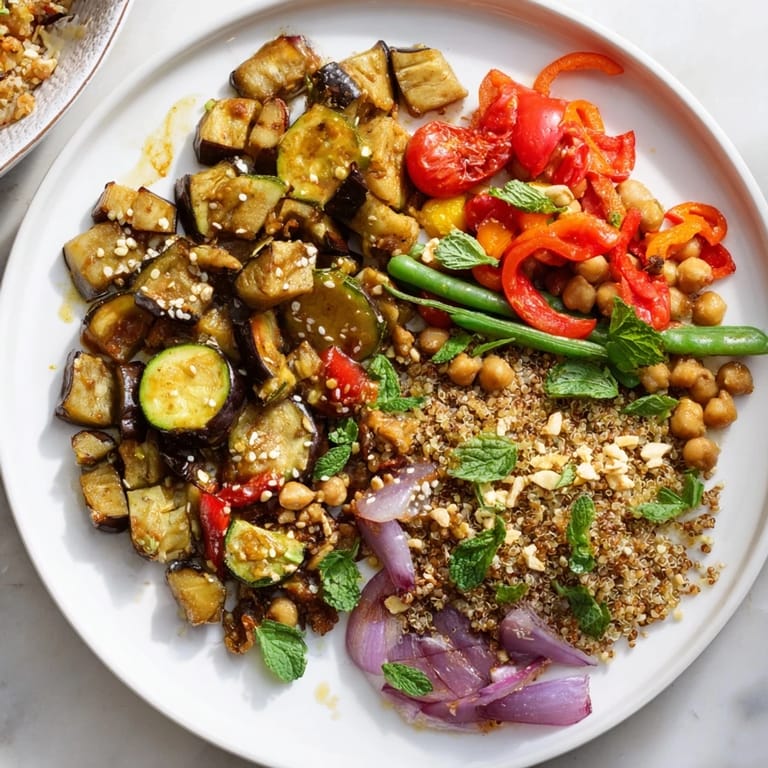
- Heat your olive oil over medium heat and start with the eggplant first because it needs the most time. After three minutes, add the peppers and zucchini, then finish with the tomatoes and garlic so they don't brown before everything else is cooked. The whole thing should smell incredibly fragrant, like you've bottled a trip to Greece.
- Asian precision:
- Sesame oil has a lower smoke point, so keep your heat at medium-high and don't walk away. The mushrooms release moisture first, then the snap peas add their bite, and the carrot catches the light as it softens—this cluster comes together in about six or seven minutes total.
- Middle Eastern warmth:
- Start with the red onion so it has time to soften and lose its sharp bite, then add the chickpeas and grain. The spice mixture will bloom in the heat, filling your kitchen with that distinctive aroma that makes people pause and ask what smells so good.
- The moment of truth:
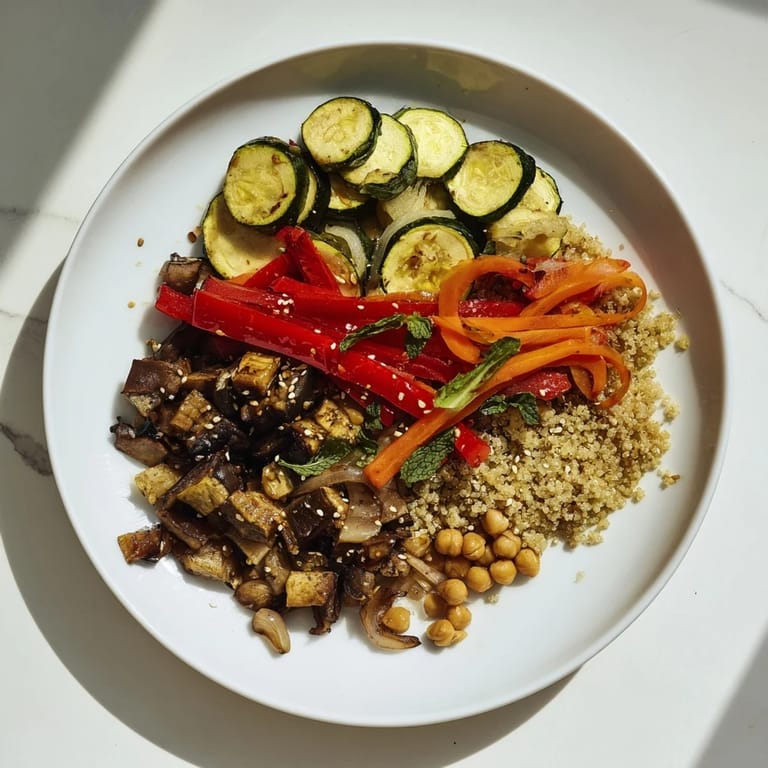
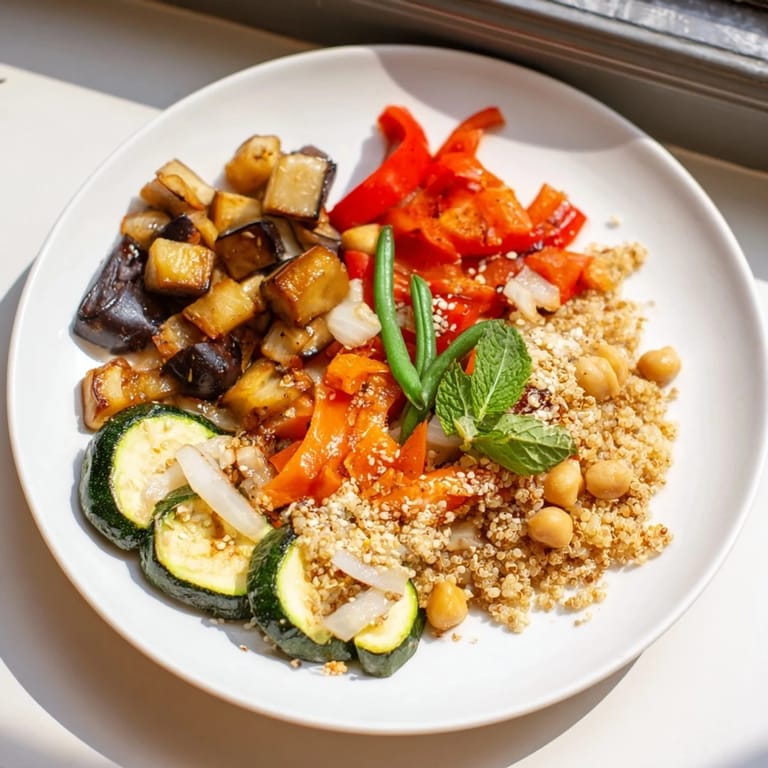
- Once all three clusters are done, arrange them on a large platter like you're composing a painting—the Mediterranean warmth on one side, the Asian brightness next to it, and the Middle Eastern richness completing the trio. Let people build their own experience from there.
 Save
Save What I love most about this dish is watching people eat it—there's always that moment where someone takes a bite of one cluster, then reaches over to taste another, then suddenly they're mixing all three together and discovering something they didn't expect. It transforms eating from a solitary act into a small adventure at the table.
Making It Your Own
The beautiful thing about this recipe is that it's a framework, not a rigid rule. If you love fennel more than zucchini, swap it in. If chickpeas don't speak to you, try white beans or lentils in the Middle Eastern cluster. I've made this with grilled chicken added to the Mediterranean portion, crispy tofu in the Asian cluster, and roasted lamb scattered over the Middle Eastern mix—each version told a different story and felt completely authentic.
Cooking for a Crowd
This recipe scales beautifully for larger gatherings. I've tripled it for dinner parties and found that people naturally gather around the platter, talking and tasting and stealing bites from each other's plates. The clusters stay warm in covered skillets on a low heat while people eat, so you're not stressed about timing everything to the second.
Wine and Serving Suggestions
Serve this with flatbread for scooping and soaking up the vegetable juices, or alongside steamed rice to catch the aromatics. A crisp Sauvignon Blanc plays beautifully with all three clusters, cutting through the richness while complementing the spices. If you prefer red wine, a light-bodied Pinot Noir has enough elegance to dance between the Mediterranean herbs and Middle Eastern spices without overpowering anything.
- Double the feta and sesame seeds if you want the garnishes to be more prominent and textured.
- Make this a vegan feast by skipping the feta and serving it exactly as is—it doesn't need anything else.
- Leftovers are incredible cold the next day as a grain bowl base or salad foundation.
 Save
Save This dish reminds me that the best meals are the ones where people feel seen—where their cravings and their histories are honored on a single plate. Cook it, taste it, and let your table become a moment of global connection.
Recipe FAQ
- → How are the flavor clusters prepared?
Each cluster is cooked separately in a skillet with its own blend of oils, vegetables, and seasonings to bring out distinct regional flavors.
- → Can I add protein to the dish?
Yes, grilled chicken, tofu, or lamb can be incorporated into any cluster to boost protein content.
- → What garnishes complement the clusters?
Toasted sesame seeds, fresh mint or cilantro, and crumbled feta cheese add texture and brightness to the dish.
- → Is this suitable for gluten-free diets?
Use quinoa and tamari instead of bulgur and soy sauce to make the dish gluten-free.
- → What are good serving suggestions?
Serve warm with flatbread or steamed rice, allowing diners to mix and match flavors for a satisfying meal.