 Save
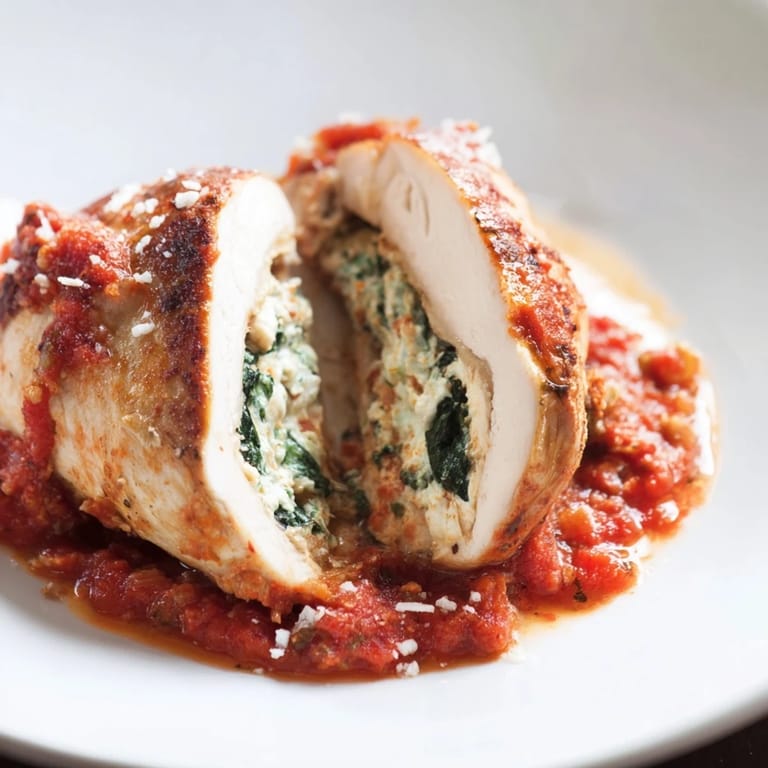
Save My neighbor handed me a container of her homemade ricotta one Saturday morning, still warm and slightly grainy in the best way. I had chicken breasts thawing and spinach wilting in the crisper, so I did what any practical cook would do: I cut a pocket into the meat and stuffed everything inside. The smell that filled my kitchen that afternoon, ricotta bubbling through the edges and tomato sauce simmering around golden chicken, made me feel like I'd stumbled onto something worth keeping. This dish has been on repeat ever since.
I made this for a friend recovering from surgery, someone who needed real food but nothing too heavy. She called me two days later asking for the recipe, saying it tasted like care in a dish. I think she was right. Sometimes the best meals are the ones that feel like a hug without trying too hard, just good ingredients doing their job well.
Ingredients
- Boneless, skinless chicken breasts: Look for evenly sized pieces so they cook at the same rate, and don't be afraid to pound them gently if one side is much thicker.
- Ricotta cheese: Whole milk ricotta gives you the creamiest filling, but part-skim works if you want to lighten things up without losing too much richness.
- Fresh baby spinach: Chop it fine so it blends into the filling smoothly, and if it's wet from washing, pat it dry or the mixture gets soupy.
- Parmesan cheese: Freshly grated melts better and tastes sharper than the pre-shredded kind, which often has anti-caking agents.
- Garlic cloves: Mince them small for the filling so you get flavor in every bite, and save the bigger pieces for the sauce where they'll soften and sweeten.
- Lemon zest: Just half a lemon's worth cuts through the richness and makes the filling taste brighter without being obviously citrusy.
- Crushed tomatoes: Use a good quality canned brand, the kind that tastes like summer even in January, because the sauce is simple and the tomatoes really show.
- Onion: A small one is plenty, and if you dice it fine it practically dissolves into the sauce and adds sweetness.
- Dried oregano and Italian herbs: These bring warmth and familiarity, the kind of flavor that makes your kitchen smell like an Italian grandmother is visiting.
- Olive oil: Use it for searing and sautéing, it handles the heat and adds a fruity backbone to both the chicken and the sauce.
Tired of Takeout? 🥡
Get 10 meals you can make faster than delivery arrives. Seriously.
One email. No spam. Unsubscribe anytime.
Instructions
- Preheat and prep:
- Set your oven to 375°F and pull out your oven-safe skillet. This is the kind of dish that goes from stovetop to oven, so having everything ready makes the process feel smooth instead of frantic.
- Mix the filling:
- Combine ricotta, chopped spinach, Parmesan, minced garlic, Italian herbs, lemon zest, salt, and pepper in a bowl until it looks like a thick, spoonable paste. Taste it now, this is your chance to adjust seasoning before it goes inside the chicken.
- Create the pockets:
- Lay each chicken breast flat and use a sharp knife to cut a horizontal slit through the thickest part, creating a pocket without cutting through the other side. Season the outside generously with salt and pepper.
- Stuff the chicken:
- Spoon the ricotta mixture into each pocket, packing it in gently but not so much that it bursts out. Use toothpicks to close the openings if the filling wants to escape.
- Sear for color:
- Heat olive oil in your skillet over medium-high heat and sear the stuffed breasts for 2 to 3 minutes per side until they turn golden. You're not cooking them through, just building flavor and texture.
- Build the sauce base:
- In the same skillet, sauté the chopped onion in a bit more olive oil until it's soft and translucent, about 3 minutes. Add the garlic and let it bloom for another minute, stirring so it doesn't burn.
- Simmer the tomatoes:
- Stir in the crushed tomatoes, oregano, sugar, salt, and pepper, and let everything bubble gently for 5 minutes. The sugar balances the acidity and makes the sauce taste fuller.
- Nestle and bake:
- Place the seared chicken breasts into the sauce, spooning some over the tops so they stay moist. Slide the skillet into the oven and bake uncovered for 20 to 25 minutes, until the chicken reaches 165°F in the thickest part.
- Finish and serve:
- Pull out the toothpicks, sprinkle with extra Parmesan or torn basil if you have it, and serve the chicken with plenty of that tomato sauce. It's best eaten hot, with something to soak up every last bit of sauce.
 Save
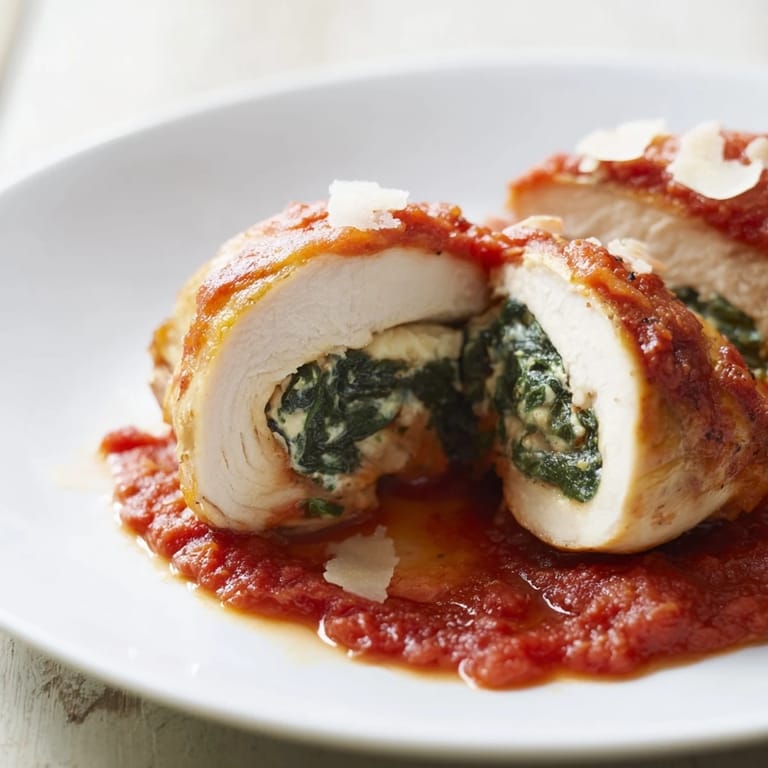
Save One evening I served this with a simple arugula salad and good bread, and my husband said it tasted like we were on vacation somewhere warm and unhurried. I didn't tell him it took less than an hour. Some meals just have that effect, they slow you down and make the table feel like the best place to be, even on a regular Tuesday.
How to Make the Filling Extra Creamy
If your ricotta feels grainy or dry, whisk in a tablespoon of heavy cream or a little extra olive oil before mixing in the other ingredients. This smooths everything out and makes the filling almost mousse-like. I also like to let the filling sit for a few minutes after mixing so the spinach releases its moisture and everything melds together, then I give it one more stir before stuffing.
What to Serve Alongside
This chicken is hearty enough to stand on its own, but it loves being paired with something that soaks up the tomato sauce. I usually go for crusty bread, buttered pasta, or even creamy polenta. A crisp green salad with a sharp vinaigrette cuts through the richness and makes the whole meal feel balanced. If you're feeding a crowd, roasted vegetables like zucchini or bell peppers fit right in.
Storage and Reheating Tips
Leftovers keep well in the fridge for up to three days, stored in an airtight container with the sauce spooned over the top to keep the chicken moist. Reheat gently in a covered dish in a 325°F oven for about 15 minutes, or in the microwave in short bursts so the filling doesn't split. The flavors actually deepen overnight, so don't be surprised if day two tastes even better.
- Freeze individual portions in sauce for up to two months, then thaw in the fridge overnight before reheating.
- Add a splash of water or broth when reheating if the sauce has thickened too much.
- Don't refreeze once thawed, the texture of the chicken and ricotta won't hold up as well.
 Save
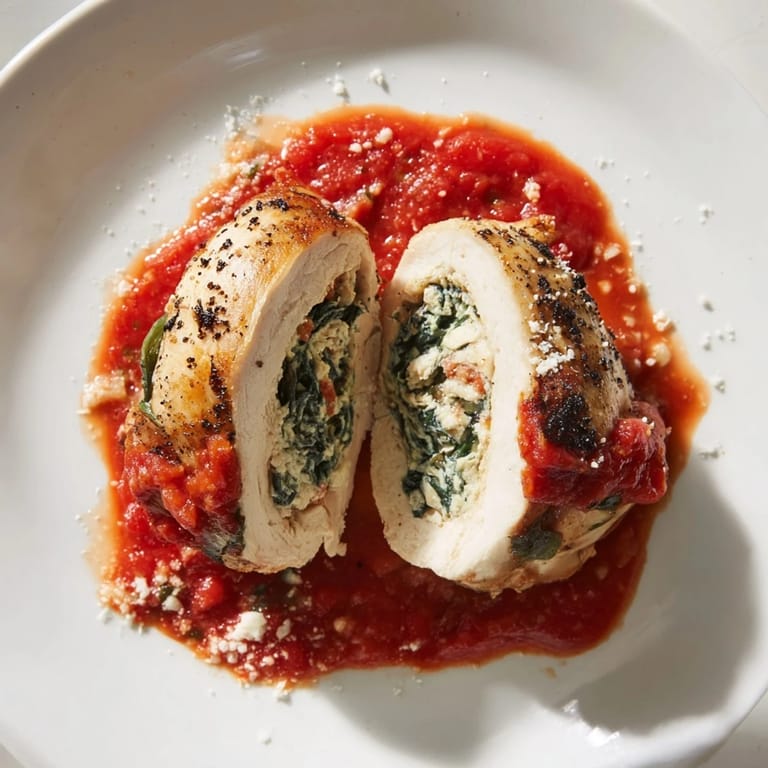
Save This is the kind of recipe that makes you look like you tried harder than you did, and I mean that in the best way. It's comforting, impressive, and reliable, the sort of dish that earns a regular spot in your rotation without any fuss.
Recipe FAQ
- → How do I prevent the chicken from drying out?
Don't overcook the chicken. Use a meat thermometer and remove from the oven once the internal temperature reaches 165°F (74°C). The baking time of 20-25 minutes is typically sufficient for standard-sized breasts.
- → Can I make this dish ahead of time?
Yes, you can prepare and stuff the chicken breasts up to 8 hours in advance. Keep them covered in the refrigerator. You may need to add 5-10 minutes to the baking time since they'll start cold.
- → What's the best way to butterfly the chicken?
Place the breast on a cutting board. Using a sharp knife, carefully slice horizontally through the thickest part, stopping just before the edge so it remains attached. This creates a pocket without cutting completely through.
- → Can I use frozen spinach instead of fresh?
Absolutely. Use 1/2 cup frozen spinach, thawed and squeezed dry to remove excess moisture. This prevents the filling from becoming watery and maintains proper texture.
- → What are good side dish pairings?
Crusty bread works wonderfully for soaking up sauce. Cooked pasta, roasted vegetables like zucchini or bell peppers, or a fresh green salad complement the rich filling beautifully.
- → How do I store leftovers?
Store cooled chicken and sauce in an airtight container in the refrigerator for up to 3 days. Reheat gently in a 350°F oven covered with foil, or in a skillet over low heat to maintain tenderness.