 Save
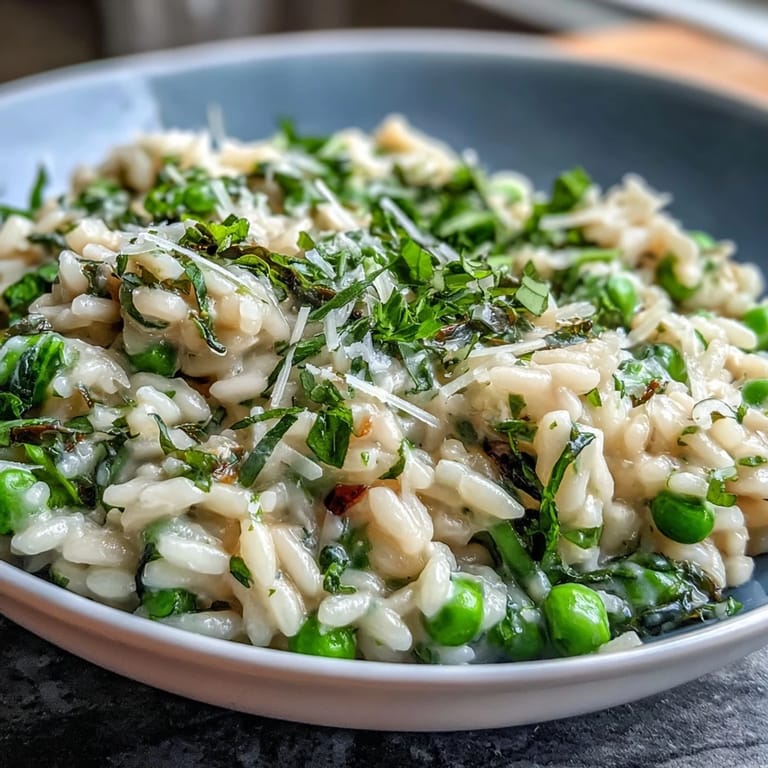
Save The scent of sizzling shallots drifted through my open kitchen window the first time spring pea risotto was on my stove. A friend had brought over a bundle of fresh peas and a handful of wild mint, and we set out with no plans except to honor the season’s bounty. There was something almost luxurious about stirring rice gently while laughter bounced off the countertops and sunlight warmed the tiled floor. The risotto came together hourglass-slow, each moment more fragrant and hopeful than the last. By the time we plated, the anticipation matched the emerald vibrance of the dish itself.
There was a rainy Tuesday when I surprised my partner with this risotto after they’d slogged home through puddles. The warmth of the bowl seemed to bring color back into spring’s grey, and we spent the evening debriefing the day between creamy forkfuls and clinks of white wine glasses.
Ingredients
- Spring peas: Fresh peas pop with sweetness but frozen work perfectly when the pods are still hibernating at the market.
- Shallot: Its gentle bite perfumes the oil without overpowering the peas, and mincing it finely prevents uneven texture.
- Garlic: I like to stir in minced garlic just as the shallot blooms—watch for golden flecks and inhale deeply.
- Fresh mint: This aroma brightens the risotto unexpectedly; chop only right before adding so flavor doesn’t fade.
- Lemon zest: Livening up the whole pot, a quick zest at the end ties everything together with a sunny note.
- Arborio rice: The star of any risotto, its plumpness owes everything to patient, unhurried stirring.
- Vegetable broth: Low-sodium keeps it from getting too salty as you ladle—keep it warm so the rice cooks evenly.
- Dry white wine: Adds depth and a subtle tang; I reach for an extra glass to sip while I stir.
- Olive oil: The foundation of a glossy sauté, use a fruity, fresh oil if you can.
- Unsalted butter: Folded in at the end for silkiness, leaving the peas and mint to shine.
- Parmesan cheese: Go for the real thing and grate it yourself—the nutty, crystalline bite is worth it.
- Kosher salt: A little goes a long way, but season after tasting since Parmesan is salty on its own.
- Freshly ground black pepper: A twist at the end draws out the earthiness of the peas.
Tired of Takeout? 🥡
Get 10 meals you can make faster than delivery arrives. Seriously.
One email. No spam. Unsubscribe anytime.
Instructions
- Warm the broth:
- Pour the vegetable broth into a saucepan and set it over low heat, letting the quiet simmer fill the kitchen as you prep the rest.
- Begin the sauté:
- Heat olive oil in your biggest skillet and listen for that faint sizzle as the shallots and garlic tumble in; stir gently until soft and fragrant, never letting them brown.
- Toast the rice:
- Scatter in the Arborio rice and stir to coat every grain, waiting for that moment when they look translucent with tiny white centers—about two minutes.
- Add the wine:
- Carefully pour in the white wine; the pan will hiss, and you’ll stir constantly as the liquid reduces and the aroma deepens.
- Stir in the broth:
- Add the hot broth, ladle by ladle, pausing between each addition so the rice slowly swells and turns creamy—patience is your best kitchen tool here.
- Introduce the peas:
- Once the risotto starts to look tender, stir in the peas; they’ll turn vivid green, peeking through the glossy rice as you finish adding broth.
- Finish with flavor:
- Take the pan off the heat and fold in butter, Parmesan, mint, and lemon zest, stirring until everything is smooth and lightly flecked with herbs.
- Garnish and serve:
- Spoon into bowls immediately, topping with extra Parmesan and mint if you like; serve hot while it’s irresistibly creamy.
 Save
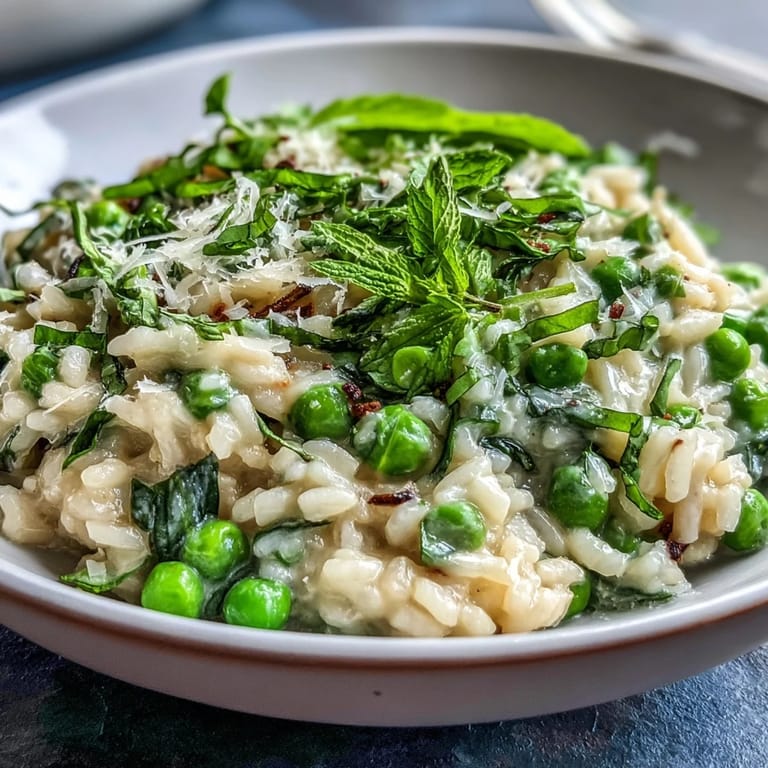
Save The first time this risotto ended up as more than just dinner was a night I invited neighbors over during an unexpectedly late frost. What began as a quiet meal for one grew into an impromptu gathering, our bowls steaming in grateful hands while conversation bloomed like spring outside the chilled windows.
All About the Creaminess
I used to think risotto needed heavy cream for richness, but discovered that slow ladling and near-constant stirring coax natural starch out of the rice. That’s what gives it that restaurant-style silkiness, without weighing it down.
Perfect Pairings and Additions
This risotto is a chameleon: toss in sautéed mushrooms for depth, or serve alongside a crisp salad to highlight the green flavors. It pairs especially well with a chilled Sauvignon Blanc or any dry white with bright acidity.
Cooking Together: Troubleshooting and Tricks
No matter how often I make risotto, it still keeps me humble—sometimes the rice takes longer to soften, or the peas cook faster than expected. Keep tasting as you go and remember each batch has its quirks.
- If you need to pause, take it off the heat and add a splash of hot broth before resuming.
- Taste for seasoning only at the end, since saltiness changes as broth reduces.
- Don’t be afraid to use frozen peas—they’ll be just as sweet once stirred in.
 Save
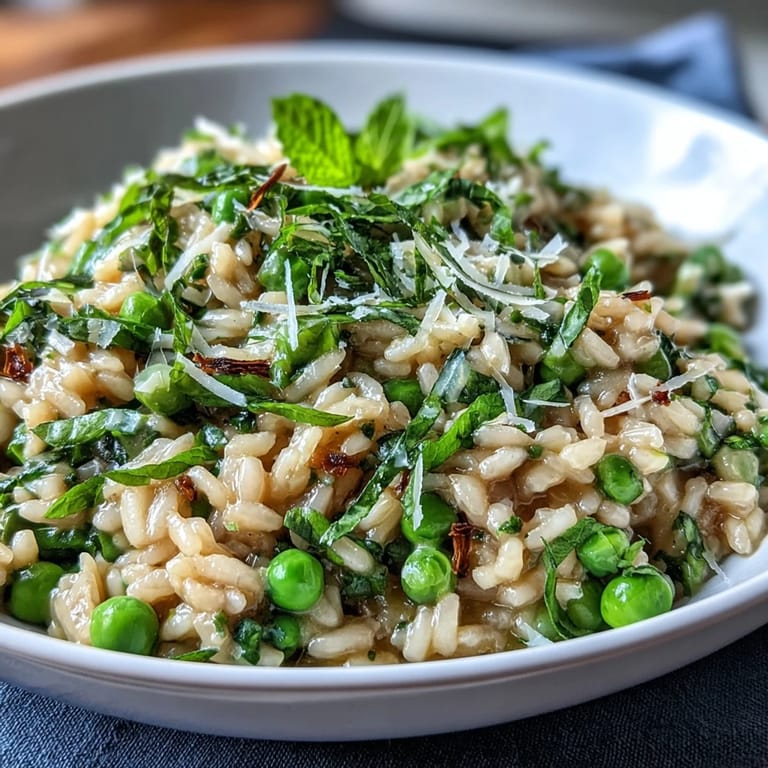
Save May this bowl of spring pea risotto brighten up whatever day brings you to the kitchen. It’s both comfort and celebration, best enjoyed slowly, one spoonful at a time.
Recipe FAQ
- → Can I use frozen peas instead of fresh?
Yes. Add frozen peas straight from the bag about 15 minutes into cooking so they heat through without becoming mushy; this preserves color and texture while keeping the dish bright.
- → What if I don’t want to use white wine?
Substitute an equal amount of warm vegetable broth or a splash of white wine vinegar diluted with broth. The wine adds acidity, so adjust with a teaspoon of lemon juice if needed.
- → How do I achieve a creamy, not gluey, texture?
Use warm broth and add it gradually while stirring to coax starch from the rice slowly. Finish off heat with butter and grated Parmesan for silkiness; avoid overcooking the grains.
- → When should I add the peas so they stay vibrant?
Stir the peas in roughly halfway through the broth additions, around the 15-minute mark. This warms them through and keeps their bright color and slight bite.
- → Can I make this ahead and reheat later?
Risotto is best fresh, but for make-ahead, undercook the rice by a minute, cool, and refrigerate. Reheat gently with warm broth and a knob of butter, stirring until creamy.
- → What cheese or garnish alternatives work well?
Pecorino Romano can replace Parmesan for a sharper bite. Finish with extra mint, lemon zest or a drizzle of good olive oil for brightness.