 Save
Save The first time I made Swedish meatballs, I was trying to impress someone who'd just moved to my city—nothing fancy, just a weeknight dinner that somehow became unforgettable. My grandmother had mentioned them in passing years before, something about her own mother making them for winter gatherings, but I'd never actually attempted them until that evening when I realized comfort food doesn't need to be complicated. What struck me most wasn't the difficulty, but how the kitchen filled with this warm, spiced aroma that made everything feel slower and more intentional. The meatballs came out tender and yielding, and the sauce pooled around them like silk. I've made them countless times since, and they've become the recipe I return to when I want to feed people without fuss.
I made these for my colleague's dinner party once, nervous because I wasn't sure if Scandinavian comfort food would land with her friends from all over. But watching people slow down mid-conversation, really paying attention to what they were eating—that's when I understood the appeal of this dish. There's something about meatballs in creamy sauce that just settles people, makes them want to stay at the table longer. Since then, it's become my go-to when I want to feel generous without overthinking it.
Ingredients
- Ground beef and pork (250 g each): The combination gives you depth—beef brings richness, pork keeps them tender. I've learned not to use anything leaner than 80/20 or they get dense.
- Milk-soaked breadcrumbs (1/2 cup each): This is where the magic happens; the breadcrumbs act like a sponge that keeps moisture locked in. Don't skip the soaking step or your meatballs will be dense.
- Onion and garlic (1 small onion, 1 clove): Finely chopped so they distribute evenly and almost dissolve into the meat as it cooks.
- Egg (1 large): Your binder, but only one—too many eggs and they become rubbery.
- Allspice and nutmeg (1/2 tsp each): These are the soul of Swedish meatballs; don't substitute them. Nutmeg in particular changes everything about the flavor.
- Salt and pepper: I taste the mixture raw (I know, I know) to make sure the seasoning is right before cooking.
- Butter for frying (2 tbsp): Use real butter; it browns the meatballs better than oil and adds a subtle nuttiness.
- Beef broth (2 cups): Good quality matters here because it becomes your sauce base. I use low-sodium so I can control the salt.
- Heavy cream and Worcestershire (1/2 cup and 1 tsp): The cream smooths everything out; the Worcestershire adds umami without being obvious about it.
- Dijon mustard and flour (1 tsp and 2 tbsp): Mustard is subtle but brings all the flavors together; flour is just your thickener, nothing fancy.
Tired of Takeout? 🥡
Get 10 meals you can make faster than delivery arrives. Seriously.
One email. No spam. Unsubscribe anytime.
Instructions
- Soak the breadcrumbs in milk:
- In a small bowl, pour milk over breadcrumbs and let them sit for five minutes. They'll soften into a paste-like texture that you can fold directly into the meat. This step is non-negotiable for tender meatballs.
- Combine everything gently:
- In a large bowl, add the beef, pork, soaked breadcrumb mixture, finely chopped onion, minced garlic, egg, allspice, nutmeg, salt, and pepper. Use your hands and mix until just barely combined—overmixing develops gluten and makes them tough. You're looking for a texture that's uniform but still loose.
- Roll into meatballs:
- Wet your hands with cold water so the mixture doesn't stick to you, then gently roll into one-inch balls. Damp hands make this almost meditative; they'll be slightly irregular, and that's perfect.
- Brown the meatballs:
- Heat butter in a large skillet over medium heat. Once it's foaming and smells toasty, add meatballs in batches—don't crowd the pan or they'll steam instead of brown. Turn them occasionally for six to eight minutes until they're golden all over. Set them aside on a plate and keep warm.
- Make the roux:
- In the same skillet with all those flavorful browned bits stuck to the bottom, melt two tablespoons of butter over medium heat. Whisk in flour and let it cook for a minute or two, stirring constantly so it doesn't burn. You want it to smell a little nutty and toasted.
- Build the sauce:
- Gradually pour in beef broth while whisking constantly, scraping up all those caramelized bits from the pan—that's where the flavor lives. Simmer for three to four minutes until it thickens slightly, then stir in the heavy cream, Worcestershire sauce, and Dijon mustard. Taste it and adjust salt and pepper.
- Finish together:
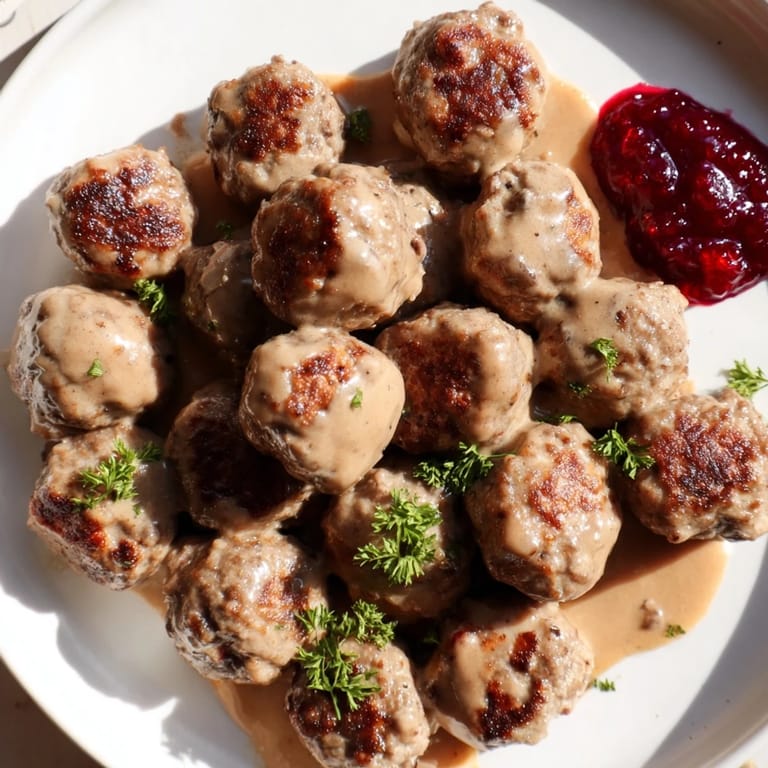
- Return the meatballs to the sauce and simmer gently for eight to ten minutes. They'll finish cooking through and absorb some of that creamy, spiced flavor. The whole kitchen smells like comfort at this point.
 Save
Save One winter evening, I made these for someone who'd been going through a rough time, and they ate quietly, focusing only on the food. Afterward they said it was exactly what they needed—something warm and undemanding that tasted like someone cared. That's when meatballs stopped being just a recipe for me and became something more like a language.
Serving and Sides
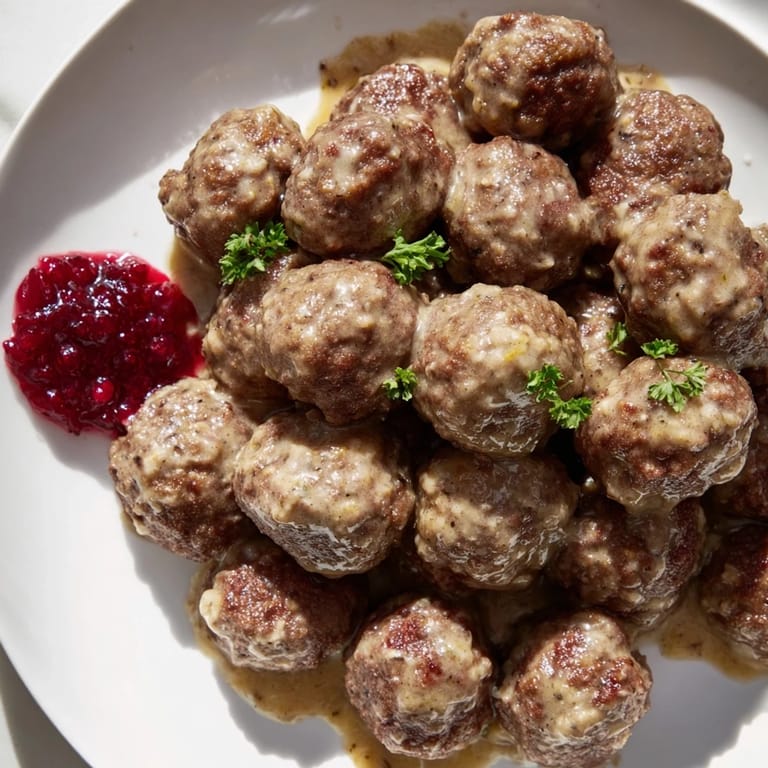
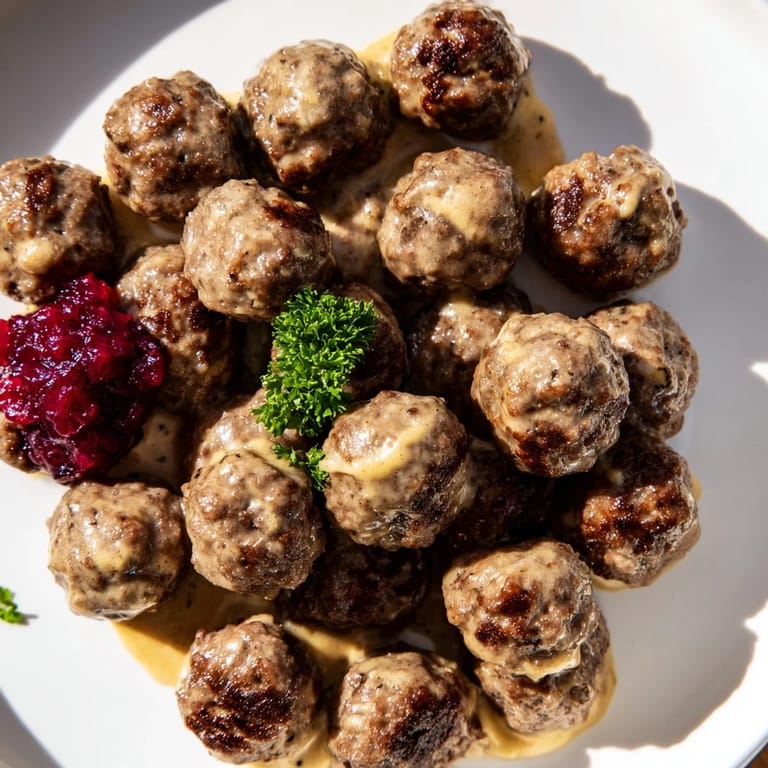
Creamy meatballs absolutely require mashed potatoes, not as an afterthought but as a central part of the experience. I make mine with plenty of butter and a splash of the cooking milk, so they're almost luxurious against the sauce. Lingonberry jam is traditional for a reason—that tartness cuts through the richness perfectly, or use cranberry sauce if lingonberries aren't available where you live. A sprinkle of fresh parsley at the end adds a moment of brightness and color that makes the whole plate feel intentional.
Flavor Balance and Wine Pairing
These meatballs are rich and warming, so they pair beautifully with wines that have acidity to cut through the cream. A Pinot Noir is traditional and works perfectly, but I've also had great success with a light Burgundy or even a slightly chilled red if that's what you have on hand. The spices—especially the nutmeg—call for something elegant rather than heavy, so avoid bold, tannic reds. If you're not drinking wine, a simple sparkling cider or even just cold milk works in a pinch.
Make-Ahead and Storage
I love making these the day before because the flavors deepen and mingle overnight—just reheat gently on the stovetop with a splash of broth if the sauce has thickened too much. You can also freeze the cooked meatballs in their sauce for up to three months, thawing them in the fridge overnight before reheating. The uncooked meatball mixture keeps in the fridge for a day if you want to roll and cook them later, or you can freeze the raw balls on a tray before transferring to a bag.
- Reheat on low heat to keep the meatballs tender and prevent the cream from breaking.
- Frozen meatballs thaw best overnight in the fridge rather than at room temperature.
- Double the recipe without any trouble—these freeze beautifully and taste even better the second time.
 Save
Save Swedish meatballs have become my comfort in a bowl, the dish I make when I want to feed people something that says I was thinking of them. There's something honest about food that's been loved across generations and continents, food that asks only to nourish and comfort.
Recipe FAQ
- → What spices give the meatballs their distinctive flavor?
Ground allspice and nutmeg add warm, aromatic notes that enhance the meat mixture's depth.
- → How is the creamy brown sauce prepared?
Butter and flour are cooked together to form a roux, then beef broth, cream, Worcestershire sauce, and Dijon mustard are whisked in to create a smooth, flavorful sauce.
- → Can I substitute the meats used in the meatballs?
Yes, ground turkey or chicken can be used for a lighter variation while maintaining tender texture.
- → What traditional sides complement this dish?
Mashed potatoes and lingonberry jam are classic accompaniments, adding creamy and tart elements respectively.
- → How can I ensure the meatballs stay tender?
Avoid overmixing the meat mixture and soak breadcrumbs in milk before combining to maintain moisture and tenderness.
- → What cooking tools are needed to prepare this dish?
A large mixing bowl, skillet or frying pan, whisk, measuring cups and spoons, and a spatula are essential.