 Save
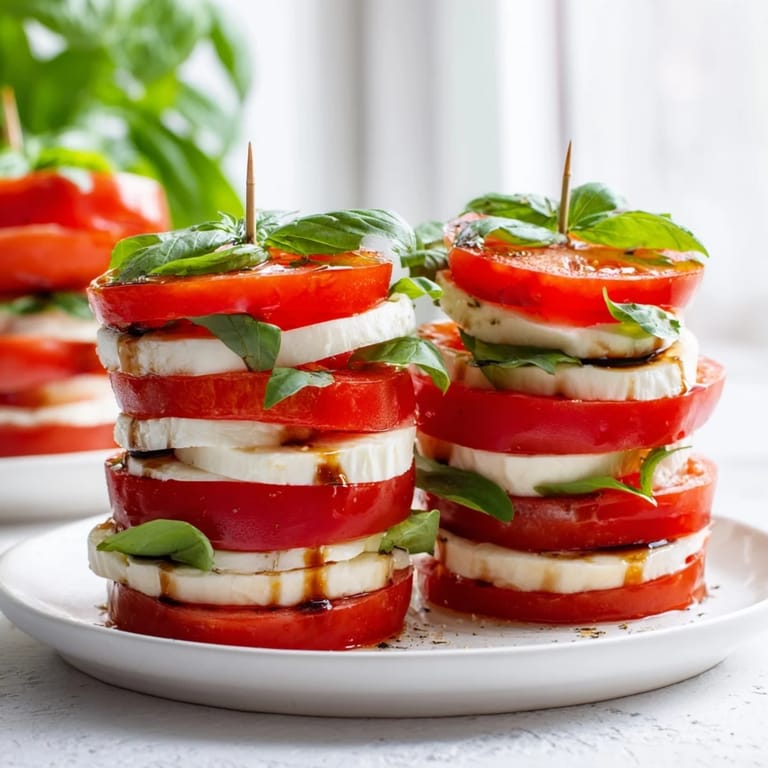
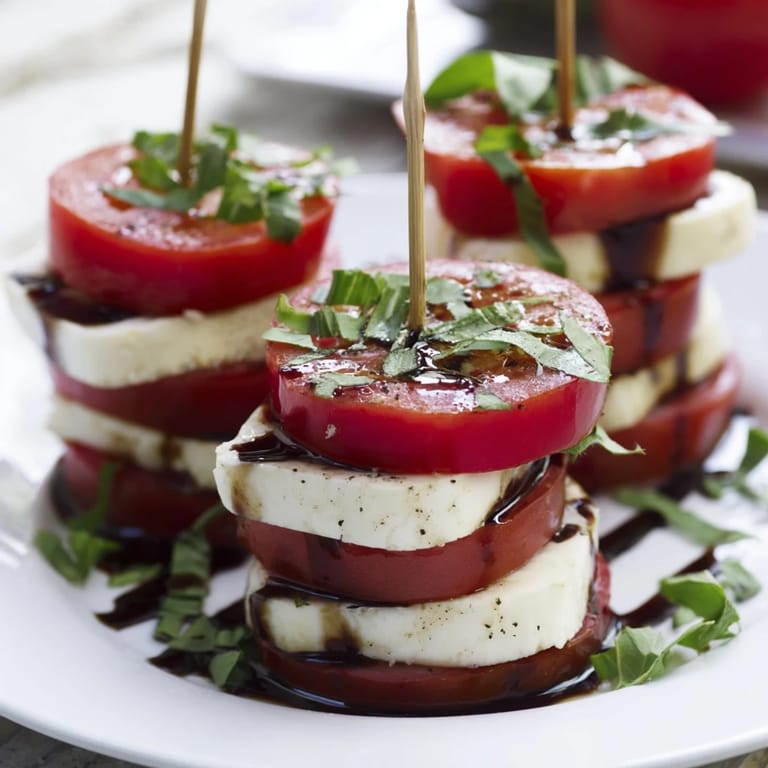
Save I stumbled onto these stacks during a summer afternoon when my neighbor brought over a basket of tomatoes so ripe they practically glowed. She casually mentioned stacking them with mozzarella, and I became obsessed with the idea of building something that looked as good as it tasted. Twenty minutes later, standing in my kitchen with three perfect pillars lined up on a white plate, I understood why this simple combination has charmed Italian tables for generations. There's something about the vertical arrangement that makes it feel like edible architecture, and the taste proves beauty and flavor aren't mutually exclusive.
The first time I made these for a dinner party, I was nervous about whether they'd actually stay stacked. My sister leaned against the counter watching me wrestle with the first toothpick, and when I finally got it through cleanly without squashing anything, she laughed and said it looked like I'd just performed surgery. By the end of the evening, three pillars sat alone on the platter while everything else had been picked clean, and I realized I'd found something that tastes impressive enough to remember but simple enough to make again.
Ingredients
- Fresh ripe tomatoes: Look for ones that yield slightly to pressure and smell fragrant at the stem end. The sweetness of summer tomatoes is non-negotiable here.
- Fresh mozzarella cheese: Buy it as close to when you'll use it as possible, ideally the same day. Room-temperature mozzarella is creamier and slices more cleanly.
- Fresh basil leaves: Tear or cut them just before assembling so they don't bruise and darken. Whole leaves between the layers add visual drama.
- Extra-virgin olive oil: This is where you use the good stuff because there's nowhere for mediocre oil to hide. Taste it first if you can.
- Balsamic glaze: The thick version, not regular vinegar, which would make the stacks soggy. Its sweetness balances the acidity beautifully.
- Sea salt and black pepper: Finish seasoning just before serving so the salt doesn't draw out the tomato juice.
Tired of Takeout? 🥡
Get 10 meals you can make faster than delivery arrives. Seriously.
One email. No spam. Unsubscribe anytime.
Instructions
- Slice everything into neat rounds:
- Use a sharp knife and a cutting board you can really press down on. Aim for tomato and mozzarella slices about the thickness of your pinky, consistent across all pieces so your stacks don't lean like the Tower of Pisa.
- Prepare your basil:
- Wash the leaves gently and pat them completely dry with paper towels. Moisture is the enemy of holding a stack together, so take an extra second here.
- Build the tower:
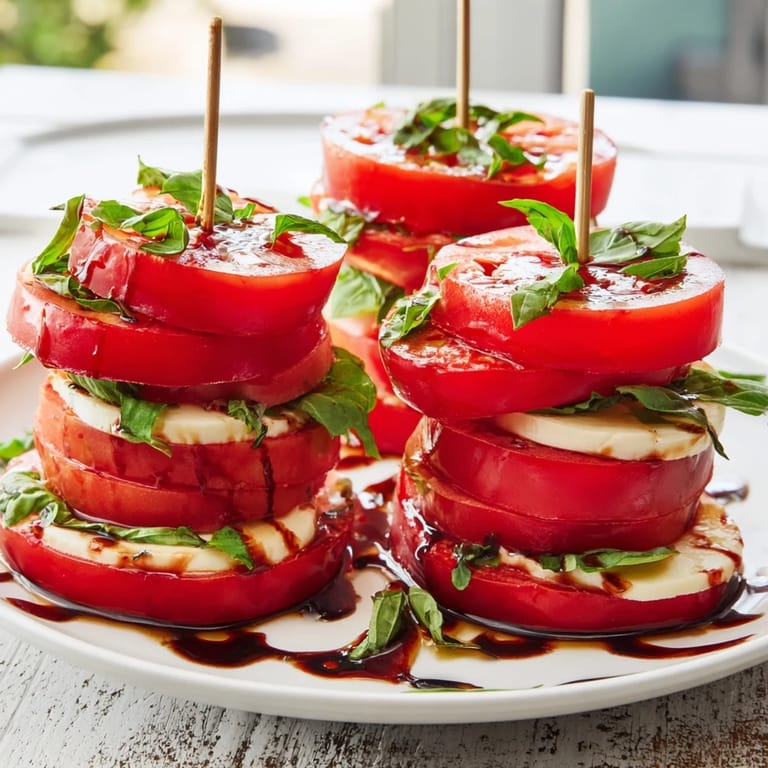
- On your serving platter, place a tomato slice as your foundation. Layer mozzarella on top, then basil, then tomato again. Three or four repetitions will give you a pillar that's impressive without being impossible to eat in one bite.
- Anchor it with a toothpick:
- Push a long toothpick or bamboo skewer straight down through the center of your stack. Go slowly so you don't crack anything. The toothpick should be snug but not so tight it compresses the layers.
- Finish with oil and vinegar:
- Drizzle the olive oil and balsamic glaze artfully over the tops and around the platter. A light hand here looks intentional, not accidental.
- Season and serve:
- Finish with a pinch of sea salt and a crack of pepper right before bringing it to the table. The fresher the seasoning hits, the brighter it tastes.
 Save
Save These stacks have a way of becoming the first thing people reach for at a gathering, and I've watched them spark conversations about tomatoes, about whether mozzarella should ever be cold, about summers spent in Italy. There's something about putting food on a stick that makes people feel like kids again, even when they're adults in dress clothes. When someone asks for the recipe and I tell them it takes 15 minutes, their expression usually goes from skepticism to determination.
The Art of the Perfect Slice
The difference between a pillar that looks restaurant-worthy and one that looks homemade comes down to how you cut. A really sharp knife moves through tomato and mozzarella without sawing or crushing. If your knife is dull, it squeezes the tomato and tears the mozzarella, and suddenly your beautiful stack looks sad. I keep my knife specifically for slicing soft things, and I wipe it between cuts so the cheese doesn't stick and drag.
Timing and Temperature
These should be eaten within an hour of assembly because the layers gradually release water. The good news is there's no cooking, so you can build them right before your guests arrive. Tomatoes that are properly ripe have already been at room temperature on a counter somewhere, and that's the temperature they want to stay at. Cold mozzarella tastes dense and bland compared to mozzarella that's had time to soften and breathe.
Playing with Variations
Once you've made these once, you'll start seeing possibilities everywhere. Heirloom tomatoes in different colors create a striped effect that's stunning. Some people add a thin slice of prosciutto between layers, which sounds like it shouldn't work but absolutely does. You could even try burrata instead of regular mozzarella if you want the filling to be extra creamy. The core magic is the combination of fresh tomato, soft cheese, and basil, so everything else is just an accent.
- A small basil leaf pressed between the tomato and mozzarella adds a flavor layer without changing the texture.
- Microgreens on top add color and a peppery note that makes people think you spent hours on this.
- If you want to make these ahead, assemble without the toothpick and add it right before serving to avoid puncturing holes ahead of time.
 Save
Save These pillars are one of those rare appetizers that feels like a celebration without being fussy. Every time I make them, I'm grateful for how much joy can come from a tomato, some cheese, and an afternoon with friends.
Recipe FAQ
- → How do I assemble the stacks without them toppling over?
Use long toothpicks or bamboo skewers inserted vertically through the layers to secure the tomato, mozzarella, and basil in place.
- → Can I use heirloom tomatoes instead of regular tomatoes?
Yes, heirloom tomatoes add vibrant color and unique flavors that enhance the presentation and taste.
- → What is the best way to slice the mozzarella and tomatoes?
Slice both into even, approximately 1 cm thick rounds for balanced layering and easy stacking.
- → Are there any suggested seasoning variations?
Adding flaky sea salt or a light dusting of dried oregano can boost the flavor complexity.
- → What kind of oil and glaze complement this dish?
Extra-virgin olive oil and balsamic glaze provide rich, fruity, and tangy notes that enhance the fresh ingredients.