 Save
Save I first discovered the magic of umami boards while traveling through Tokyo, watching street vendors arrange ingredients with the precision of artists. It was a moment that changed how I understood flavor—not as individual tastes, but as a conversation between ingredients. Years later, when I wanted to recreate that feeling for friends, I realized an umami board wasn't just food; it was an invitation to play with flavors together, to dip and discover, to find your own perfect bite.
The first time I made this for a dinner party, I watched my friends lean over the board with genuine excitement, mixing and matching flavors like they were composing their own recipes. That moment, when everyone stopped talking to focus on the sensory experience, taught me that the best meals aren't always complicated—they're the ones that invite people to be creative.
Ingredients
- Shiitake mushrooms: These dark, meaty mushrooms are the heart of umami flavor; when sautéed until golden, they develop a depth that regular mushrooms can't touch
- King oyster mushrooms: Their firm texture holds up beautifully to the pan, creating satisfying bites that stay crispy at the edges and tender inside
- Enoki mushrooms: Delicate and slightly sweet, they add visual elegance and a contrast in texture that surprises the palate
- Sesame oil: Use the good stuff here—it's the difference between a good board and one that tastes like you've been to Japan yourself
- Soy sauce or tamari: Tamari keeps it gluten-free if that matters to your guests, and adds a rounder, fuller salty note than regular soy
- Mirin: Just a teaspoon brings a subtle sweetness that balances the salty fermented ingredients beautifully
- Roasted seaweed snacks: Crispy, briny, and utterly addictive; they're the bridge between familiar and exotic
- Seasoned seaweed salad: This adds moisture and a tangy flavor that cuts through the richness
- Nori strips: Their toasty flavor grounds the whole board in authentic umami
- Pickled daikon radish: Bright, acidic, and refreshing; it's the palate cleanser your guests didn't know they needed
- Pickled ginger: Silky and gently warming, this ingredient appears humble until you taste how it transforms everything around it
- Edamame: Steamed and salted, they provide protein and a gentle, grassy sweetness
- Black garlic cloves: These are umami superstars—sweet, tangy, and almost licorice-like, they're worth seeking out in specialty shops
- Fermented black beans: Rinse them well and they become tiny flavor bombs that don't overpower but rather whisper sophistication
- Roasted cashews or peanuts: Choose one you love; the roasted, salty notes anchor everything with satisfying crunch
- Fried shallots: These fragile, golden strands add a layer of complexity and visual beauty at the very last moment
- Fresh coriander and chives: Pick these fresh just before serving; their bright herbal notes lift the entire board
- Red chili: Optional, but it adds heat and visual drama that makes the board impossible to ignore
- Ponzu sauce: Citrusy and salty, it's the ideal companion for grounding the board's complexity
- Spicy sesame dressing: This brings warmth and richness that coats the palate in the most comforting way
Tired of Takeout? 🥡
Get 10 meals you can make faster than delivery arrives. Seriously.
One email. No spam. Unsubscribe anytime.
Instructions
- Sauté the shiitake and king oyster mushrooms:
- Heat your sesame oil in a skillet over medium-high heat—you want it shimmering but not smoking. Add the shiitake and king oyster mushroom slices, giving them space to breathe. Let them sit undisturbed for a few minutes until the edges turn golden brown; this is where the magic happens. Stir gently and cook for another 2 to 3 minutes until they're tender and deeply caramelized. Add soy sauce and mirin, toss everything together, and let the aromas rise. Cook for just one more minute, then remove from heat and let cool completely. This is patient work that pays off.
- Blanch the delicate enoki mushrooms:
- Bring a pot of water to a rolling boil. Hold the enoki mushrooms by their base and dunk them in for exactly 30 seconds—count it out, because overcooked enoki becomes mushy and loses their character. Drain immediately and spread them on a clean kitchen towel to cool and dry slightly. They should remain tender with just a gentle firmness.
- Build the foundation with mushroom fans:
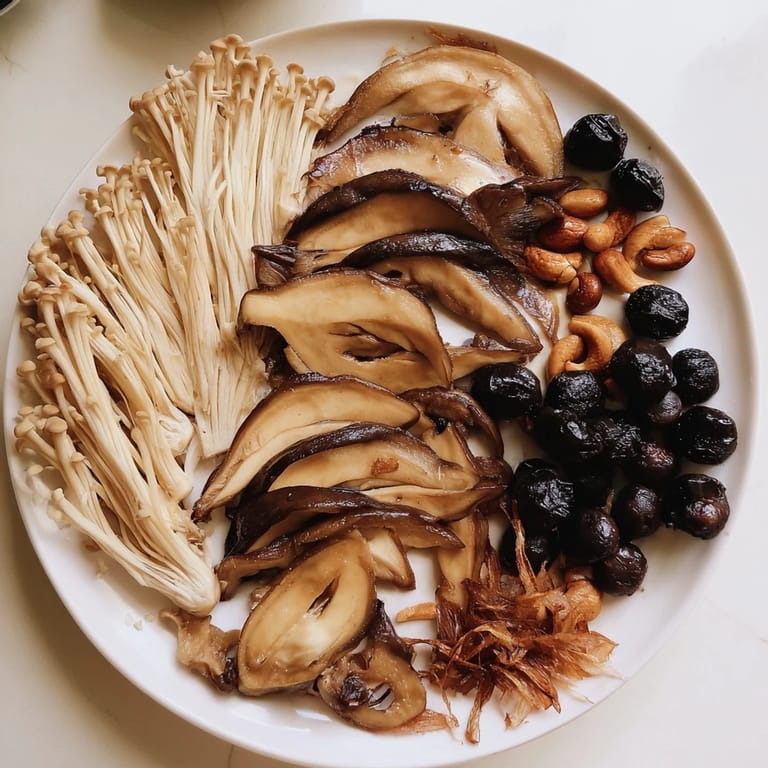
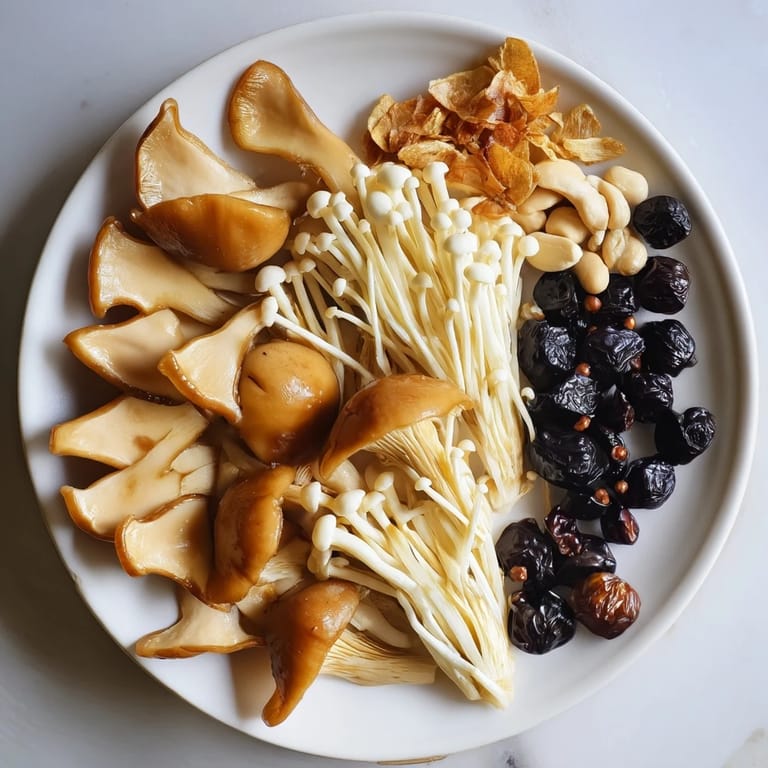
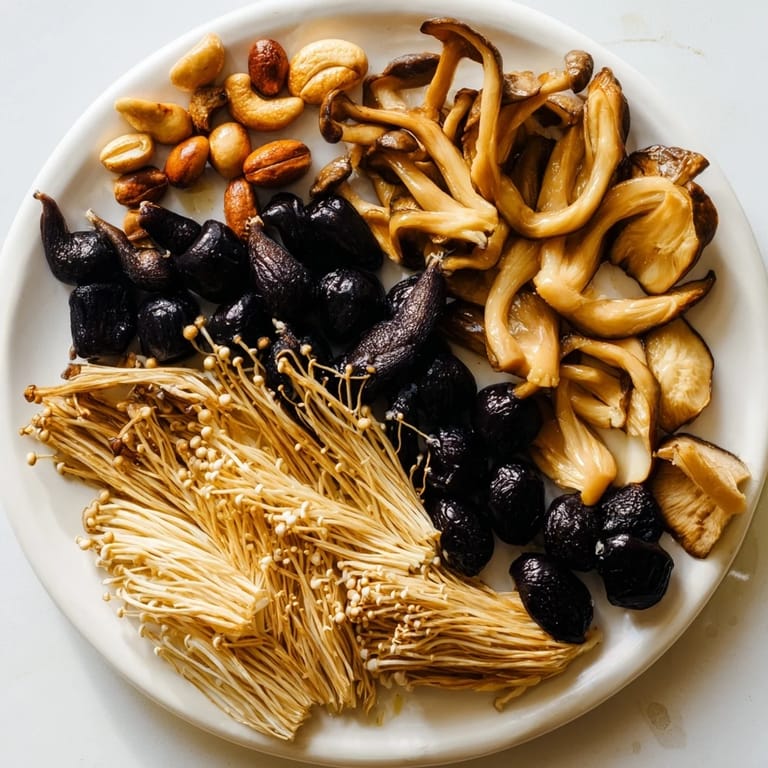
- Take your large board and begin arranging all three types of cooled mushrooms in elegant, overlapping fan shapes. Start with the shiitake and king oyster, laying each slice at a slight angle so they nestle into one another like roof tiles. The enoki mushrooms, with their delicate threads, create feathery fans that add visual drama. This isn't just cooking; this is composition.
- Create additional fans with seaweed:
- Now add your roasted seaweed snacks and nori strips in similar fan patterns in different areas of the board. The seaweed salad can be spooned into its own small pile or tucked into gaps. Think about color and visual balance—you're creating a landscape here.
- Fill the spaces with umami accents:
- Arrange small piles of pickled daikon, pickled ginger, edamame, black garlic cloves, and fermented black beans in the remaining spaces. Leave some room for the next layer—you're building depth, not crowding the board. Each ingredient deserves its own moment to shine.
- Scatter the crunch and garnish:
- Sprinkle roasted cashews or peanuts across the board in generous handfuls. Scatter fried shallots over everything right before serving—if you add them too early, they'll soften and lose their delicate crispness. Tear fresh coriander leaves and chop chives finely, then scatter them across the board. If using red chili, slice it thinly and place it where it adds visual interest without overwhelming.
- Nestle the sauces and serve:
- Pour your ponzu sauce and spicy sesame dressing into small bowls and tuck them into the board wherever they fit most beautifully. Step back and admire what you've created. Serve immediately with an invitation for guests to explore, dip, and discover their favorite flavor combinations.
 Save
Save I remember serving this board to my grandmother, who had spent her whole life cooking elaborate meals. She looked at it for a long moment, then smiled and said it was the most beautiful thing she'd ever seen on a table. Watching her arrange her own bites, mixing fermented black beans with black garlic, taught me something important: sometimes the most generous thing a cook can do is step back and let people create their own perfect moment.
The Art of Umami Balance
Umami is the fifth taste that sneaks up on you quietly—it's not sharp or bold, but rather a deepening, a rounding of flavors that makes you pause and savor. This board works because every element contains umami: mushrooms, soy sauce, seaweed, fermented black beans, miso-adjacent elements. When they come together, they don't fight—they amplify one another. The trick is respecting each ingredient's contribution and not letting one overpower the conversation.
Building Your Umami Board Like a Painter
Think of the board as a canvas and yourself as an artist. The mushroom fans are your focal point—bold, beautiful, and commanding attention. The seaweed creates secondary focal points. The pickled elements are your highlights, drawing the eye. The crunchy nuts and fried shallots are your final brushstrokes, added last for maximum impact. When you step back, the board should feel balanced, with no empty corners screaming for attention and no section so crowded that nothing stands out. This is the joy of composed plates: you're controlling the narrative of flavor.
Making It Your Own and Adapting with Confidence
This recipe is more of a template than a rigid formula. Some of my best versions have happened when I worked with what I had on hand. Portobello mushrooms are more forgiving than shiitake and hold their shape beautifully. Maitake brings an entirely different earthiness. Grilled tofu or marinated tempeh will add protein and create new flavor bridges. The board thrives on personalization—whatever makes your kitchen sing is the right choice. Pair it with chilled sake for elegance, green tea for harmony, or even cold beer for casual joy. The magic isn't in following every detail perfectly; it's in understanding the principles and trusting yourself to play within them.
- Substitute mushrooms freely based on what your market offers or what you prefer texture-wise
- Make your board vegan by checking all sauce and pickle labels, and feel zero guilt about it—the flavors are still stunning
- Prep everything ahead except the fried shallots and fresh herbs, then assemble just before guests arrive for maximum freshness
 Save
Save This board is about generosity and invitation. It says to everyone at your table: I've taken time to think about what delights you, I've gathered beautiful things, and now I'm inviting you to play with flavor and discover something wonderful together.
Recipe FAQ
- → What mushrooms are used to create the umami flavors?
Shiitake, king oyster, and enoki mushrooms combine for deep earthy and umami-rich tastes, lightly sautéed to enhance their natural savoriness.
- → How is the seaweed incorporated in the board?
Roasted seaweed snacks, seasoned seaweed salad, and crisp nori strips are arranged in overlapping fans, adding oceanic depth and texture.
- → What sauces complement the board's flavors?
Ponzu sauce offers citrusy brightness while a spicy sesame dressing adds a nutty kick, both enhancing the layered umami elements.
- → Can this dish be adapted for a vegan diet?
Yes, by ensuring all sauces and pickles are plant-based and optionally adding grilled tofu or marinated tempeh for extra protein.
- → What garnishes provide texture and color to the board?
Roasted cashews or peanuts, fried shallots, fresh coriander, chives, and sliced red chili create crunchy, aromatic, and vibrant highlights.