 Save
Save I still remember the first time I created a platter like this for my friend Maya's housewarming party. I wanted to bring something that felt alive with color and possibility, something that said 'I care about nourishing you well' without any fuss. As I arranged those jewel-toned vegetables and fruits in concentric circles, something clicked—this wasn't just food, it was an edible garden, a celebration of abundance right there on the table. Everyone gathered around it like it was a work of art, and honestly, it became the centerpiece of the whole evening.
What I love most is remembering my cousin's birthday brunch when I brought this platter. She had just gone vegan, and I wanted her to feel celebrated, not accommodated. Watching her face light up as she saw the guacamole, the beetroot hummus, the cashew tzatziki—all these vibrant options—she said she'd never felt more welcomed at a gathering. That's the real magic of this platter: it makes everyone feel included.
Ingredients
- Rainbow carrots (1 cup, sliced): These aren't just pretty—the varieties have subtly different sweetness levels. I learned to slice them thin so they're tender enough to dip easily without breaking. Heirloom varieties actually taste more complex than the standard orange ones.
- Baby cucumbers (1 cup, sliced or quartered): Baby varieties stay crisp longer than full-sized ones. I always slice them just before serving so they maintain that satisfying snap.
- Cherry tomatoes, assorted colors (1 cup): The flavor difference between red, yellow, and orange is real—each one brings its own sweetness. Choose ones that feel heavy for their size; that's how you know they're flavorful.
- Radishes (1 cup, thinly sliced): They add a peppery bite that makes the sweetness of other vegetables shine brighter. Thin slicing makes them approachable for people who might be wary.
- Baby bell peppers (1 cup, sliced): I prefer baby peppers for platters because they feel special and their sweetness is more pronounced. They stay crisp for hours, unlike full-sized peppers.
- Snap peas (1 cup): These are the texture component that makes people keep coming back. Leave them whole if possible—there's something wonderful about the way people eat them off the platter.
- Mixed color grapes (1 cup, seedless): The sweetness bridges vegetables and dips beautifully. I've learned that chilling them makes them even more refreshing.
- Strawberries (1 cup, halved): Slice them just before serving, and they'll bleed into the platter slightly, creating beautiful color gradients. That visual richness matters.
- Pineapple chunks (1 cup): The tropical sweetness and acidity work magic with savory dips. I always include pineapple because it signals 'celebration' to me.
- Kiwi slices (1 cup, peeled and sliced): The bright green is irreplaceable on a platter like this. Peel and slice just before serving so the color stays vivid.
- Classic hummus (1 cup): This is your anchor dip—familiar and grounding. Good quality tahini makes all the difference here.
- Beetroot hummus (1 cup): The earthiness and color are show-stoppers. This is what makes people say 'wow' about your platter.
- Guacamole (1 cup): The creamy richness that makes vegetables taste even better. Fresh lime juice keeps it from browning, and it's worth using good avocados.
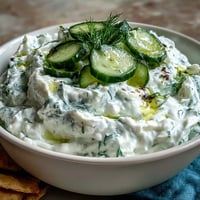
- Cashew tzatziki (1 cup): This creamy, garlicky dip is the revelation. Soaking cashews until soft is essential—it creates that velvety texture that feels indulgent but is actually plant-based.
- Pomegranate seeds (1/4 cup): These jewel-like bites add crunch and visual drama. They're worth seeking out for the moment people's faces light up when they discover them.
- Fresh herbs—mint, basil, parsley (1/4 cup, roughly chopped): These finish the platter with freshness and fragrance. They're not just garnish; they're flavor elevators that make everything taste more alive.
- Edible flowers (optional but lovely): Pansies, violas, or nasturtiums add a whimsical touch that makes people feel special. Use organic varieties grown without pesticides.
- Gluten-free crackers or pita chips (1 cup): These fill gaps and provide textural variety. Choose ones with simple ingredients that you'd actually want to eat.
Tired of Takeout? 🥡
Get 10 meals you can make faster than delivery arrives. Seriously.
One email. No spam. Unsubscribe anytime.
Instructions
- Prepare with intention:
- Wash everything thoroughly and pat it completely dry—water is the enemy of crispness. As you slice and prepare, you're not just chopping; you're in conversation with the ingredients, understanding their textures and preparing them to shine. I like to keep prepared vegetables in containers with a paper towel to absorb excess moisture until assembly time.
- Set your stage:
- Choose a large platter or board that feels substantial and inviting. I prefer wooden or slate boards because they feel warm and natural. Make sure it's clean and dry. This is your canvas, and it deserves respect.
- Place your anchors:
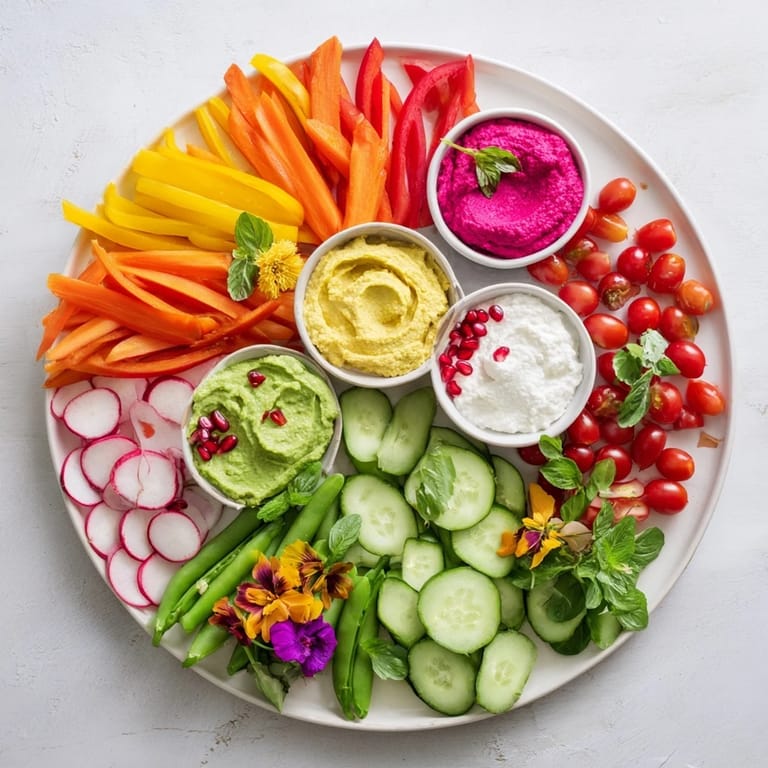
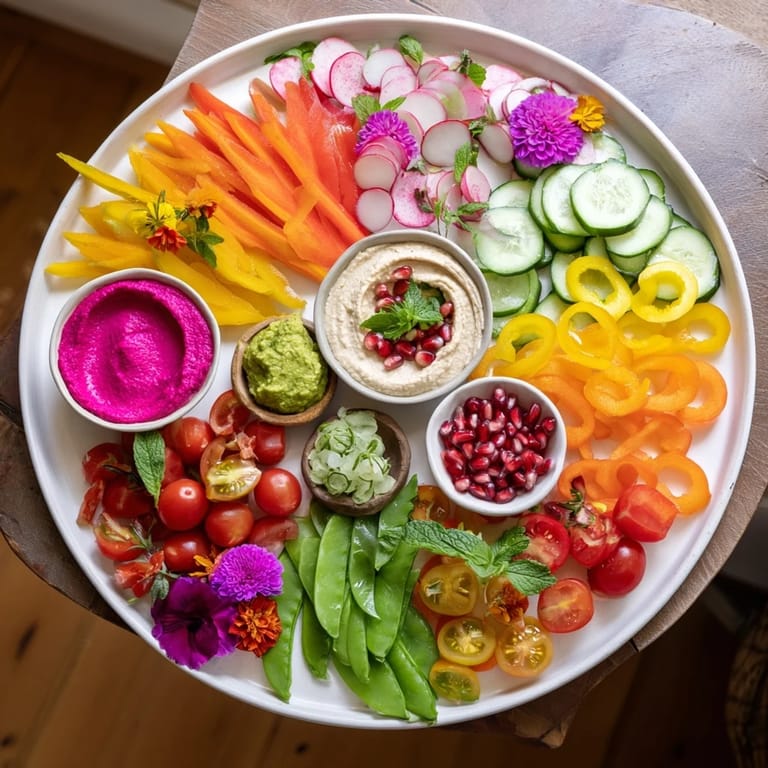
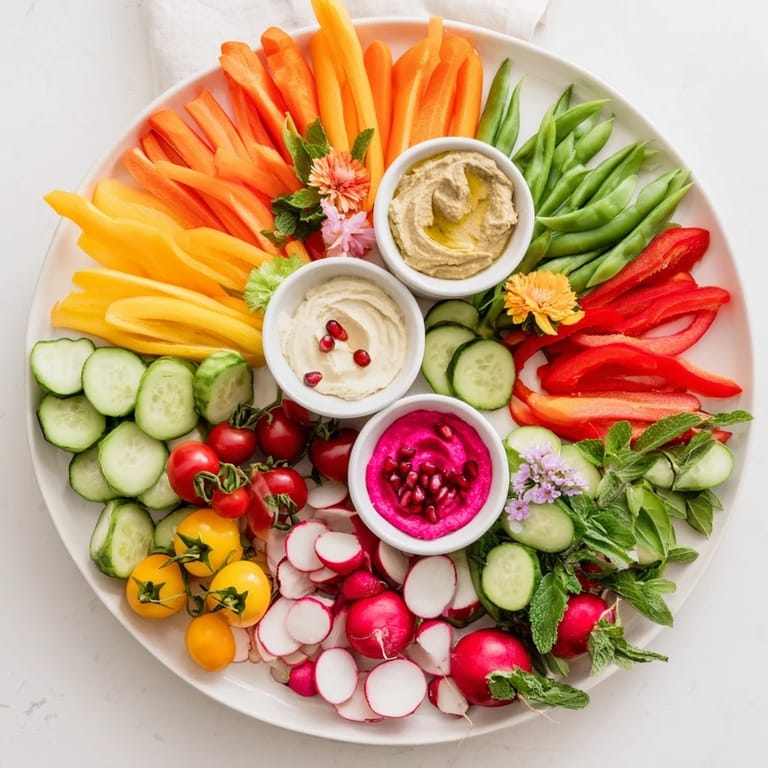
- Arrange your dip bowls first—these are the centerpoints everything else orbits around. Place them at different points rather than in a line; this naturally guides people's hands around the platter and creates visual balance. I typically use three to four small bowls, spacing them so there's plenty of room between them.
- Build in color blocks:
- This is where the magic happens. Group like items together—all the carrots in one section, all the tomatoes in another—but let the colors dance next to each other. Red tomatoes next to golden pineapple. Orange peppers next to pink strawberries. The contrast is what catches the eye and makes people want to reach for things. Work in sections, moving around the board like you're painting.
- Fill with brightness:
- Use the gaps to tuck in pomegranate seeds, fresh herbs, edible flowers, and crackers. These aren't just fillers; they're the details that make it feel abundantly designed rather than randomly assembled. Step back frequently and look at your work. If something feels sparse, add more. If it feels crowded, create breathing room.
- Finish with care:
- A light drizzle of good olive oil over the vegetables and a pinch of sea salt brings everything into focus. Serve immediately while everything is at peak crispness, or cover loosely with plastic wrap and refrigerate. Just before serving, uncover and give the platter a final look—adjust anything that looks like it's wilted, add fresh herbs if needed, and set it down like the centerpiece it is.
 Save
Save There was this moment at a dinner party when I watched three generations of a family standing around this platter—a teenager trying the guacamole for the first time, their parent explaining why the colors matter, and their grandparent exclaiming over the edible flowers. That platter became a conversation starter, a gathering point, a quiet statement that plant-based eating is abundant and joyful. That's when I knew this wasn't just a recipe; it was a way to express love through color and care.
Why Arrangement Matters More Than You Think
I used to think a platter was just about throwing fresh things on a board. Then I started paying attention to how people interact with food, and everything changed. When vegetables are grouped by color and type, people's eyes naturally follow a path around the platter, discovering new things as they go. When a tomato sits next to grapes, which sit next to yellow bell peppers, suddenly someone who 'doesn't eat vegetables' is reaching for a slice of radish. The arrangement is almost magical in how it makes people more adventurous and more present. I've started thinking of platter arrangement like garden design—you're creating pathways and focal points, inviting people into a landscape of nourishment.
The Dips Are Where Your Personality Shines
Here's what I've learned: the vegetables are important, but the dips are where you get to show your creativity and care. Hummus is the safe choice, but beetroot hummus says 'I paid attention.' Cashew tzatziki says 'I took time to soak cashews and blend them into something special.' If you're making your own dips, that's when someone will taste the platter and think 'this person really knows how to cook.' Even if you're buying them ready-made, choosing interesting varieties elevates the whole experience. The dips are your signature on this platter.
Seasonal Swaps and Making It Your Own
The beauty of a platter like this is that it's a canvas for what's fresh around you. In summer, I load it with heirloom tomatoes and fresh berries. In spring, I lean into asparagus tips and tender peas. In fall, I add roasted beets and apple slices. Winter is when I bulk it up with more hearty vegetables and nuts. You're not locked into any particular ingredient list—you're invited to respond to what's best at your farmers market, what your guests love, what excites you in that moment. That flexibility is what keeps this platter feeling fresh across seasons.
- Roasted chickpeas add a savory crunch that surprises people and makes the platter feel more substantial.
- Marinated olives or pickled vegetables bring a tangy element that balances the sweetness of fruits and creamy dips.
- A sprinkle of mixed seeds (pumpkin, sunflower, sesame) adds nutrition and visual texture without overwhelming the platter.
 Save
Save Every time I make this platter, I'm reminded that feeding people doesn't have to be complicated to be meaningful. There's something genuinely powerful about setting down a table full of color, abundance, and care. It says 'I see you, I'm nourishing you, I want you to feel celebrated.'
Recipe FAQ
- → What are the key fresh vegetables used?
Rainbow carrots, baby cucumbers, cherry tomatoes, radishes, baby bell peppers, and snap peas create a colorful vegetable selection.
- → Which fruits complement this platter?
Seedless grapes, strawberries, pineapple chunks, and kiwi add sweetness and vibrant color.
- → What plant-based dips are included?
Classic hummus, beetroot hummus, guacamole, and cashew tzatziki provide a variety of creamy dips.
- → How can I enhance the platter’s appearance?
Arrange items in color-blocked sections, then add garnishes like pomegranate seeds, fresh herbs, and edible flowers for a fresh look.
- → Can this platter accommodate allergen concerns?
Yes, nut-based dips like cashew tzatziki can be omitted or replaced, and gluten-free crackers are used to minimize allergens.