 Save
Save The winter solstice board came to life on a gray December afternoon when I realized I'd been staring at my cheese drawer for far too long, waiting for inspiration. My partner mentioned how the solstice represents balance—the darkest day bringing hope for returning light—and something clicked. I started pulling out contrasting ingredients: dark olives and chocolate on one side, creamy Brie and honeyed pears on the other. The whole thing assembled itself like a small edible meditation on duality, and suddenly a cheese board felt like something worth celebrating.
I made this board for our solstice gathering, and what surprised me most was how people instinctively gravitated to different sides depending on their mood. My friend who'd been stressed all week went straight for the dark chocolate and olives, while someone else built delicate stacks of Brie and pear. It became less about the food and more about everyone finding their own quiet moment on the board.
Ingredients
- Kalamata olives: These bring a serious, briny punch that anchors the dark side and keeps things from feeling too sweet.
- Oil-cured black olives: Their deep intensity adds complexity; don't skip them even if it feels like overkill.
- Dried mission figs: Halve them so they're easy to grab and they reveal those beautiful interior details that make the dark side feel luxurious.
- Fig jam: A spoonful acts as a bridge between sweet and savory—dip olives in it and you'll understand why.
- Dark chocolate: Break it into irregular pieces; rough edges are more inviting than perfectly neat squares.
- Roasted almonds: Their crunch keeps the dark side from feeling one-note, and they catch the light beautifully.
- Fresh rosemary: Not just decoration—brush your hand over it and the aroma sets the mood for the entire board.
- Ripe Brie: Room temperature Brie is practically liquid gold; cold cheese tastes like rubber, so let it sit out for a bit before serving.
- Pears: Slice them last or toss with a tiny squeeze of lemon to prevent browning; you want them luminous.
- Honeycomb or honey: If you can find actual honeycomb, it's worth every penny for the texture and visual drama.
- Toasted walnuts: Toast them yourself if possible; the smell while they warm is worth it alone.
- Green grapes: They're the light side's little jewels—seedless means no one has to spit anything out mid-conversation.
- Fresh thyme: Smaller and more delicate than rosemary, it softens the light side visually.
- Baguette and crackers: Use a crusty baguette and mix your crackers—some seeded, some plain—so there's variety in texture.
Tired of Takeout? 🥡
Get 10 meals you can make faster than delivery arrives. Seriously.
One email. No spam. Unsubscribe anytime.
Instructions
- Create your line of division:
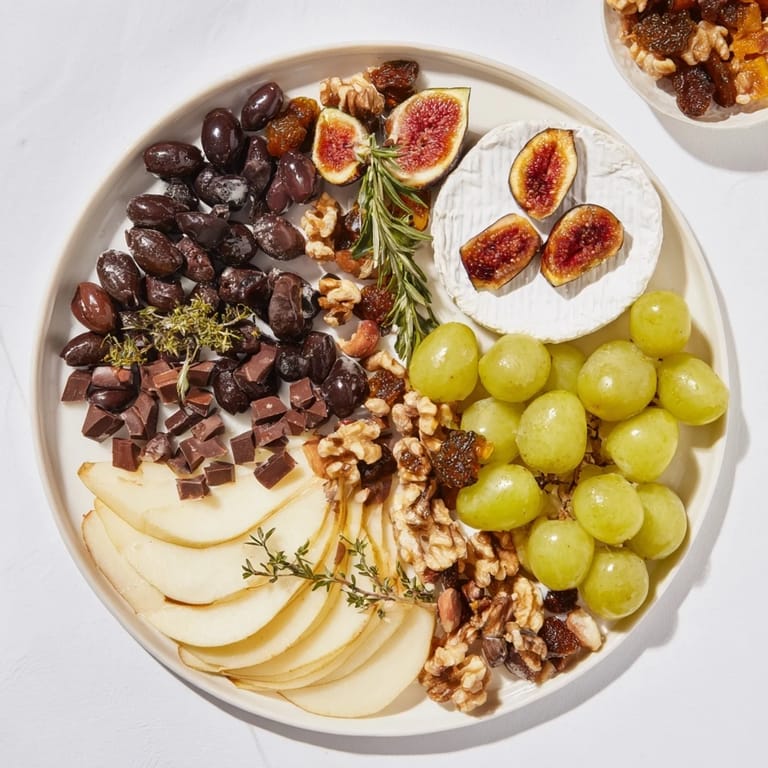
- Lay a row of fresh rosemary sprigs down the center of your board like you're drawing a line in the sand. This divides dark from light and becomes part of the edible landscape. If rosemary feels too bold, use a neat line of crackers instead.
- Build the dark side:
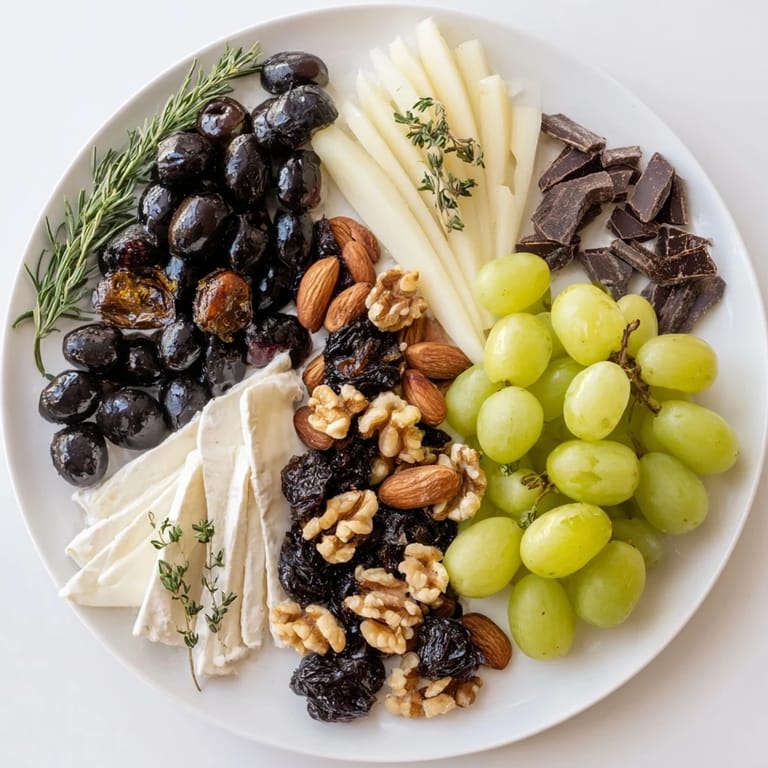
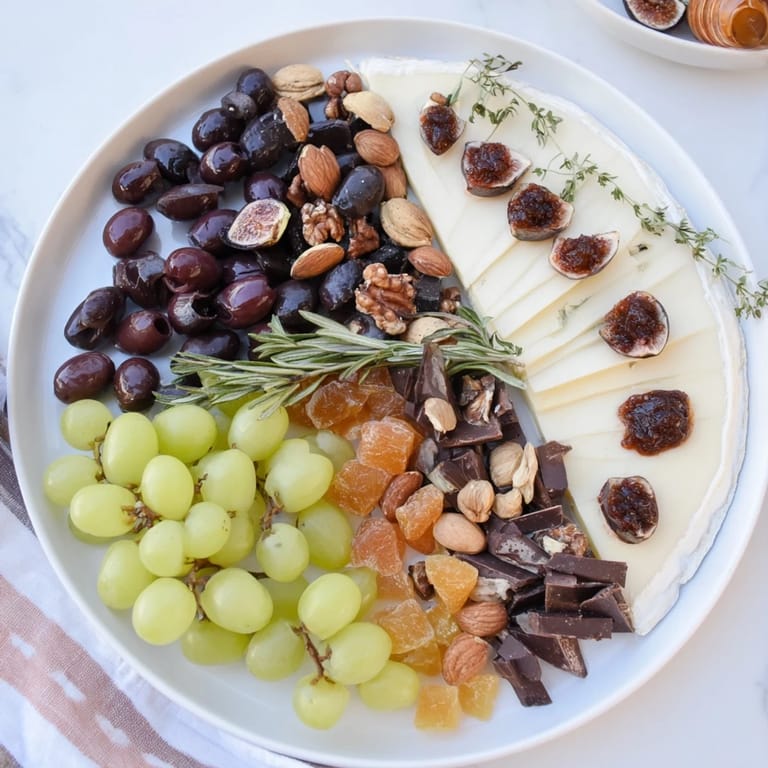
- Start with the olives clustered together, then tuck the fig halves around them so their interior faces outward. Drop a small bowl of fig jam in one corner, scatter the chocolate pieces like they're falling naturally, and add almonds in little drifts. Finish by laying a rosemary sprig on top as a final touch.
- Build the light side:
- Place the Brie wedge or wheel as your anchor point, then fan the pear slices nearby so they catch light. Drizzle or place honeycomb, scatter walnuts, and dot green grapes around like constellations. Garnish with thyme sprigs tucked between elements.
- Add the supporting players:
- Arrange baguette slices in a casual pile along the center divider or on a separate small plate. Mix your crackers in a secondary pile so people can choose their vehicle based on what they're about to eat.
- Serve and enjoy:
- Bring everything to room temperature if it's been refrigerated, step back and admire your work, then set it out for people to explore at their own pace.
 Save
Save What made this board feel sacred wasn't the ingredients themselves but the way it created a moment of pause. People slowed down, made intentional choices, talked while they assembled bites instead of scrolling. For an hour on the darkest day of the year, a simple board became a small ritual.
The Art of Balance
The magic of this board is that it's not trying to please everyone with one flavor profile—it's offering a conversation between extremes. The dark side speaks in rich, earthy, slightly bitter notes while the light side answers with sweetness and brightness. This tension is what makes it interesting; neither side is complete without the other, much like the solstice itself.
Making It Your Own
A cheese board is one of the few dishes where substitutions don't feel like failures—they feel like evolution. Swap pears for apples if that's what's beautiful this week, use Camembert instead of Brie if you prefer earthiness, add prosciutto if your crowd eats meat. The structure stays the same but your version becomes uniquely yours.
Serving and Pairing
Serve this board at room temperature when possible; cold flavors feel muted and distant, like they're behind glass. A dry sparkling wine cuts through the richness of the dark side beautifully while a light-bodied red soothes the palate between bites. Pour the wine, light a candle, and let the board set the pace for your gathering.
- Give people space and time to explore rather than narrating what everything is—discovery tastes better.
- Set out small plates and napkins so people can make composed bites rather than eating directly off the board.
- Refill and adjust elements as you go, but resist over-arranging; some chaos is part of the beauty.
 Save
Save A winter solstice board is really just an excuse to sit with people you care about and mark a moment that matters. The food is wonderful, but the pause is the real gift.
Recipe FAQ
- → How should I arrange the two sides on the board?
Divide the board evenly using a sprig of rosemary or a line of crackers to separate the dark and light sides for a clear visual and flavor contrast.
- → Can I substitute any ingredients on this board?
Yes, Brie can be replaced with Roquefort or Camembert, pears swapped for apples, and dried figs exchanged for apricots to suit preferences.
- → What beverages pair well with this selection?
A dry sparkling wine or a light-bodied red wine complements the rich and fresh flavors beautifully, enhancing the tasting experience.
- → Are there any allergy considerations to keep in mind?
This board contains milk, tree nuts, and gluten; gluten-free crackers and bread can be used to accommodate dietary needs.
- → How long does it take to prepare this board?
Preparation is quick and simple, typically taking around 15 minutes, with no cooking required.
- → Can I add any protein to make it more filling?
For added richness, thin slices of prosciutto can be included, but this can be omitted for vegetarian preferences.