 Save
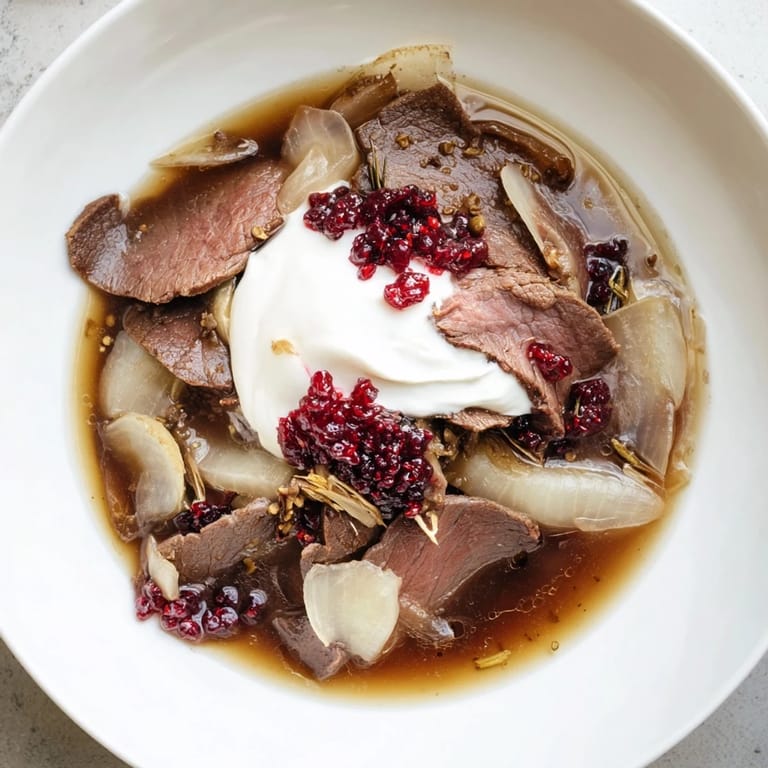
Save The first time I tasted reindeer stew was in a small restaurant north of the Arctic Circle, where snow pressed against the windows and the kitchen seemed to glow from within. The owner had made it the same way her grandmother did, with dark meat and sour cream pooling together, finished with a bright tart berry that cut through the richness like a bell ringing. I knew then I had to learn how to make it, to bring that warmth home to my own table.
My partner sat at the kitchen counter watching the pot bubble away, skeptical about cooking with reindeer until the first spoonful touched his lips. I'll never forget how his expression changed, like he was tasting something that belonged in a story rather than just dinner.
Ingredients
- Reindeer meat: This is the soul of the dish—use thinly sliced cuts that will surrender to slow heat, though venison or beef work beautifully if reindeer isn't available where you are.
- Butter and vegetable oil: Together they create a searing surface that locks the meat's juices inside without burning.
- Onions: Finely slice them so they almost dissolve into the stew, thickening and sweetening the broth as they cook.
- Garlic: Just two cloves, minced fine, add a whisper of depth rather than a shout.
- Beef or game stock: Use the best stock you can find; it becomes the backbone of every spoonful.
- Sour cream: Stirred in at the end, it makes the sauce silky and slightly tangy without curdling if you're gentle with the heat.
- Salt and black pepper: Season thoughtfully throughout, tasting as you go rather than all at once.
- Bay leaves and juniper berries: Juniper especially brings an authentic Nordic pine-forest note that elevates the whole dish into something almost ceremonial.
- Lingonberry preserves: The tart counterpoint that makes your palate wake up and notice the stew all over again with each spoonful.
- Mashed potatoes: A creamy bed to cradle the stew, traditional and completely necessary.
Tired of Takeout? 🥡
Get 10 meals you can make faster than delivery arrives. Seriously.
One email. No spam. Unsubscribe anytime.
Instructions
- Sear the meat:
- Heat butter and oil in a large heavy pot over medium-high heat until the fat shimmers and smells toasty. Working in batches, brown the reindeer slices on both sides just until the edges turn mahogany—don't crowd the pan or they'll steam instead of sear. Set each batch aside as it finishes.
- Build the base:
- In the same pot, add your sliced onions to the remaining fat and let them soften and turn translucent over about 5 minutes, stirring occasionally. Add the minced garlic and cook for another minute until the aroma hits you and you know you're on the right track.
- Combine and season:
- Return the browned meat to the pot and scatter salt, pepper, bay leaves, and crushed juniper berries over everything. Pour in the stock and water, then bring the whole pot to a gentle simmer—this should look like lazy bubbles, not a rolling boil.
- Slow braise:
- Cover the pot and turn the heat to low, letting it cook for 1½ hours while you listen to it murmur quietly on the stove. Stir occasionally and feel how the meat softens, how the liquid darkens and deepens in flavor.
- Reduce and finish:
- Remove the lid and let it cook uncovered for 10 more minutes so the broth tightens up slightly and intensifies. Then turn off the heat and stir in the sour cream gently, letting it warm through for just 2-3 minutes—no boiling or the cream will break.
- Taste and adjust:
- Always, always taste before serving and adjust the salt and pepper to your liking, remembering that the lingonberries will add tartness.
 Save
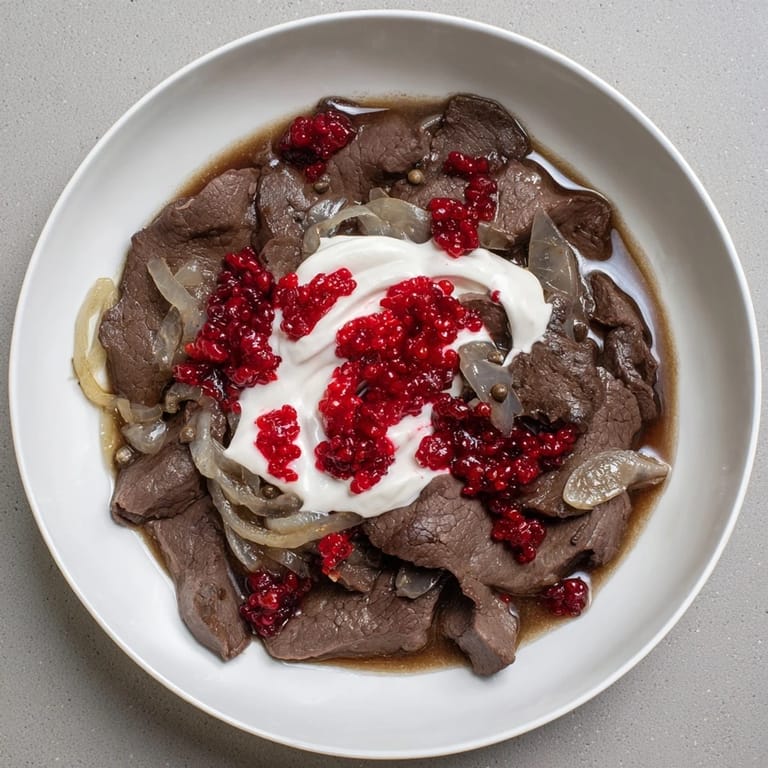
Save A friend who'd grown up eating this stew came over one winter evening, and when she took that first bite, her whole face softened. She didn't say much, just kept eating with her eyes closed, and afterward she told me it tasted like coming home. That's when I understood this wasn't just a recipe—it was a small act of time travel.
The Magic of Lingonberries
Lingonberries are tart and almost floral, nothing like the sweetness you might expect from a berry preserve. They sit on top of the stew like a jewel, and when you take a spoonful of meat and cream and then taste that bright burst of tartness, something almost electric happens on your tongue. If you truly can't find lingonberries, cranberry sauce works in a pinch, though it's a bit sweeter and misses some of that complex edge. The berries aren't a garnish—they're a necessary conversation partner with the richness below.
Why This Dish Matters in Nordic Kitchens
Reindeer stew carries the weight of history and landscape in every bite—it's what people ate when winters were long and resources had to stretch. The slow cooking method isn't fancy; it's practical, a way to make tougher cuts surrender into tenderness while filling your home with warmth. This is peasant cooking elevated not by tricks but by respect for ingredients and patience with time, which is maybe the truest form of elegance there is.
Serving and Variations
Mashed potatoes are the traditional bed for this stew, but I've also served it over egg noodles and been quite happy. Some cooks add a splash of dark beer or red wine to the broth for extra depth, which I recommend if you're feeling bold. You could even make this ahead—stews taste better the next day when flavors have had time to marry and deepen.
- If reindeer isn't available, venison tastes closest to the original, but beef chuck works wonderfully too and many people prefer it.
- Pickled cucumbers on the side are traditional and cut through the richness in a way fresh vegetables simply don't.
- Make sure your stock is gluten-free if that matters for your table, as some broths hide wheat in unexpected places.
 Save
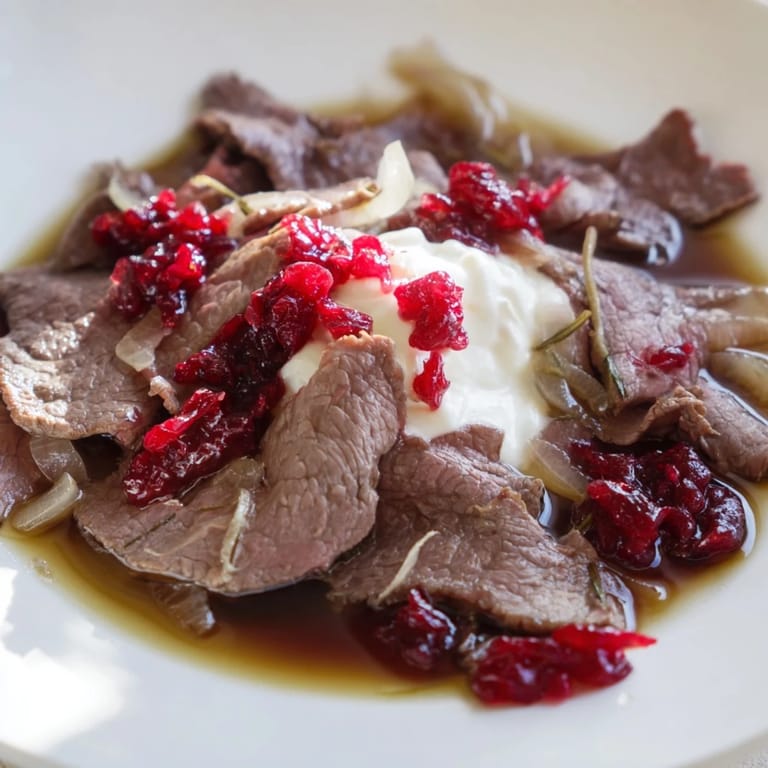
Save This stew is the kind of dish that makes you slow down, makes you notice each layer of flavor and each texture on your tongue. Serve it to people you care about and watch their faces change.
Recipe FAQ
- → Can I substitute reindeer meat?
Yes, venison or beef make excellent alternatives, maintaining a similar rich flavor and texture.
- → What gives this dish its unique flavor?
Bay leaves, juniper berries, and lingonberries contribute distinctive Nordic aromas and a subtle tartness.
- → How long should the meat be cooked?
Simmer the meat gently for about 1½ hours until tender, then reduce liquid slightly before finishing with sour cream.
- → What sides complement this dish best?
Mashed potatoes traditional pairings balance the rich stew, enhancing its creamy and tart components.
- → Can I add alcohol to enhance flavor?
Adding a splash of dark beer or red wine during cooking deepens the flavor without overpowering the dish.