 Save
Save My grandmother kept a wooden spoon behind her door every December, worn smooth from years of stirring mustard sauce for lutefisk. The first time she taught me this dish, I was skeptical about rehydrating dried cod for nearly a week, but watching that pale fish transform in the oven changed everything. The moment it emerged golden and flaking, releasing that subtle savory aroma, I understood why this Norwegian tradition has endured through generations. There's something almost magical about taking something so ancient and preserved, and coaxing it back to life with patience and care.
I made this for my boyfriend's family one winter, and his mother (who hadn't eaten proper lutefisk in twenty years) teared up at the first bite. That reaction taught me something important: some foods aren't really about the flavors alone. They're about moments suspended in time, about grandmothers and long dark winters, about traditions that somehow still matter even when we've moved far away.
Ingredients
- Dried cod (1 kg): This is the heart of the dish. Look for whole pieces rather than pre-cut chunks, as they rehydrate more evenly. The drying process preserves the fish's delicate flavor, and the long soaking gradually restores its tender texture.
- Cold water (for soaking): The daily water changes are not optional they're essential for removing the preservation compounds that would otherwise overwhelm the mild taste.
- Coarse salt (1 tbsp): This brief salt cure after soaking firms up the fish ever so slightly before baking, giving it structure without toughening it.
- Unsalted butter (2 tbsp): Use real butter here, not a substitute. It melts into the roux with an almost creamy richness that grocery store margarine simply cannot match.
- All-purpose flour (2 tbsp): The roux base for the sauce; whisk it gently to avoid lumps and don't let it brown or you'll lose the delicate mustard flavors.
- Whole milk (300 ml): This amount creates a sauce that clings to the fish without drowning it. Cold milk whisked slowly into the roux prevents that grainy texture.
- Dijon mustard (2 tbsp): The sharp, slightly spicy backbone of the sauce. Don't use yellow mustard; it tastes too vinegary here.
- Whole-grain mustard (1 tbsp): The seeds add texture and a subtle earthiness that rounds out the heat from the Dijon.
- Sugar (1 tsp): A tiny amount balances the mustard's sharp edges and ties the sauce together beautifully.
- White pepper and salt (to taste): White pepper is traditional because black specks would distract from the pale elegance of this dish.
- Boiled potatoes (4 small): Waxy potatoes work best; they hold their shape and won't fall apart on the plate.
- Crispbread or flatbread (4 slices): Something sturdy to catch all that sauce. My family always argues over whose gets the extra bread.
Tired of Takeout? 🥡
Get 10 meals you can make faster than delivery arrives. Seriously.
One email. No spam. Unsubscribe anytime.
Instructions
- Start Your Soaking Journey:
- Rinse the dried cod under cold water until the water runs clear, then place it in a large container and cover completely with cold water. This is the moment where patience becomes an ingredient. Set a phone reminder if you need to, because those daily water changes are what separate magnificent lutefisk from something regrettable.
- The Long Wait:
- For five to six days, drain and refresh the water every morning or evening. You'll notice the fish gradually plumping up, becoming softer, almost familiar again. By day four, you'll start to believe in the transformation.
- Season and Rest:
- Drain the soaked fish and pat it dry with paper towels. Sprinkle coarse salt evenly over the pieces and let them sit for thirty minutes at room temperature. This firms the flesh just enough so it won't fall apart during baking.
- Rinse Away the Salt:
- Gently rinse off all the salt under cool water, then pat dry once more. The fish should feel delicate, almost fragile, in your hands.
- Prepare Your Oven:
- Preheat to 200°C (390°F). Arrange the fish pieces in a baking dish in a single layer, not overlapping, and cover tightly with foil. This gentle, steamy baking preserves moisture and prevents drying.
- Bake Until Flaky:
- Bake for twenty five to thirty minutes. You'll know it's done when the fish is opaque throughout and flakes gently under a fork. Resist opening the foil too early to check; trust the process.
- Make the Sauce Base:
- While the fish bakes, melt butter in a saucepan over medium heat. Watch it foam and turn golden, but stop before it browns. The smell alone will remind you why you're doing this.
- Create the Roux:
- Whisk flour into the melted butter and cook for one minute, stirring constantly. This brief cooking removes the raw flour taste without allowing any color to develop.
- Introduce the Milk:
- Slowly pour in the milk while whisking constantly. This patient approach prevents lumps and creates a silky, uniform sauce. Once all the milk is incorporated, you'll feel the mixture thicken as you whisk.
- Simmer Until Ready:
- Let the sauce bubble gently for three to four minutes. It should coat the back of a spoon without running off immediately. This is when the starch does its quiet work.
- Bring in the Mustard:
- Stir in both mustards, the sugar, salt, and white pepper. Taste it and adjust as you like; some prefer it sharper, others milder. This is your sauce, your memory, your kitchen.
- Plate with Care:
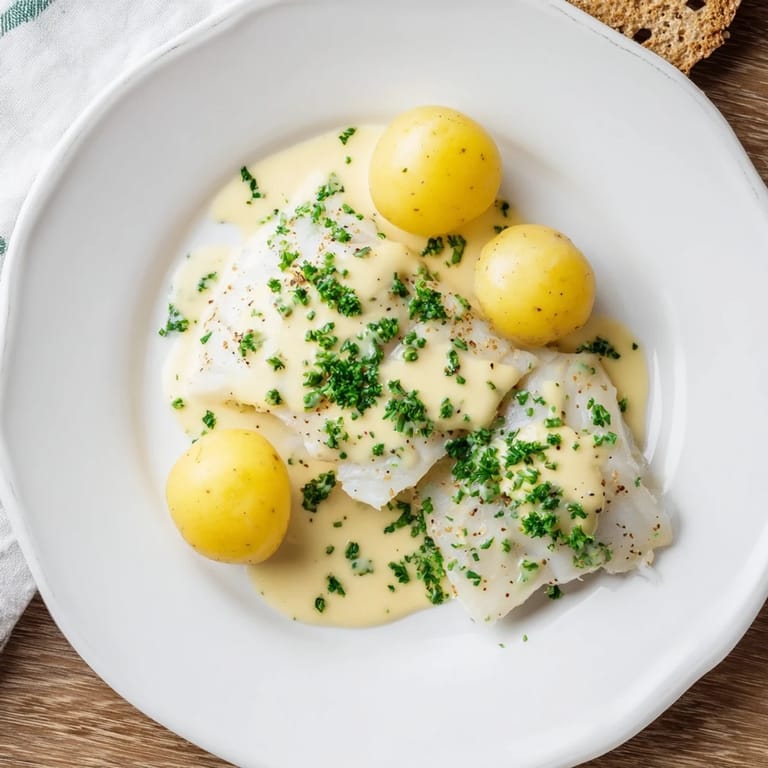
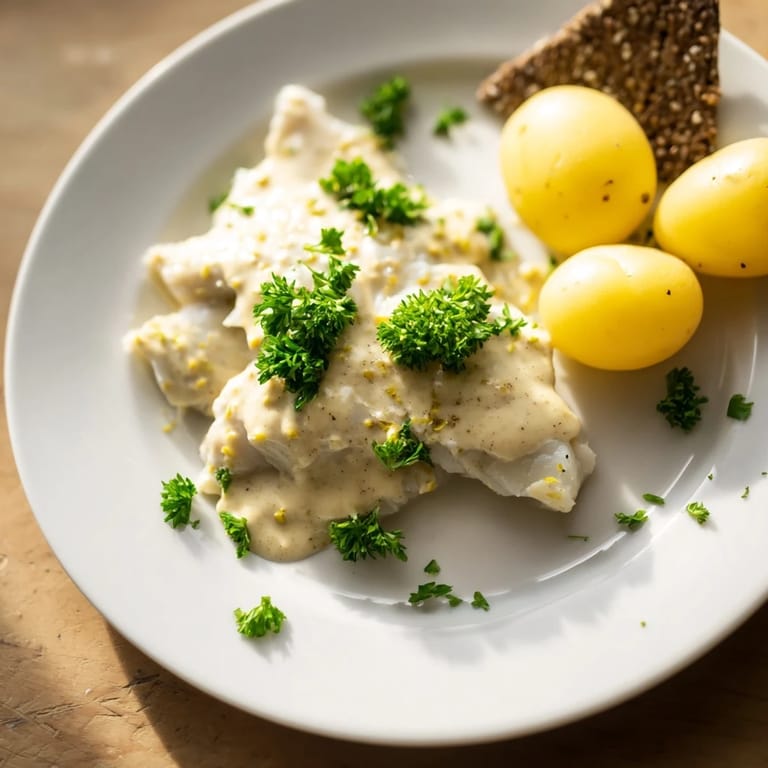
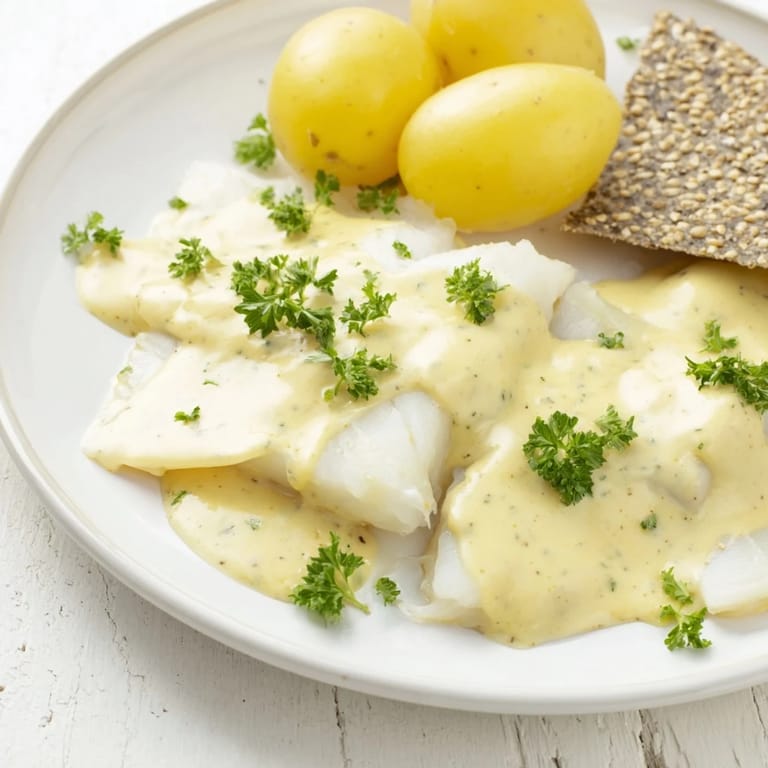
- Arrange a piece of lutefisk on each plate alongside boiled potatoes and bread. Spoon the warm mustard sauce generously over everything, letting it pool around the sides. Finish with a sprinkle of fresh parsley if you have it.
 Save
Save Once, my uncle brought lutefisk to a potluck in California, and a guest who'd never heard of the dish took one hesitant bite. Her eyes lit up with pure surprise, and she asked for the recipe immediately. That moment showed me that tradition isn't about exclusion; it's an invitation.
The History Behind Lutefisk
Lutefisk emerged centuries ago as a way to preserve cod during Scandinavian winters when fresh fish were impossible to come by. Fishermen would dry their catch in the sun and wind, creating something rock-hard that could last for months. The soaking and curing process was born from necessity, but somehow it evolved into something people crave. What started as survival food became celebrated tradition, especially around Christmas and New Year's when families gather to eat the same dish their great-grandparents prepared.
Making It Your Own
My family adds bacon bits and green peas because that's how my grandmother did it, and my aunt insists on a small dollop of butter melting into the warm plate instead of sauce. These variations aren't betrayals of tradition; they're how tradition actually lives and breathes. The foundation stays the same, but the details become yours. Some people drink aquavit alongside this dish, letting the caraway warmth complement the fish's subtle flavor. Others prefer a crisp lager that cuts through the richness of the sauce with clean, cold refreshment. There's no wrong answer, only your answer.
Timing and Make Ahead Strategy
The soaking happens entirely in advance, which means on the actual day you cook, you're looking at roughly ninety minutes of active work. You can prepare the mustard sauce up to four hours before serving and gently reheat it while the fish bakes. The potatoes boil while everything else cooks, so once you've started the fish, you're really just managing a few pans at once. I've found that gathering your family an hour before serving and letting them set the table, pour drinks, and create atmosphere makes the meal feel less like a solo performance and more like an event everyone shares in.
- Boil potatoes in salted water about thirty minutes before serving for best texture.
- Reheat sauce over low heat if you've made it ahead, stirring frequently and adding a splash of milk if it's thickened too much.
- Bake the fish as close to serving time as possible to keep it warm and at its most tender.
 Save
Save Lutefisk asks you to slow down and trust something ancient. It reminds us that the best things often take time.
Recipe FAQ
- → How long should lutefisk be soaked before cooking?
It requires soaking in cold water for 5–6 days with daily water changes to ensure proper rehydration and texture.
- → What is the best way to bake lutefisk for optimal texture?
Bake covered with foil at 200°C (390°F) for about 25–30 minutes until the fish is opaque and flakes easily.
- → How is the mustard sauce prepared for this dish?
A roux is made by melting butter and whisking in flour, then milk is gradually added and simmered until thickened. Dijon and whole-grain mustards, sugar, and seasoning finish the sauce.
- → What sides complement lutefisk traditionally?
Boiled potatoes and crispbread or flatbread are classic accompaniments, adding texture and balance to the meal.
- → Can gluten-free flour be used in the mustard sauce?
Yes, gluten-free flour can replace all-purpose flour to make the sauce suitable for gluten-free diets.