 Save
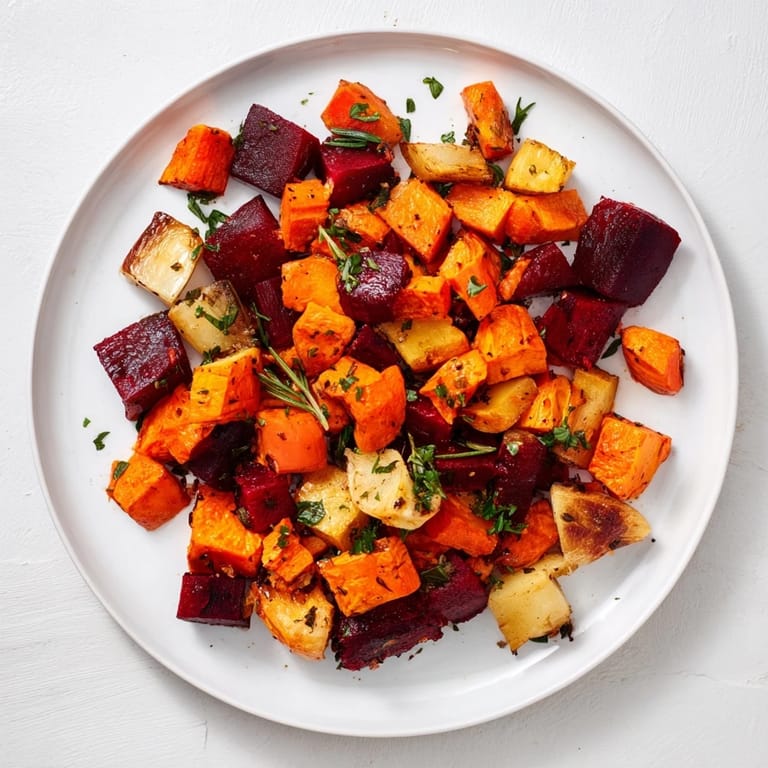
Save My tiny apartment kitchen smelled like earth and comfort the first time I made this. I'd grabbed a mismatched bundle of root vegetables from the farmers market, not entirely sure what I'd do with them, but something about their rough, dirt-streaked skins felt honest and grounding. When they emerged from the oven, all golden edges and concentrated sweetness, I realized I'd stumbled onto something that would become a regular ritual through the colder months.
Last winter, I made a massive batch for a dinner party when my oven decided it only wanted to work at 375°F instead of 425°F. You know what? They still came out beautifully, just needing about ten extra minutes. My friend Sarah, who claims to hate beets, went back for thirds and didn't even realize she'd eaten them until I pointed it out. Sometimes the best kitchen moments are the ones that don't go according to plan.
Ingredients
- 2 medium carrots: These bring natural sweetness and hold their shape beautifully during roasting
- 2 medium parsnips: They have a lovely subtle earthiness that balances the sweet potato
- 1 medium sweet potato: The creamy contrast to the other roots makes every bite interesting
- 1 medium red beet: It adds gorgeous color and becomes candy-sweet in the oven
- 1 small rutabaga or turnip: This adds a pleasant mild bitterness that keeps the dish from being too sweet
- 3 tbsp olive oil: Don't skimp here—the oil helps those edges get perfectly caramelized
- 1 ½ tsp kosher salt: This amplifies the natural flavors rather than just making things salty
- ½ tsp freshly ground black pepper: Freshly ground really does make a noticeable difference here
- 1 tsp dried thyme or 1 tbsp fresh thyme leaves: Thyme's piney notes love root vegetables
- 1 tsp dried rosemary or 1 tbsp fresh rosemary: A little goes a long way, and it adds that cozy aroma
- 3 cloves garlic, optional: If you love garlic, add it—it becomes mellow and sweet
- 2 tbsp fresh parsley, for garnish: This brightens everything up visually and adds a fresh finish
Tired of Takeout? 🥡
Get 10 meals you can make faster than delivery arrives. Seriously.
One email. No spam. Unsubscribe anytime.
Instructions
- Preheat your oven:
- Get it to 425°F and line a baking sheet while you work, making cleanup so much easier
- Combine the vegetables:
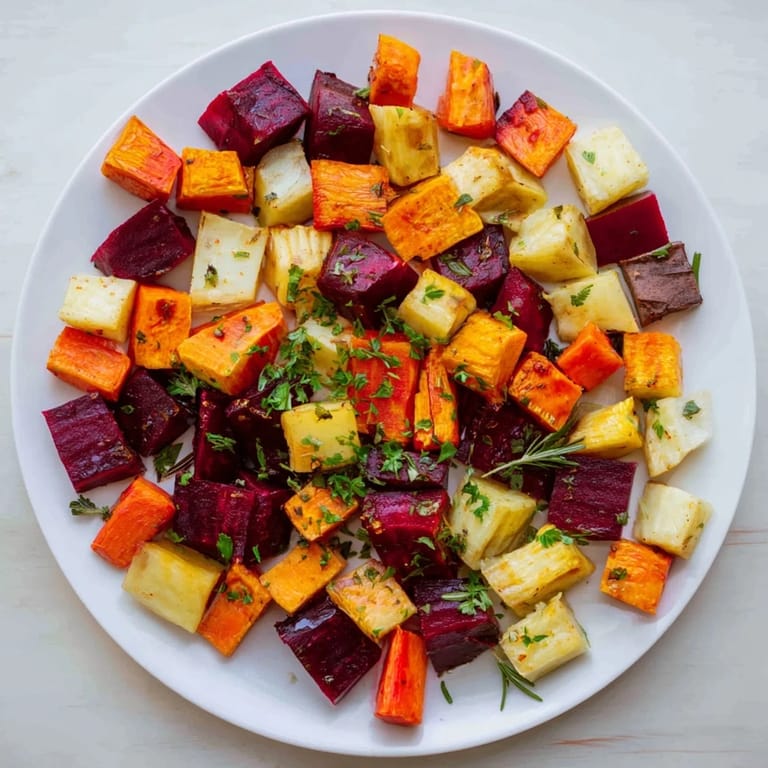
- Toss all your chopped roots in a large bowl—they'll look like a rainbow of earthy colors before they even hit the heat
- Season generously:
- Drizzle with olive oil and sprinkle with salt, pepper, thyme, and rosemary, then use your hands to coat everything thoroughly
- Arrange for roasting:
- Spread the vegetables in a single layer on your prepared sheet, giving them space to get golden instead of steamy
- Roast until tender:
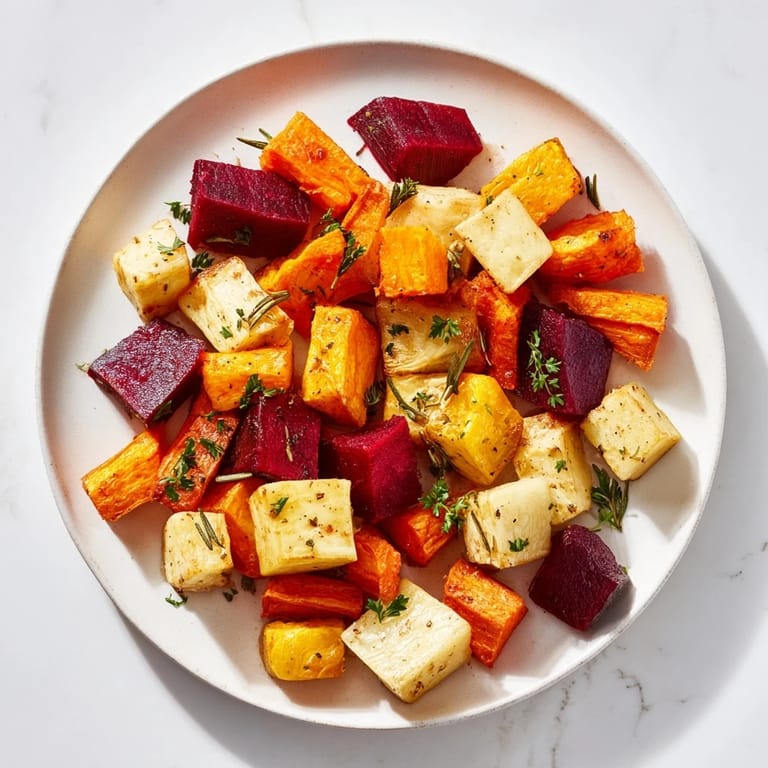
- Let them cook for 35 to 40 minutes, stirring halfway through, until they're fork-tender with caramelized edges
- Finish and serve:
- Transfer to a serving dish and sprinkle with fresh parsley if you like, then serve them while they're still warm and fragrant
 Save
Save I've started making double batches just to have leftovers for breakfast the next day. There's something profoundly satisfying about reheating these vegetables with a fried egg on top, the colors even deeper and the flavors more concentrated after a night in the fridge. It's become my version of comfort food that doesn't leave me feeling heavy.
Choosing Your Vegetables
I've learned that the humblest vegetables often transform the most dramatically in the oven. Look for firm, heavy roots without soft spots or blemishes, and don't worry if they still have some dirt clinging to them—that's often a sign they haven't been waxed or over-processed. Sometimes the ugliest vegetables at the market turn out to be the sweetest ones.
Timing Everything Right
If you're serving this alongside something else, you can let the roasted vegetables rest at room temperature for about 20 minutes without losing much quality. I've discovered they're actually wonderful slightly warm rather than piping hot, which gives me more flexibility when timing multiple dishes. The flavors seem to settle and become more cohesive as they cool slightly.
Make It Your Own
Once you've made this a few times, you'll start developing your own preferences. I've grown fond of adding a splash of balsamic vinegar during the last ten minutes of roasting, which creates a sticky, tangy glaze that people always ask about. Some nights I skip the herbs entirely and let the vegetables speak for themselves, especially when I've found particularly sweet carrots or beets.
- Try adding a handful of quartered Brussels sprouts for extra color and nutrition
- A sprinkle of za'atar or sumac transforms this into something entirely different
- Leftovers make an excellent base for grain bowls or quick lunch salads
 Save
Save Hope this becomes one of those recipes you return to whenever you need something simple and deeply satisfying.
Recipe FAQ
- → What root vegetables work best for roasting?
Carrots, parsnips, sweet potatoes, beets, and rutabaga all roast beautifully. Their dense textures hold up well to high heat while developing natural sweetness. Feel free to substitute potatoes, celeriac, or sunchokes based on availability.
- → Why roast at 425°F?
This high temperature creates caramelization on the vegetable exteriors while cooking interiors to tenderness. The result is golden brown edges with concentrated natural sugars and deep flavor development.
- → Can I prepare these vegetables ahead of time?
Yes, peel and cut the vegetables up to 24 hours in advance. Store them in an airtight container with water to prevent browning, then drain thoroughly before tossing with oil and seasonings.
- → How do I know when the vegetables are done?
The vegetables should be fork-tender with golden brown edges. Roasting typically takes 35-40 minutes, but start checking at 30 minutes as size variations affect cooking time.
- → What can I serve with roasted vegetables?
These pair excellently with roasted chicken, beef, or pork loin. For a complete vegetarian meal, serve over quinoa or alongside a green salad with vinaigrette to complement the sweetness.
- → Can I add other seasonings?
Minced garlic adds aromatic depth when tossed with the vegetables. A splash of balsamic vinegar before roasting enhances caramelization and adds subtle acidity. Fresh parsley garnish provides bright color and flavor contrast.