 Save
Save My first Estonian leib came together on a gray November afternoon when I was trying to recreate something my grandmother's old cookbook hinted at but never quite explained. The moment that sticky dough hit the bowl—dark as forest soil, threaded with caraway—I knew I was onto something real. The kitchen filled with this deep, earthy smell that's nothing like the airy wheat breads I'd been making for years. That loaf taught me that some of the best breads don't need to be light or tall; they need to be honest.
I made this for a dinner party once and watched my guests slow down their eating in a way I'd never seen before. Nobody was making small talk over it; they were just quietly, contentedly eating slice after slice with butter and a little smoked mackerel. One friend asked if I'd bought it from a bakery, and when I said no, she just nodded like that made perfect sense.
Ingredients
- Active rye sourdough starter (100 g): This is your living ingredient—it needs to be bubbly and fed recently, not dormant in the back of your fridge.
- Dark rye flour (400 g): The foundation of everything; it gives you that deep color and rich flavor you can't fake with anything else.
- Bread flour (100 g): Wheat flour adds structure so your dough doesn't become a brick.
- Lukewarm water (300 ml): Temperature matters here; if it's too cold, your fermentation stalls, too hot and you'll kill your starter.
- Dark rye malt (50 g): This is the secret ingredient that tastes faintly sweet and almost chocolatey—if you can't find it, barley malt powder works.
- Molasses or dark honey (2 tbsp): Just enough sweetness to balance the rye and feed the fermentation.
- Caraway seeds (1 tbsp plus optional topping): Toast them lightly before mixing if you want the flavor to really sing.
- Fine sea salt (2 tsp): Don't skip this; it strengthens the gluten and deepens the flavor.
Tired of Takeout? 🥡
Get 10 meals you can make faster than delivery arrives. Seriously.
One email. No spam. Unsubscribe anytime.
Instructions
- Wake up your starter and build the base:
- In a large bowl, stir together your rye starter, lukewarm water, and molasses until the molasses dissolves and the starter loosens into the water. This is where the long fermentation begins—you're creating an environment where wild yeast can wake up and work quietly overnight.
- Bring everything together:
- Add the rye flour, bread flour, malt powder, caraway seeds, and salt. Mix with a wooden spoon or your hands until a thick, shaggy dough forms—it'll look almost like wet sand mixed with gravel, which is exactly right. Don't overmix; you're just looking for the flour to hydrate.
- Let time do the heavy lifting:
- Cover the bowl with a damp cloth and leave it at room temperature for 10–12 hours or overnight. You'll watch it transform from dense and intimidating into something alive, with bubbles breaking the surface and the whole thing swelling gently upward.
- Shape and prepare for the final rise:
- Line a loaf pan with parchment or grease it lightly, then scrape the dough in and smooth the top with a wet spatula—this step is oddly meditative. Sprinkle a few caraway seeds on top if you want them to toast into the crust.
- Give it one last rise:
- Cover and let it sit for 2–4 hours until the dough reaches just below the rim of the pan. It should look full and pillowy, but not overstuffed.
- Create steam and heat:
- Preheat your oven to 220°C (430°F) and place a pan of hot water on the bottom rack. The steam is crucial—it keeps the crust supple long enough for the bread to expand fully.
- Bake with intention:
- Bake at 220°C for 15 minutes, then lower the heat to 190°C (375°F) and bake for another 30 minutes until the crust is dark brown and the loaf sounds hollow when you tap it. This two-temperature method gives you a properly baked interior without a burnt outside.
- Rest before slicing:
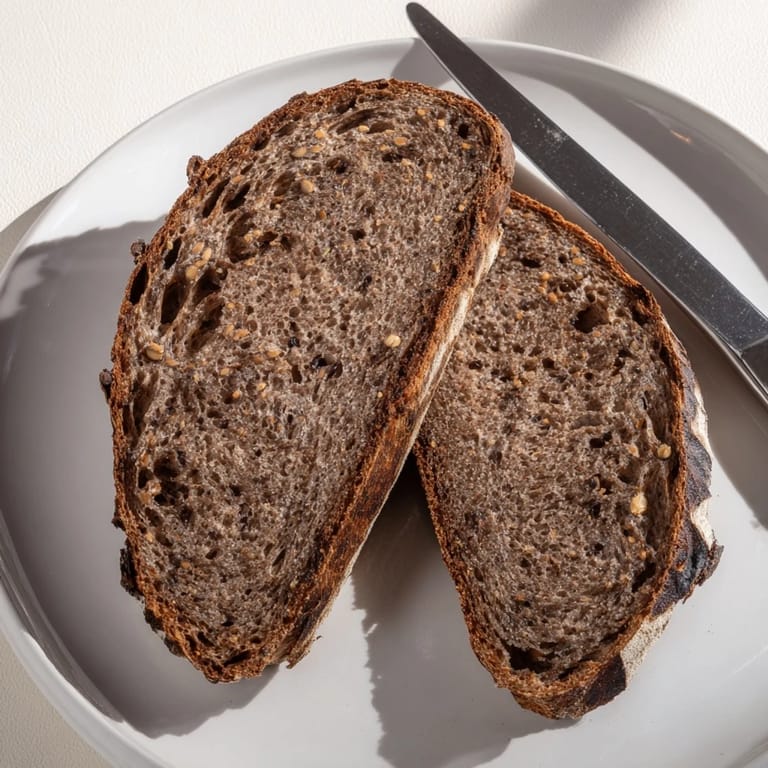
- Cool completely on a wire rack. This is hard to do, but your patience pays off—the crumb sets as it cools, and you'll get clean slices instead of a gummy mess.
 Save
Save There's something about pulling a dark, dense loaf out of the oven that feels like you've made something permanent, something that will still be good tomorrow and the day after. This bread doesn't fade; it just deepens in flavor as it sits.
The Quiet Power of Rye
Rye is different from wheat in ways that matter for this bread. It ferments faster, holds less gluten, and has this natural mineral quality that's hard to describe but easy to taste. When I switched from all wheat to this rye-heavy ratio, I stopped chasing that Instagram-perfect open crumb and started appreciating density as a feature, not a flaw. Rye wants to be sturdy and substantial; you work with that, not against it.
Timing and Temperature
This bread rewards you for paying attention to your kitchen's temperature. In summer, it rises faster and ferments more aggressively; in winter, it asks for patience and sometimes a warm corner of your kitchen. I learned to stop setting a timer and start trusting my eyes instead. When you see those bubbles breaking the surface and smell that deep, almost coffee-like aroma, that's when you know you're ready to shape.
Serving and Storage Wisdom
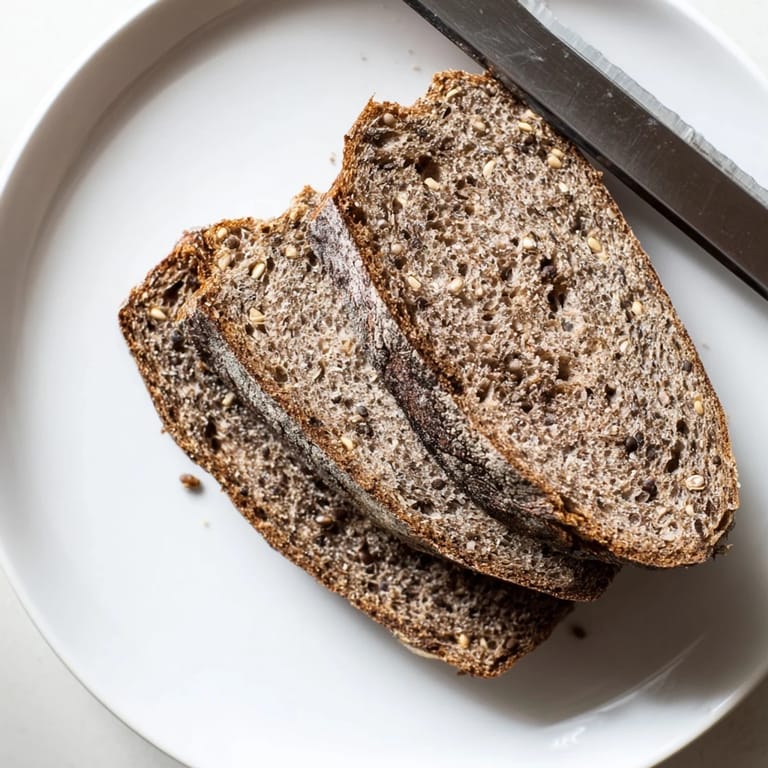
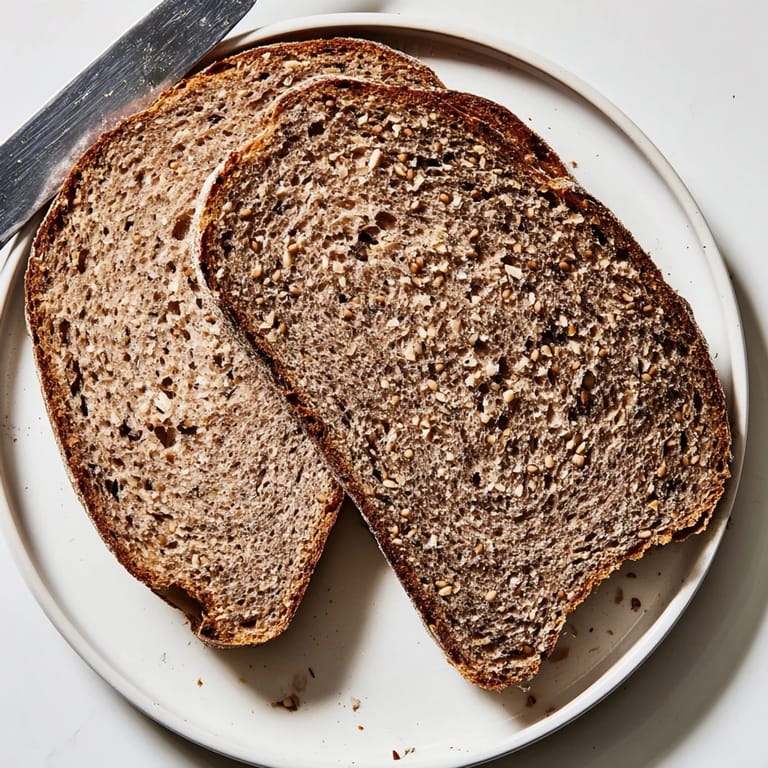
Slice this bread thick and serve it still faintly warm with salted butter, smoked fish, or alongside a sharp cheese. The flavor holds steady for days because of the long fermentation, which also naturally preserves it—wrap what you don't eat in a clean cloth and it keeps beautifully.
- Toasting day-old slices in a cast-iron pan transforms them into something crispy outside and tender inside.
- This bread pairs specifically well with pickled vegetables, cured meats, and anything with a smoky depth to it.
- If your loaf seems a bit heavy when sliced, trust that it's meant to be; dense, satisfying rye bread is the whole point.
 Save
Save Making this bread is less about following a recipe and more about learning to read your dough and your kitchen. Once you understand those rhythms, you've got a loaf that feels both deeply traditional and completely yours.
Recipe FAQ
- → What flours are used in this bread?
It uses a blend of dark rye flour and bread (wheat) flour for a balanced texture and flavor.
- → Why is malt added to the dough?
Malt enhances the bread's natural sweetness and deepens its color and aroma.
- → What is the purpose of caraway seeds?
Caraway seeds contribute a distinct spicy, slightly sweet flavor that complements the rye.
- → How long should the dough rise?
The dough undergoes a long fermentation: 10–12 hours initially, then an additional 2–4 hours after shaping.
- → How is the dark crust achieved?
Starting the bake at higher heat with steam and then reducing temperature develops a thick, aromatic crust.