 Save
Save There's something magical about the smell of cinnamon rolls rising in the oven on a quiet Sunday morning. I discovered this recipe years ago when a friend brought a plate of the most impossibly soft rolls to a potluck, and I spent half the event interrogating her about how she'd achieved such pillowy perfection. What struck me wasn't just the taste but the way the whole room seemed to pause when they came out of the oven, like time had stopped for that one moment of butter and cinnamon-scented bliss.
I made these for my partner's birthday breakfast last year, and I'll never forget the look on their face when they bit into one still warm from the pan. The kitchen smelled incredible, and for once, everything felt effortless—the dough cooperated, the timing worked out, and the glaze came together like it was meant to. That's when I realized these rolls weren't just about feeding someone; they were about showing up for them in the most delicious way possible.
Ingredients
- All-purpose flour (4 cups): This is your foundation, and getting it right matters more than you'd think—too much makes them dense, too little makes them fall apart.
- Active dry yeast (2 1/4 tsp): The yeast is what gives these rolls their signature cloudlike texture, so make sure yours is fresh and hasn't been sitting in your cupboard for years.
- Warm milk (1 cup): Temperature is everything here—too hot and you'll kill the yeast, too cool and it won't activate properly.
- Granulated sugar and brown sugar: The granulated sugar feeds the yeast, while the brown sugar in the filling adds moisture and depth that keeps every bite tender.
- Unsalted butter (melted and soft): Use real butter; it's the difference between good rolls and ones that taste like the ones from a box mix.
- Eggs and salt: Eggs enrich the dough and give it structure, while salt brightens all the flavors and prevents the rolls from tasting flat.
- Ground cinnamon (2 1/2 tbsp): Don't skimp on this—that generous amount is exactly what makes people close their eyes when they taste your rolls.
- Cream cheese and powdered sugar for the glaze: This combination creates a glaze that's tangy enough to balance the sweetness and thick enough to actually stay on top instead of running off the sides.
Tired of Takeout? 🥡
Get 10 meals you can make faster than delivery arrives. Seriously.
One email. No spam. Unsubscribe anytime.
Instructions
- Wake up the yeast:
- Pour warm milk into a bowl, sprinkle yeast over it with a tablespoon of sugar, and wait. You'll see it foam and bubble to life, which is your sign that everything is ready to go.
- Build the dough:
- Once the yeast is foamy, add the rest of your ingredients and mix until a shaggy dough comes together. This is where you stop overthinking and just let your hands do the work.
- Knead until smooth:
- Whether you use a stand mixer with a dough hook or do this by hand, you're looking for dough that's smooth and slightly elastic, not sticky. This usually takes about 6 to 8 minutes, and you'll feel the difference under your hands.
- First rise:
- Place your dough in a greased bowl, cover it loosely with a cloth, and tuck it somewhere warm—near a sunny window, in a turned-off oven, or even on top of the refrigerator. An hour is usually enough for it to double in size.
- Shape the rectangle:
- Once risen, punch that dough down (and yes, this is the most satisfying part), then roll it into a 16 by 12-inch rectangle. Don't stress about perfect edges; rustic is just fine here.
- Fill and roll:
- Spread soft butter over the entire rectangle, then sprinkle your cinnamon sugar mixture evenly across. Starting from one long edge, roll the dough tightly toward you, pinch the seam closed, and slice into 12 rolls using a sharp knife or, if you're feeling fancy, dental floss.
- Second rise:
- Arrange the rolls in a greased baking dish, cover them loosely, and let them rise again until they're nearly doubled, about 35 to 45 minutes. This is when the magic happens—they puff up and kiss each other as they rise.
- Bake to golden:
- Into a 350°F oven they go for 22 to 25 minutes, until the tops are deep golden brown and your kitchen smells like a bakery. You'll know they're ready when you can barely stand the anticipation.
- Make the glaze:
- While rolls bake, beat together softened cream cheese, butter, powdered sugar, vanilla, and just enough milk to create something spreadable but not runny. Taste it and adjust if you want it tangier or sweeter.
- Glaze and serve:
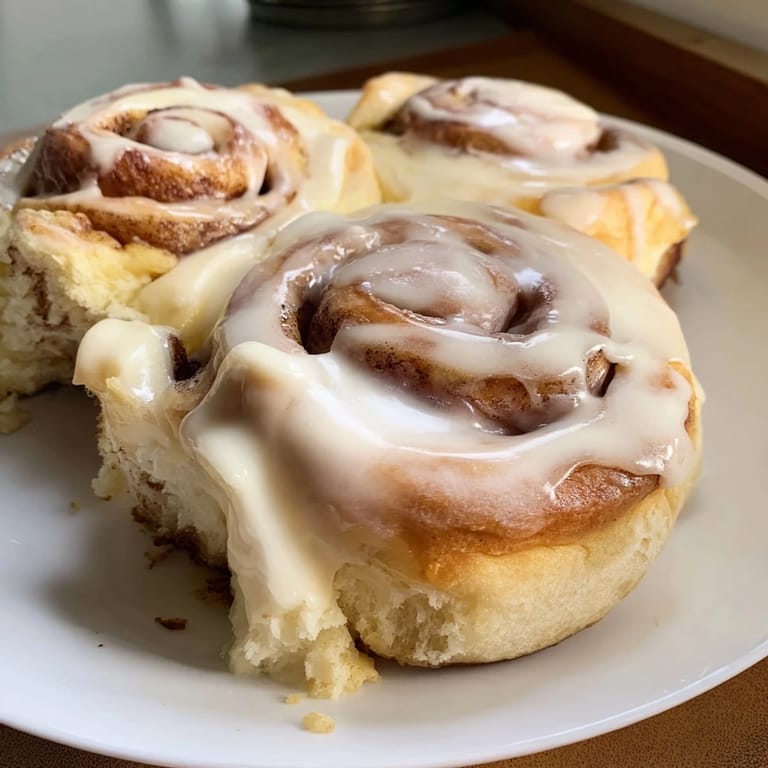
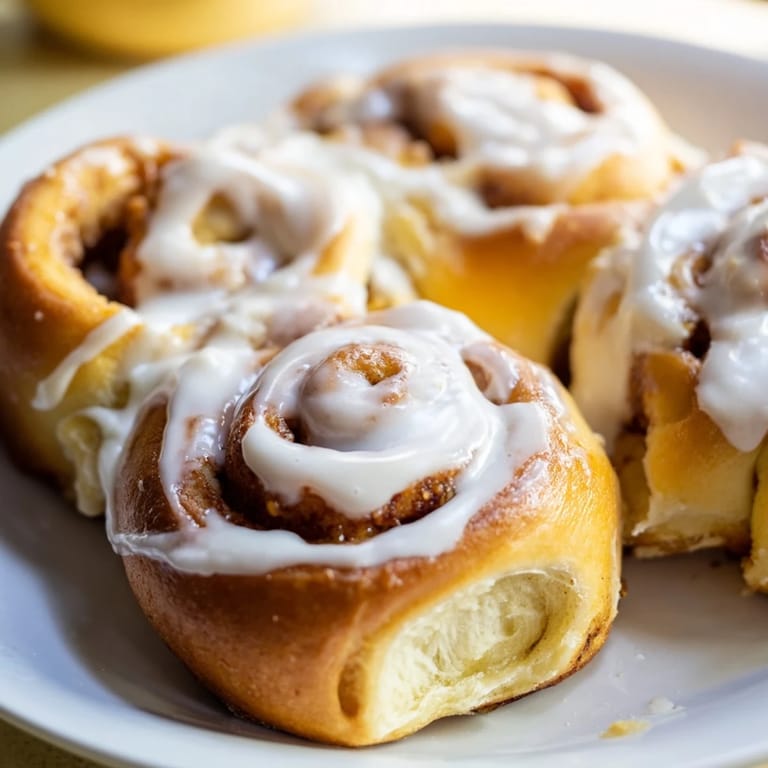
- Let the rolls cool for about 10 minutes, then spread that cream cheese glaze generously over warm rolls. Serve them immediately while the glaze is still soft and the rolls are still warm.
 Save
Save I've learned that cinnamon rolls are one of those recipes that teaches you patience in the best way possible. There's something humbling about trusting yeast, about waiting for dough to rise and understanding that you can't rush perfection. When you finally pull them from the oven and that glaze melts into warm swirls, it feels less like cooking and more like witnessing something beautiful.
The Art of Softness
What separates a good cinnamon roll from a great one is all about keeping things tender. The butter in the dough, the brown sugar in the filling, and even the cream cheese glaze all work together to create that signature pillow-soft texture that makes people forget their manners and just eat with their hands. I've tried bread flour, and it does work, but I always come back to all-purpose because there's a balance there—sturdy enough to rise properly, but tender enough to melt on your tongue.
Making Them Your Own
One of my favorite discoveries was that these rolls are a blank canvas for your own touches. I've added crushed pecans and raisins to the filling, swirled a little extra cinnamon on top, and even tried a hint of cardamom in the dough. Each version has been delicious in its own way, and I love that this recipe is flexible enough to accommodate whatever flavors you're craving without losing its essential character.
Timing and Make-Ahead Magic
The beauty of this recipe is that you can prepare the rolls the night before and let them finish rising in the morning, which means you can have fresh-baked rolls for breakfast without actually baking at dawn. I've done this on countless mornings when I wanted to impress someone without the pre-5 a.m. alarm clock, and it works perfectly every time.
- Prepare rolls through the shaping step, cover them, and refrigerate overnight—the cold actually helps them develop more flavor.
- In the morning, let them come to room temperature and rise for about an hour before baking, and you'll have warm rolls ready by mid-morning.
- They're also forgiving if you need to bake them a little earlier or later than planned; just watch the golden color rather than the clock.
 Save
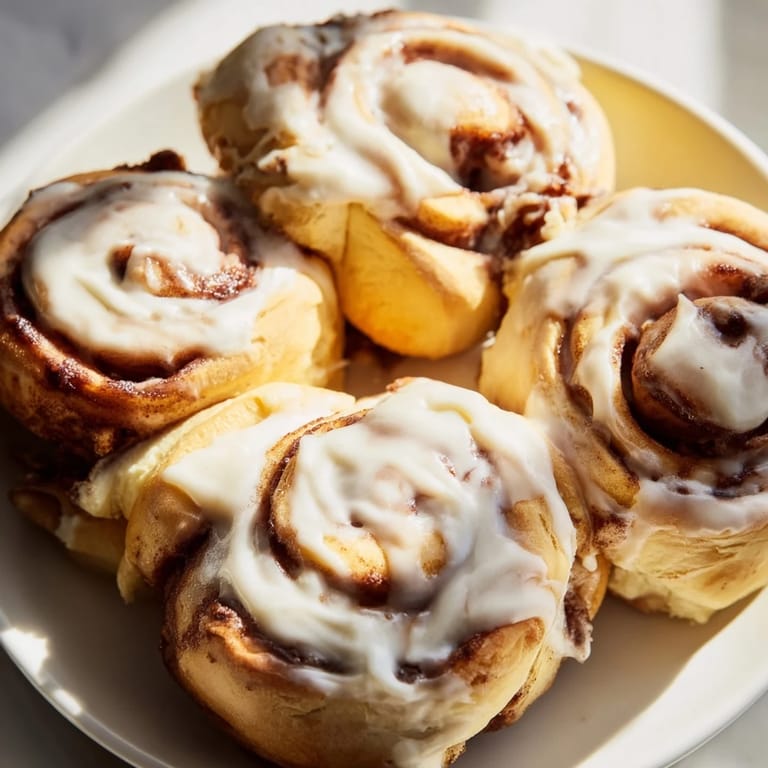
Save These rolls have become my answer to almost every morning that needs a little extra love. There's nothing quite like sharing them warm from the oven, watching someone's face light up, and knowing you made that moment happen from scratch.
Recipe FAQ
- → How do I get the rolls extra soft?
Using bread flour instead of all-purpose flour improves gluten development, resulting in a softer, chewier texture.
- → Can I prepare the rolls in advance?
Yes, shape the rolls and refrigerate overnight. Let them rise at room temperature for an hour before baking.
- → What is the purpose of the cream cheese glaze?
The glaze adds a rich, tangy sweetness that complements the cinnamon filling and keeps the rolls moist.
- → Can I add nuts or dried fruits to the filling?
Yes, chopped pecans or raisins can be mixed into the cinnamon sugar filling for added texture and flavor.
- → How long should the dough rise?
Allow the dough to rise in a warm spot until doubled in size, usually about one hour, then let the shaped rolls rise again for 35-45 minutes before baking.
- → What temperature is best for baking?
Bake the rolls at 350°F (175°C) until golden brown, roughly 22-25 minutes, for an even bake and soft crumb.