 Save
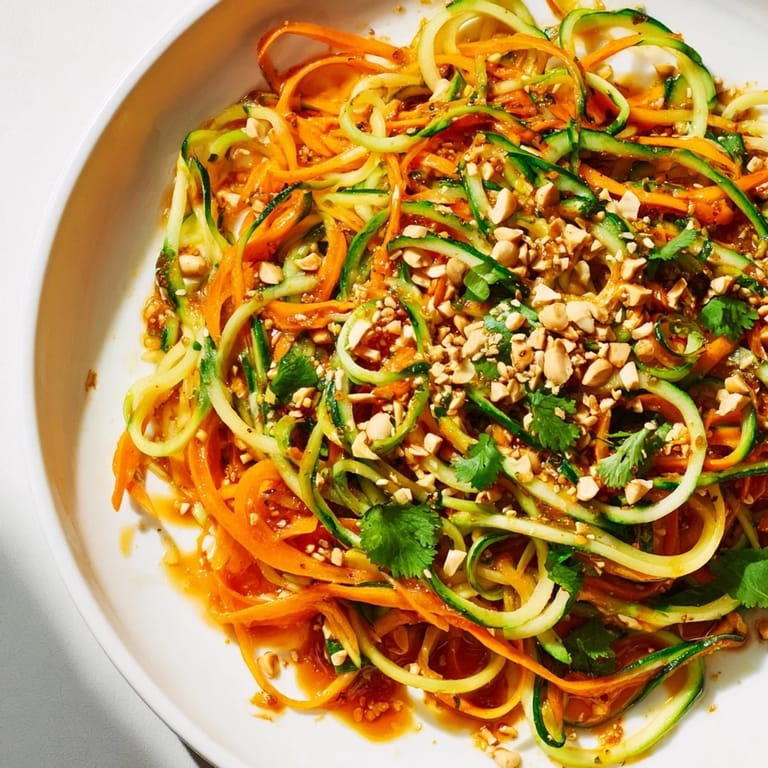
Save Last summer, I was scrolling through my phone during a lazy afternoon when I stumbled on a video of someone spiralizing cucumbers with this fiery chili sauce, and something about it just clicked. I had all the ingredients sitting in my fridge, so I decided to throw it together right then and there. The moment I tossed everything together and took that first bite, I understood why people were going wild for it—it was cool, it was crunchy, and it had this addictive heat that made me reach for another forkful without thinking.
I made this for my roommate on a sweltering July evening when neither of us could face the thought of turning on the stove. We sat on the kitchen counter with our bowls, and she kept saying it tasted like summer in noodle form—which sounds cheesy, but it was exactly right. The way the coolness of the cucumber played against the spice, with that nutty sesame undertone, just felt like what we both needed in that moment.
Ingredients
- Cucumbers: Spiralize or julienne them finely so they pick up the sauce and stay tender, not watery—the key is patting them dry afterward so they don't dilute everything.
- Carrot: This adds a subtle sweetness and a pop of color, but it's truly optional if you're in a rush or just want to keep it simple.
- Scallions: Slice them thin so they distribute throughout the bowl and add that bright onion bite in every bite.
- Fresh cilantro: If you're one of those people who loves it, it brings a herbaceous freshness that balances the heat beautifully.
- Soy sauce or tamari: This is your umami backbone, so don't skip it—tamari works if you're keeping things gluten-free.
- Rice vinegar: It cuts through the richness of the sesame oil and keeps everything feeling light and zippy.
- Sesame oil: A little goes a long way here, but it's essential for that nutty, toasty flavor that ties everything together.
- Chili crisp or chili oil: This is where the personality lives—adjust it to your heat tolerance, but don't be shy.
- Maple syrup or honey: Just a touch to balance the spice and acidity, creating a sauce that's complex rather than one-note.
- Garlic and ginger: Fresh is non-negotiable here; they need to be minced fine so they distribute evenly through the sauce.
- Sesame seeds: Toast them if you can, as it deepens their flavor and adds a satisfying crunch.
Tired of Takeout? 🥡
Get 10 meals you can make faster than delivery arrives. Seriously.
One email. No spam. Unsubscribe anytime.
Instructions
- Spiralize and dry your cucumbers:
- Run your spiralizer over the cucumbers, then lay them on paper towels and gently press to remove excess water—this step saves you from a soggy bowl later. If you don't have a spiralizer, a julienne peeler works just fine.
- Toss the vegetables together:
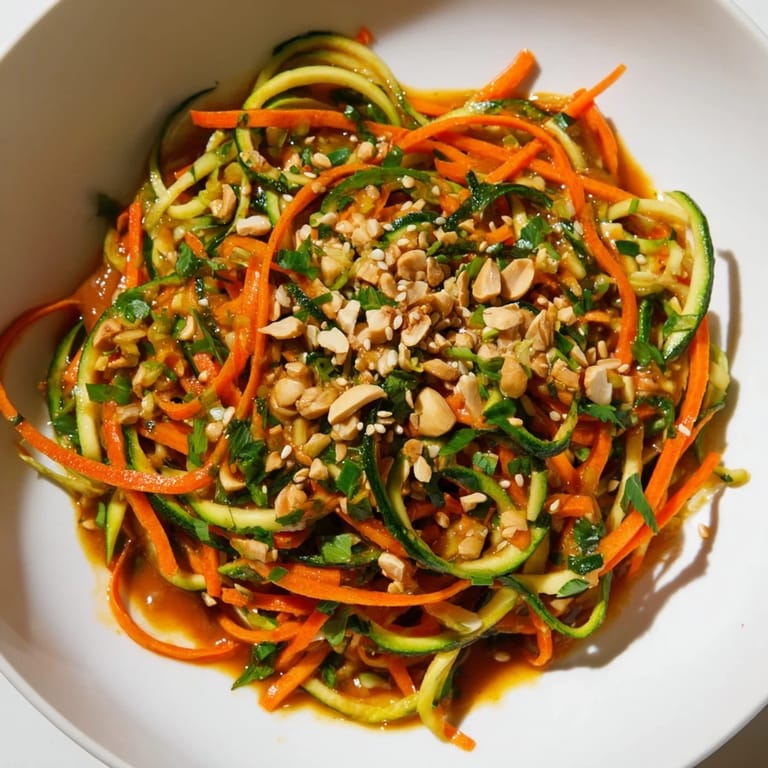
- Combine the cucumber noodles, carrot, scallions, and cilantro in a large bowl, mixing gently so the delicate strands don't break apart.
- Whisk the sauce to life:
- In a small bowl, combine the soy sauce, rice vinegar, sesame oil, chili crisp, maple syrup, garlic, ginger, and sesame seeds, whisking until everything is smooth and the flavors meld. Taste it straight from the spoon—this is your moment to adjust the heat or sweetness.
- Marry the sauce with the vegetables:
- Pour the sauce over the vegetables and toss gently but thoroughly, making sure every strand gets coated. You want the vegetables to glisten, not swim.
- Plate and finish:
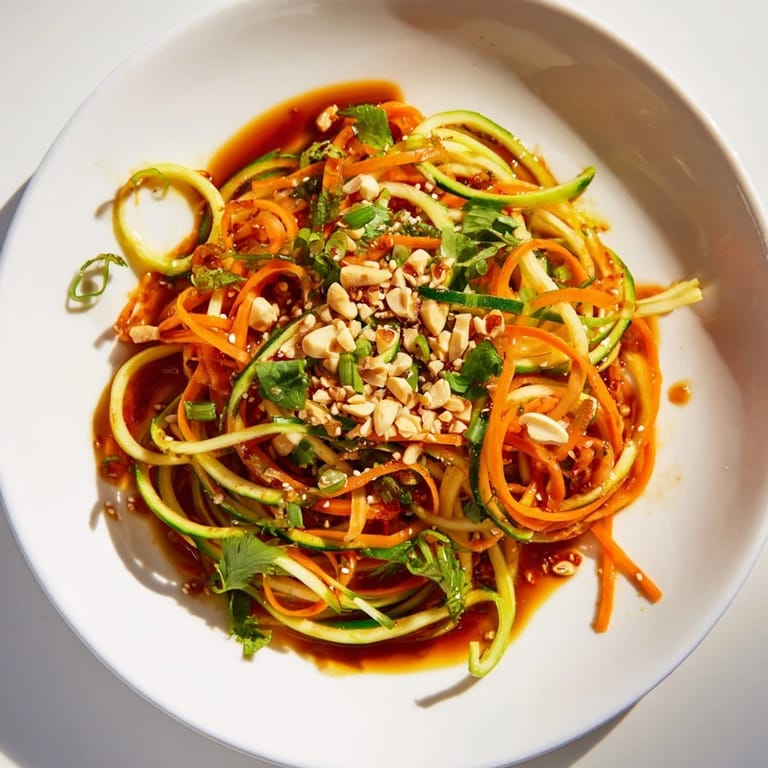
- Divide between bowls and scatter with chopped peanuts, an extra drizzle of chili crisp, and a lime wedge on the side. Serve immediately while everything is still crisp and cold.
 Save
Save There's something almost meditative about the sound of the spiralizer working through a cucumber, turning something solid into delicate ribbons. I find myself making this on evenings when I need to calm down, and by the time I'm eating it, the tension from the day has already started melting away.
Making It Your Own
The beauty of this bowl is that it's a canvas for whatever you have on hand or whatever your mood demands. I've added shredded rotisserie chicken when I needed more protein, thrown in edamame for bulk, and swapped peanuts for sunflower seeds when someone at the table had an allergy. Once you understand the balance of the sauce, you can riff on the vegetables however you want.
Storage and Serving Ideas
This is best served fresh, but if you're prepping ahead, store the sauce separately from the vegetables and combine them just before eating. I've also made the sauce the night before and kept it in the fridge, which actually helps the flavors deepen. For serving, think of this as flexible—it works as a side dish alongside grilled fish or tofu, or as a light main course on its own.
Troubleshooting and Tweaks
If your sauce tastes too spicy, whisk in a little more sesame oil or a drizzle of honey to round it out. If it's too mild, add chili flakes or fresh sliced chilies for a different kind of heat. Sometimes I'll add a splash of rice vinegar if it feels heavy, or bump up the ginger if I want more bite.
- Use English or Persian cucumbers if you find regular ones too seedy and watery.
- Prep your mise en place before you start so the assembly feels effortless and meditative.
- Don't skip toasting the sesame seeds—it's a small step that transforms the entire flavor profile.
 Save
Save This bowl taught me that sometimes the simplest dishes—the ones that require no cooking at all—can be the most memorable. There's something honest about serving food that tastes exactly like itself.
Recipe FAQ
- → What type of cucumbers work best for this dish?
English or Persian cucumbers are preferred as they have fewer seeds and a milder flavor, enhancing the bowl's crunch and freshness.
- → How can I adjust the spice level?
Modify the amount of chili crisp or chili oil to your taste, or add fresh sliced chili for extra heat.
- → Are there gluten-free options available?
Use tamari instead of soy sauce to keep the dish gluten-free without compromising flavor.
- → What toppings can enhance texture and flavor?
Roasted peanuts or cashews add crunch and richness; lime wedges provide a fresh, tangy finish.
- → Can I add protein to this bowl?
Yes, tofu, shredded chicken, or edamame can be added for extra protein and heartiness.