 Save
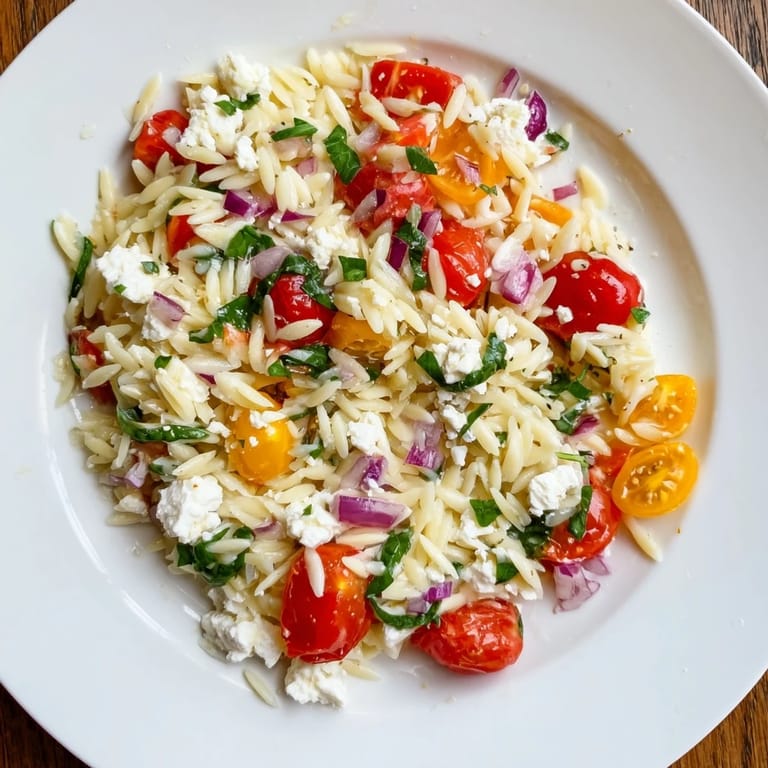
Save I discovered this salad on a sweltering afternoon when my kitchen felt too hot for anything serious—just the thought of turning on the stove made me wince. A friend had left a bunch of basil on my counter, the kind that smells like summer itself, and I had tomatoes threatening to overripen if I didn't use them soon. I threw together what I had with some orzo that happened to be in the pantry, and somehow those simple pieces became something I've made dozens of times since. It's one of those dishes that tastes like it took hours but honestly takes less time than ordering delivery.
I'll never forget bringing this to a potluck last July when everyone else showed up with heavy casseroles and complicated sides—this bright, cold salad was gone within minutes while everything else sat there sweating under the tent. Someone actually asked for the recipe that night, and I realized it wasn't fancy or complicated, just genuinely good. Now it's become my go-to move whenever I'm asked to bring something, because I know it works every single time.
Ingredients
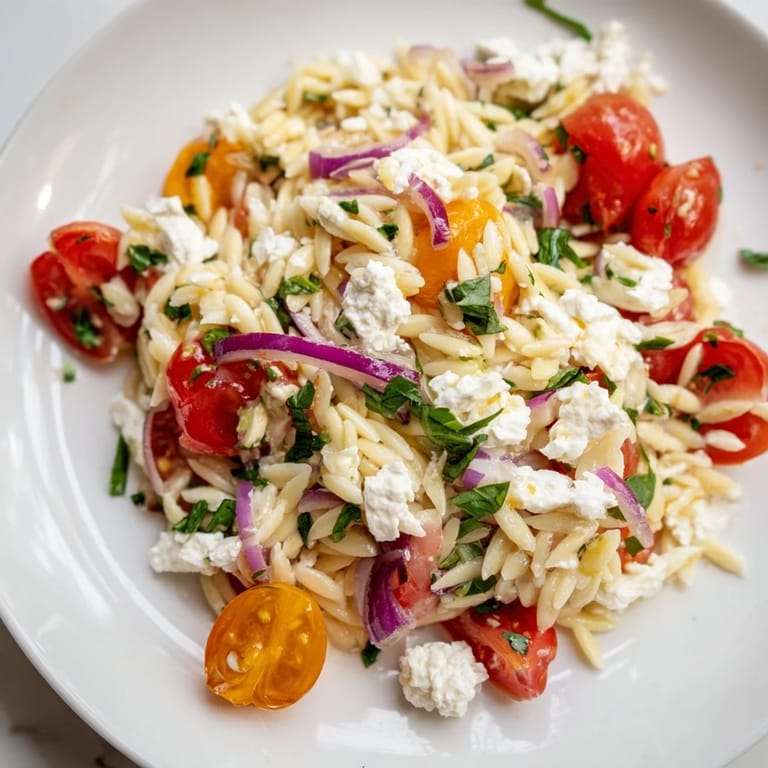
- Orzo: This rice-shaped pasta is the backbone here—it's small enough to coat evenly with dressing but has enough substance to feel like a real meal, not just rabbit food.
- Cherry tomatoes: Halving them instead of chopping is the move because they stay intact and juicy rather than falling apart, plus they look prettier.
- Red onion: Finely diced means it softens slightly as it sits and weaves itself throughout the salad without overwhelming anything.
- Feta cheese: Crumbled feta gets into every bite, and it adds a salty, tangy note that makes everything else taste more like itself.
- Fresh basil and parsley: These aren't afterthoughts—they're what makes this taste like summer instead of just tasting fine, so don't skip them or use the dried stuff.
- Extra-virgin olive oil: Good quality matters here since it's a main player in the dressing, not just background seasoning.
- Red wine vinegar: It's sharp enough to cut through the richness without being aggressive, and it lets the tomatoes shine.
- Garlic and oregano: Together they anchor the Mediterranean flavor and remind you why this works.
Tired of Takeout? 🥡
Get 10 meals you can make faster than delivery arrives. Seriously.
One email. No spam. Unsubscribe anytime.
Instructions
- Cook the orzo until it's tender but still has a tiny bit of bite:
- Bring a big pot of salted water to a rolling boil and add the orzo, watching it cloud the water as it hydrates. Set a timer for whatever the package says minus a minute—you want it al dente, not soft, because it'll continue absorbing flavors as the salad sits.
- Cool it down fast:
- Drain it through a strainer and then run cold water over it while you shake it around a bit, or spread it on a plate if you're in a hurry. This stops the cooking immediately and keeps the pasta from turning mushy.
- Build the dressing in your serving bowl:
- Whisk together the olive oil, vinegar, minced garlic, oregano, salt, and pepper right where you'll be tossing everything—this saves a dish and lets the flavors start getting friendly with each other before anything else goes in.
- Bring everything together gently:
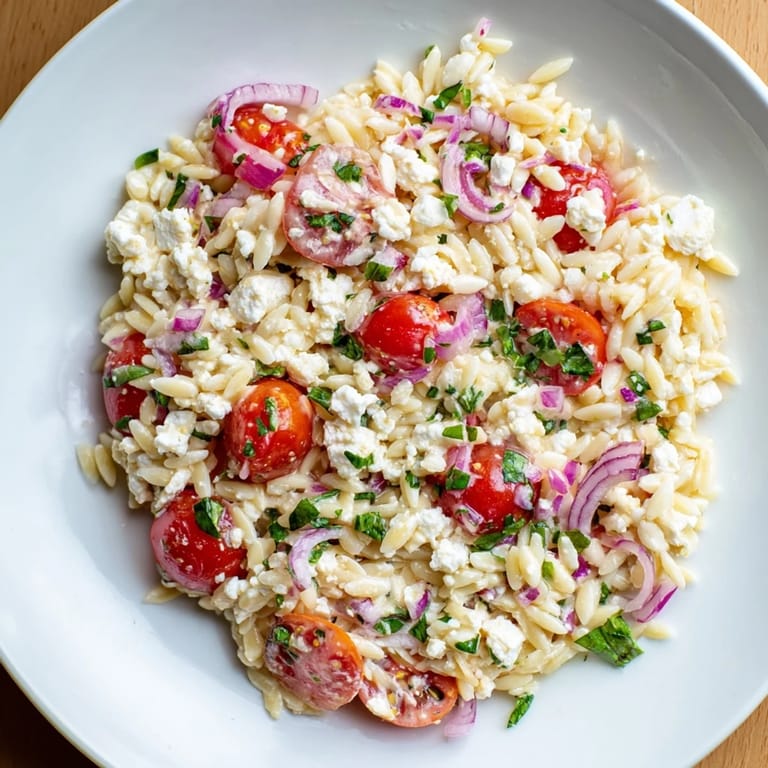
- Add the cooled orzo, tomatoes, onion, feta, basil, and parsley to the bowl and toss with a gentle hand so the tomatoes stay whole and the feta doesn't break into dust. Taste it and adjust salt and vinegar if it needs it.
 Save
Save There's a moment about thirty minutes after you've made this, when you open the fridge to grab something else and catch that smell of basil and olive oil mixing with tomato—that's when you know you've made something right. It's the kind of dish that gets better with a little time, which is honestly more useful than anything you can make that tastes best the instant it's done.
What Makes This Different
Most pasta salads feel heavy and mayonnaise-y, but this one lets each ingredient taste like itself instead of blending into mush. The cold dressing and light touch mean you taste the tomato, then the basil, then the salt of the feta—it's not all one confused flavor. I've learned that this approach works because there's nothing here fighting for attention, just good ingredients that happen to make sense together.
Make-Ahead Magic
This is genuinely one of the best parts of this recipe—you can make it up to four hours ahead and it actually tastes better as it sits. The orzo keeps soaking up the dressing, the onion mellows out, and everything gets more cohesive without getting mushy. I often make it the morning of a gathering, which means I'm not stressed at the last minute when everyone's actually arriving.
Variations and Additions
This recipe is a canvas more than a strict formula, which is why I keep making it—it changes depending on what's in my kitchen or what I'm feeling that day. I've added everything from sliced Kalamata olives to roasted red peppers, crumbled goat cheese to diced cucumber, and every version has been good. The core of orzo, tomato, and feta is the foundation, but from there you can play around.
- Toss in some diced cucumber or bell pepper if you want extra crunch and freshness.
- A handful of Kalamata olives adds a briny note that feels fancy without any extra work.
- If you're serving this with grilled chicken or fish, it rounds out a meal perfectly without being heavy.
 Save
Save This is my default move when I want something that tastes like summer, comes together in minutes, and keeps getting better instead of worse. It's become the kind of recipe I make without thinking anymore—the one that always works.
Recipe FAQ
- → Can I use a different type of pasta instead of orzo?
Yes, small pasta shapes like couscous or small shells can be a good substitute while maintaining texture and bite.
- → How can I make this dish vegan-friendly?
Replace feta with a plant-based cheese alternative or omit it entirely and add extra herbs or olives for flavor.
- → Is this dish best served warm or chilled?
It is versatile and delicious served chilled or at room temperature to let flavors meld.
- → What herbs complement the flavors in this dish?
Fresh basil and parsley provide bright, aromatic notes that enhance the overall taste.
- → Can I prepare this in advance?
Yes, it can be made ahead and refrigerated for up to 4 hours to develop deeper flavors.
- → Are there suggested additions for extra flavor?
Kalamata olives or roasted red peppers add a delightful tang and complexity.